24 Nov 2026
Online fraud is traditionally limited by the cost of the human labor needed to talk to potential victims. We ask whether hosted large language models will now supply that labor.
Trending research and the full catalog - each paper linked to the benchmarks, methods, and models it introduces.
Filtering here covers the 2,000 most recent papers, as much as one page can hold in memory. See the full index of 23,103 papers.
24 Nov 2026
Online fraud is traditionally limited by the cost of the human labor needed to talk to potential victims. We ask whether hosted large language models will now supply that labor.
24 Nov 2026
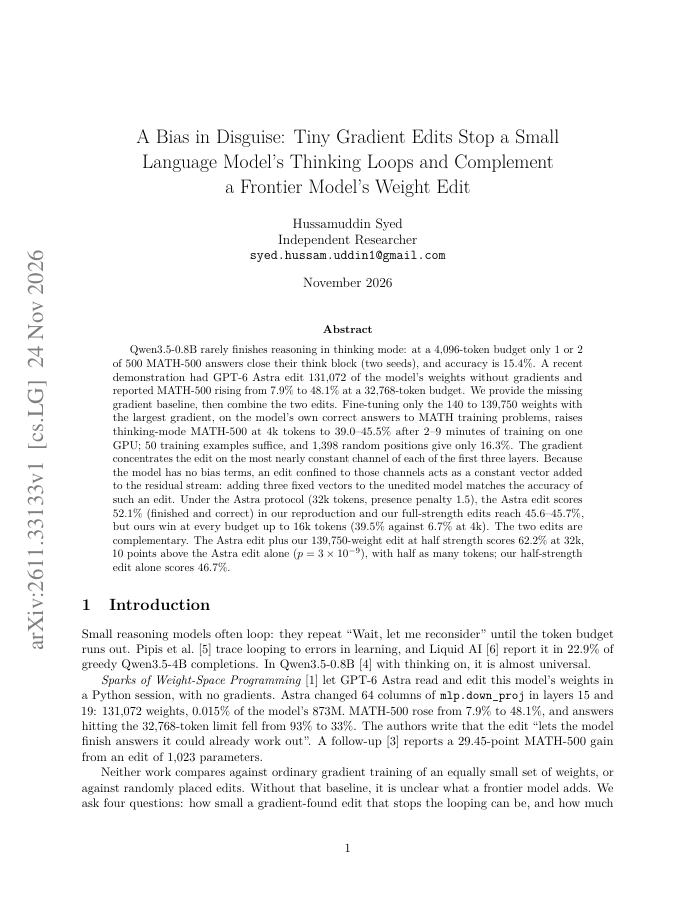
Qwen3.5-0.8B rarely finishes reasoning in thinking mode: at a 4,096-token budget only 1 or 2 of 500 MATH-500 answers close their think block (two seeds), and accuracy is 15.4%.
24 Nov 2026
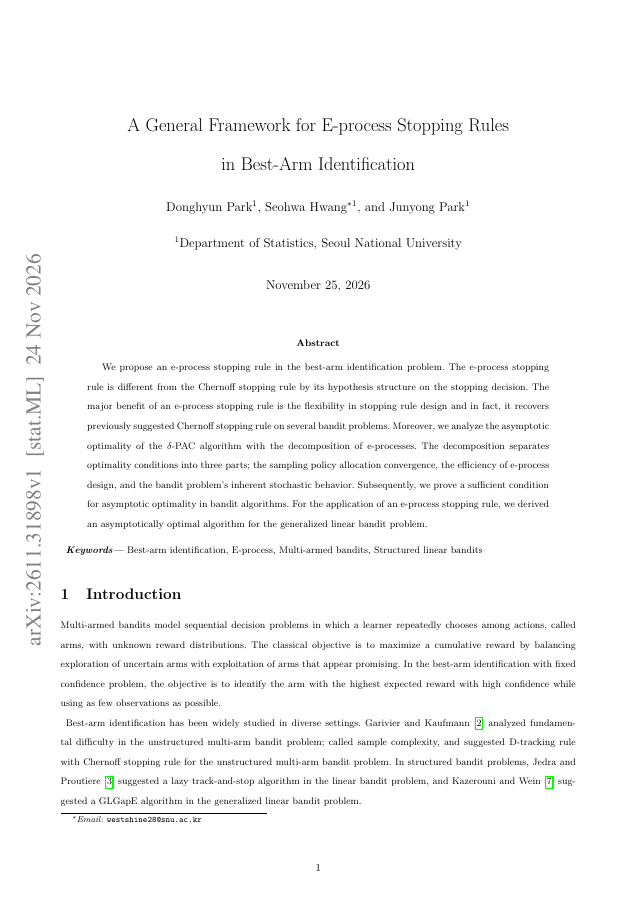
We propose an e-process stopping rule in the best-arm identification problem. The e-process stopping rule is different from the Chernoff stopping rule by its hypothesis structure on the stopping decision.
24 Nov 2026
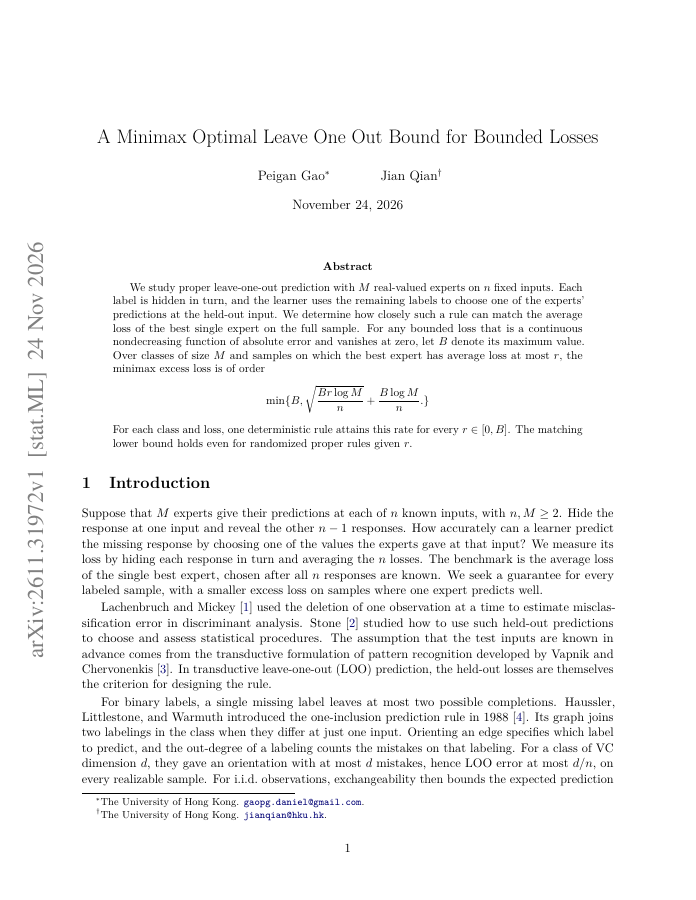
We study proper leave-one-out prediction with $M$ real-valued experts on $n$ fixed inputs. Each label is hidden in turn, and the learner uses the remaining labels to choose one of the experts' predictions at the held-out input.
23 Nov 2026
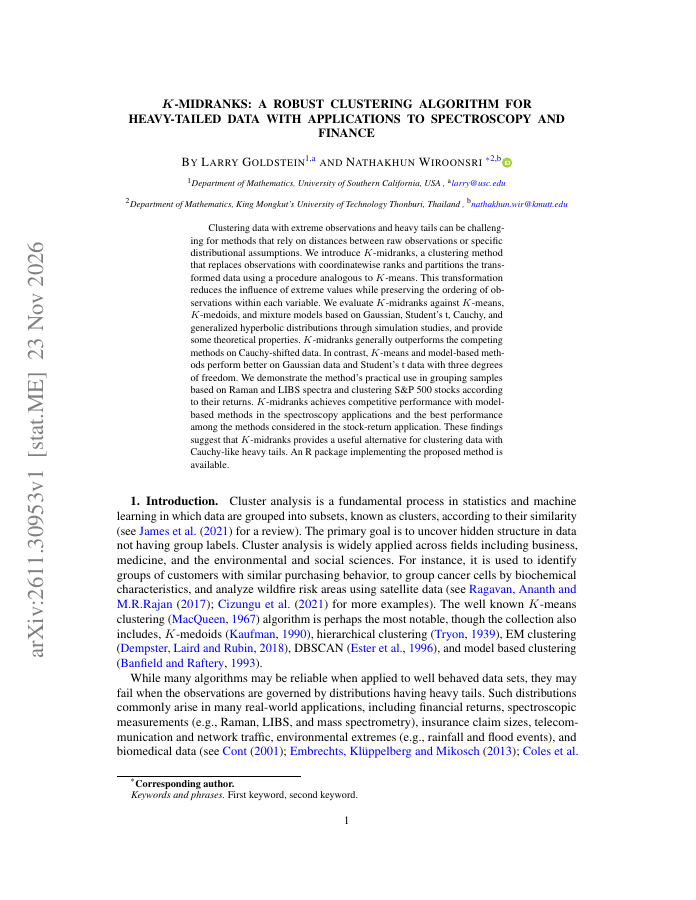
Clustering data with extreme observations and heavy tails can be challenging for methods that rely on distances between raw observations or specific distributional assumptions.
23 Nov 2026
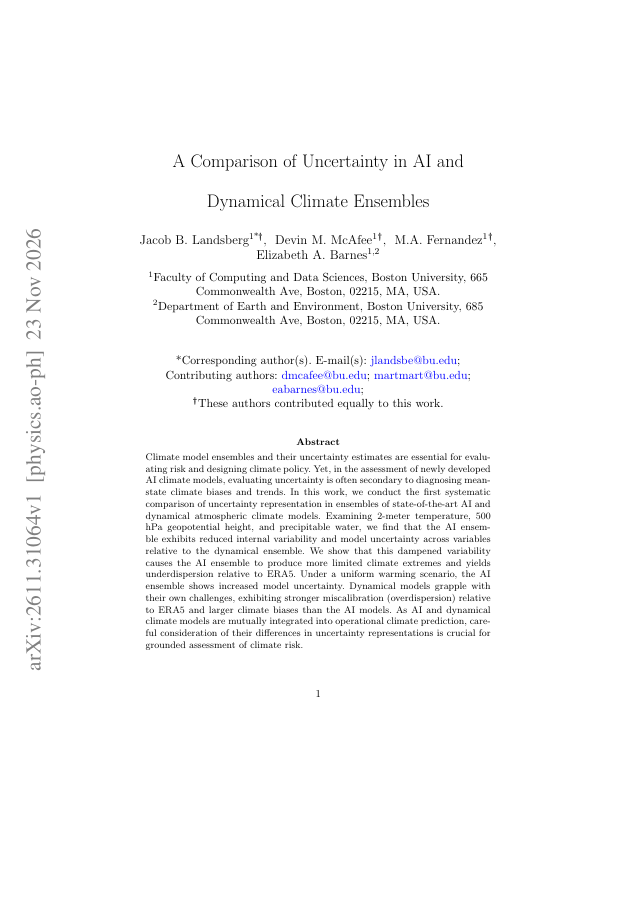
Climate model ensembles and their uncertainty estimates are essential for evaluating risk and designing climate policy. Yet, in the assessment of newly developed AI climate models, evaluating uncertainty is often secondary to diagnosing mean-state climate biases and trends.
23 Nov 2026
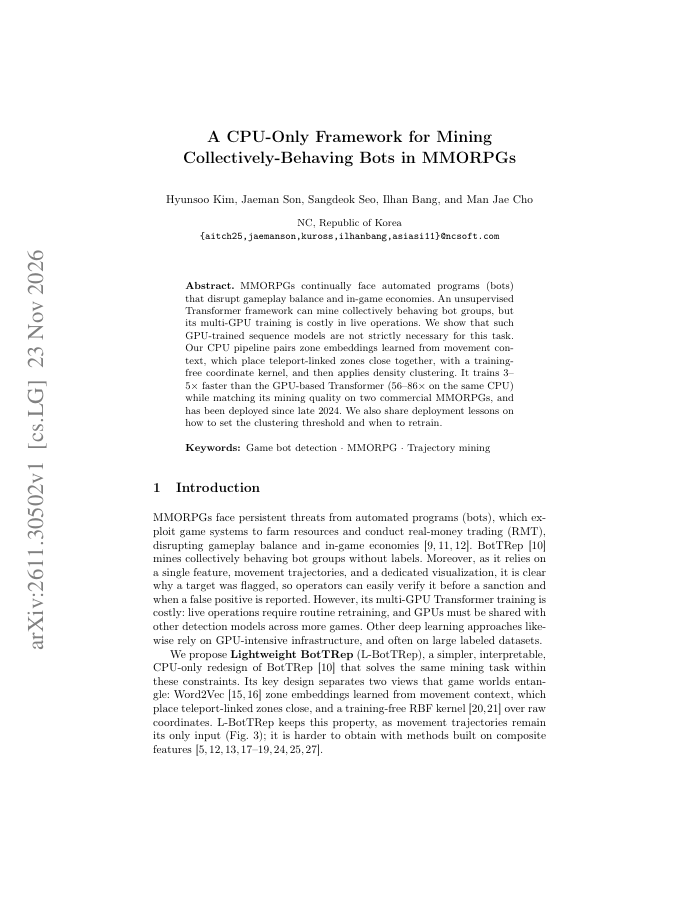
MMORPGs continually face automated programs (bots) that disrupt gameplay balance and in-game economies. An unsupervised Transformer framework can mine collectively behaving bot groups, but its multi-GPU training is costly in live operations.
23 Nov 2026
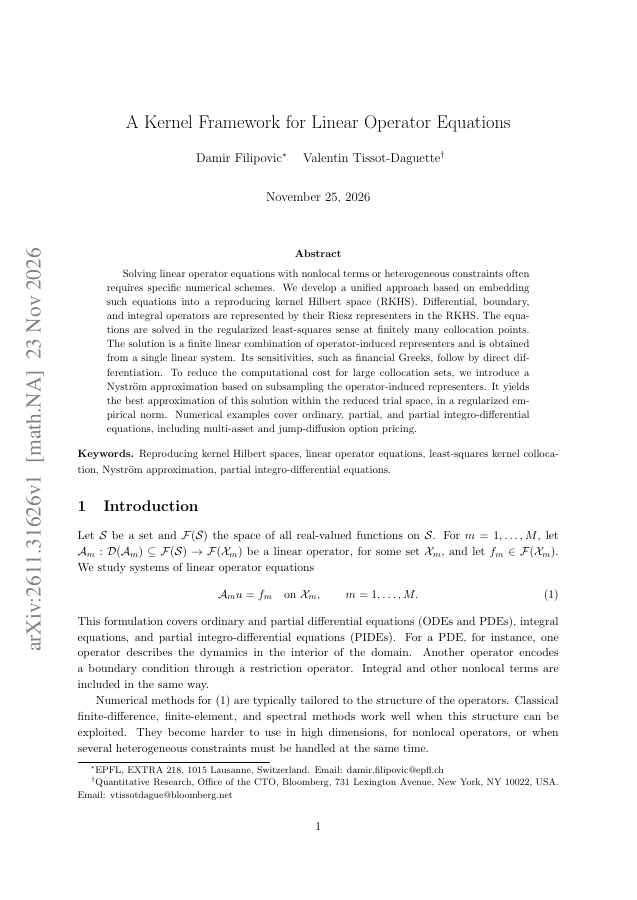
Solving linear operator equations with nonlocal terms or heterogeneous constraints often requires specific numerical schemes. We develop a unified approach based on embedding such equations into a reproducing kernel Hilbert space (RKHS).
23 Nov 2026
By accumulating spikes over multiple timesteps, rate coding approximates the real-valued activations of an ANN, a principle that underpins numerous ANN-to-SNN conversion methods. However, the converted SNNs typically incur loss in accuracy compared to the original ANN.
23 Nov 2026
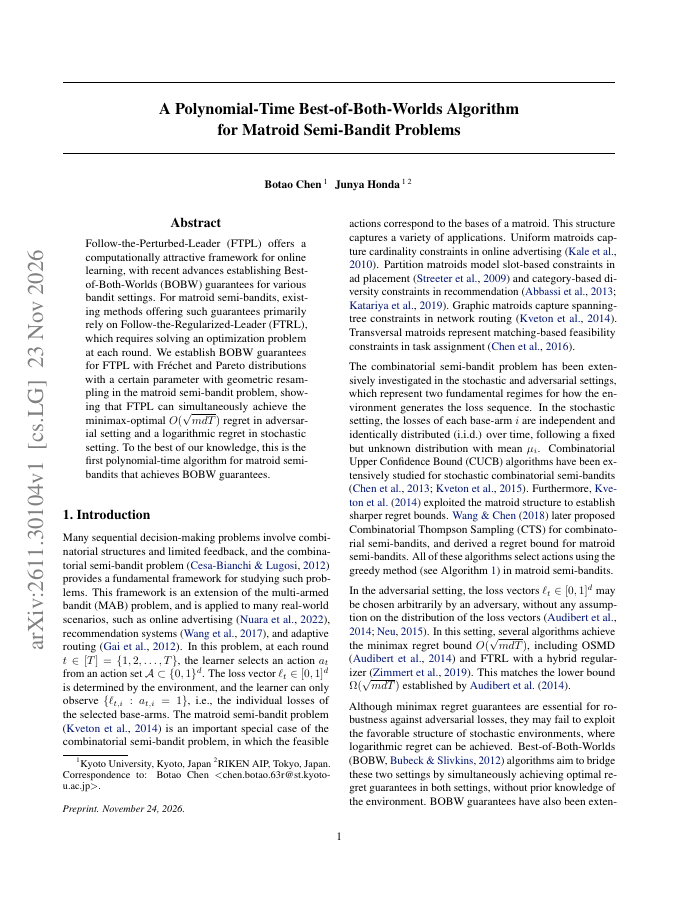
Follow-the-Perturbed-Leader (FTPL) offers a computationally attractive framework for online learning, with recent advances establishing Best-of-Both-Worlds (BOBW) guarantees for various bandit settings.
22 Nov 2026
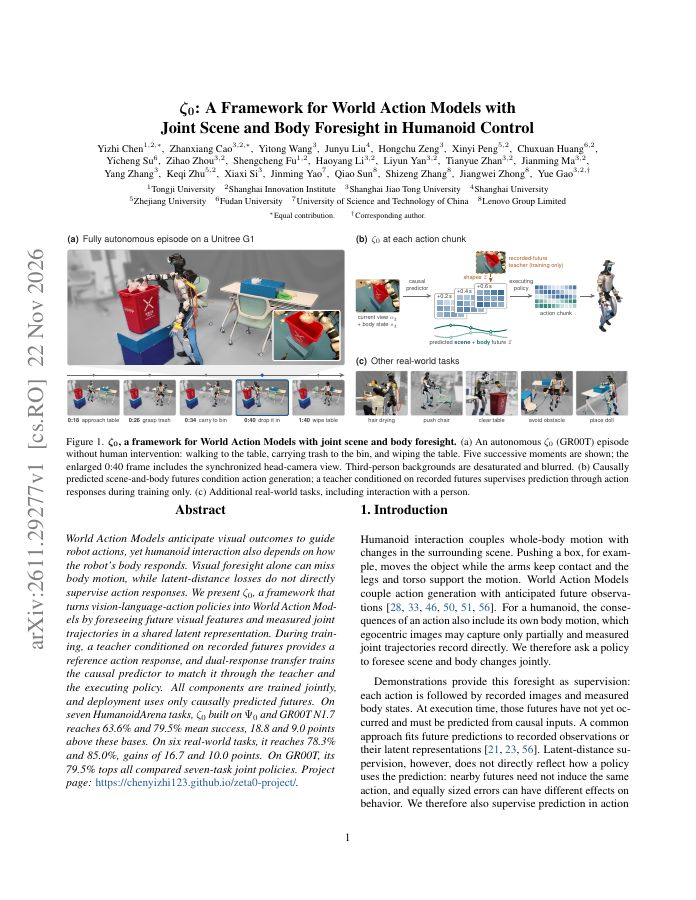
World Action Models anticipate visual outcomes to guide robot actions, yet humanoid interaction also depends on how the robot's body responds. Visual foresight alone can miss body motion, while latent-distance losses do not directly supervise action responses.
22 Nov 2026
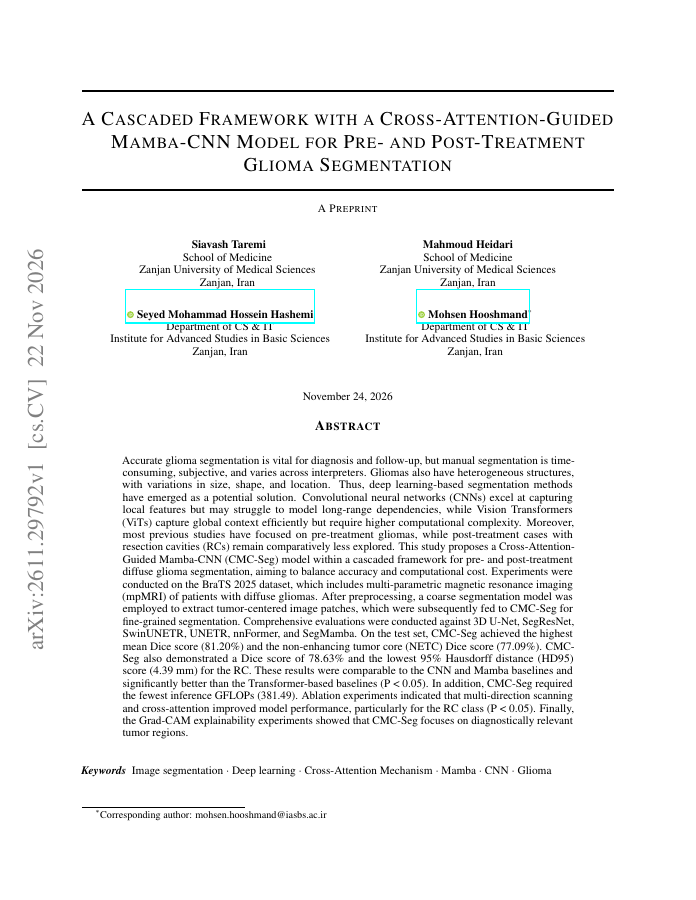
Accurate glioma segmentation is vital for diagnosis and follow-up, but manual segmentation is time-consuming, subjective, and variable across interpreters. Gliomas are heterogeneous in size, shape, and location. Deep learning has therefore emerged as a potential solution.
22 Nov 2026
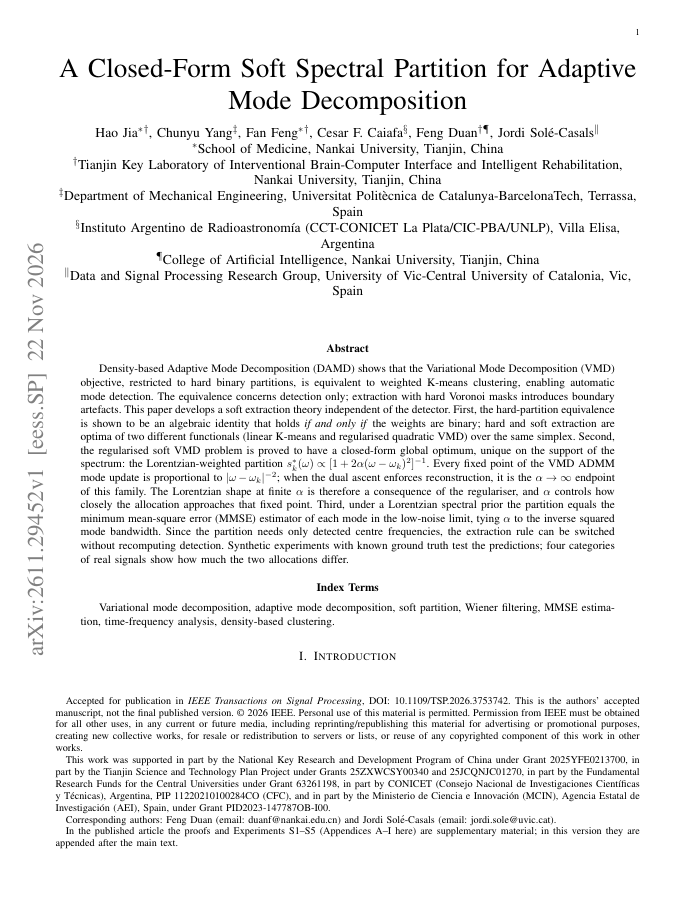
Density-based Adaptive Mode Decomposition (DAMD) shows that the Variational Mode Decomposition (VMD) objective, restricted to hard binary partitions, is equivalent to weighted K-means clustering, enabling automatic mode detection.
21 Nov 2026
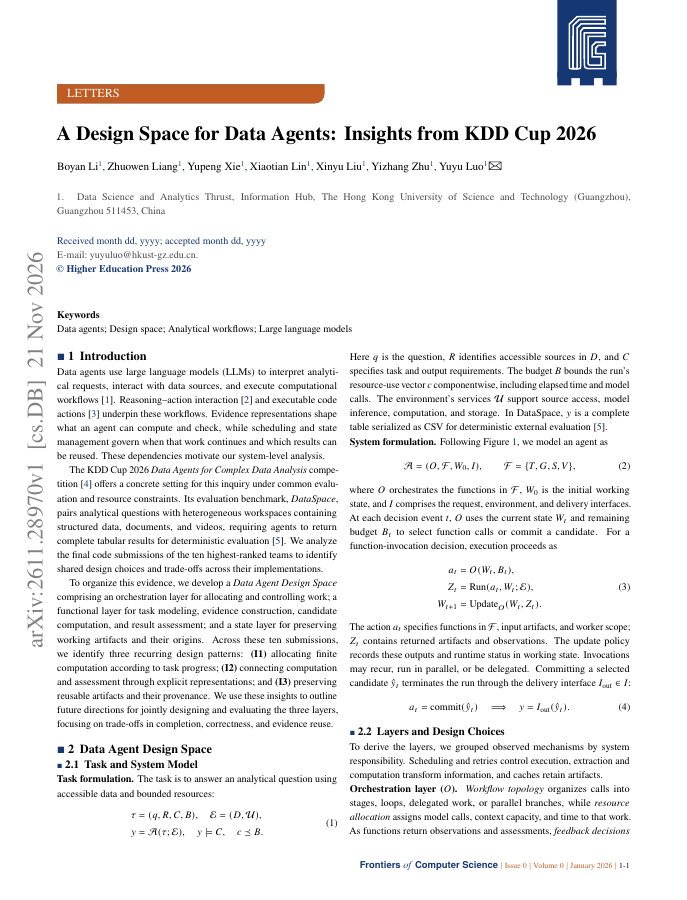
Data agents interpret analytical requests, gather evidence from heterogeneous sources, and compute results within finite resource budgets. We analyze the final code submissions of the ten highest-ranked teams in the KDD Cup 2026 Data Agents for Complex Data Analysis competition.
21 Nov 2026
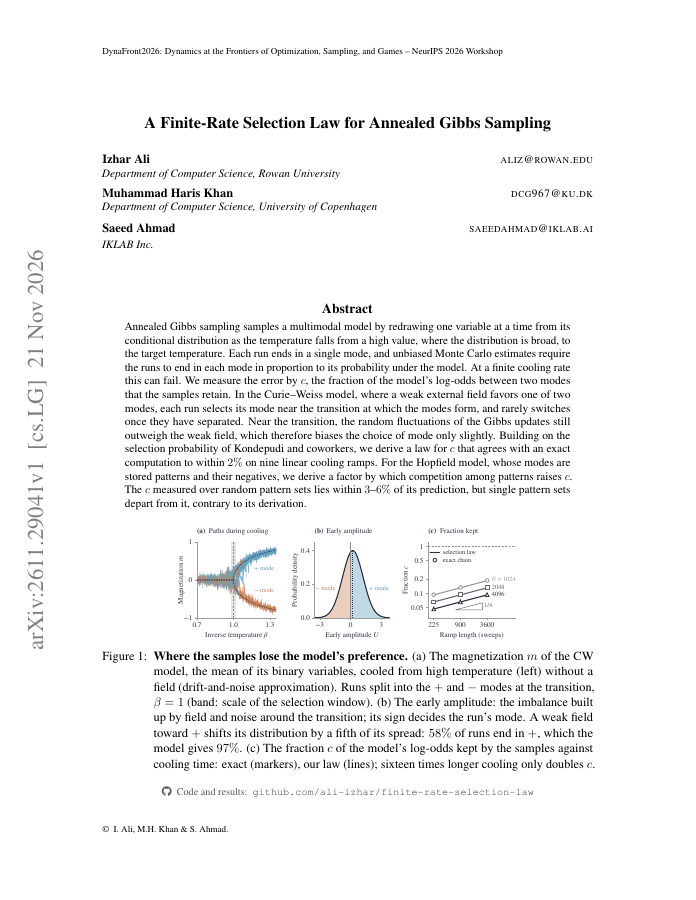
Annealed Gibbs sampling samples a multimodal model by redrawing one variable at a time from its conditional distribution as the temperature falls from a high value, where the distribution is broad, to the target temperature.
21 Nov 2026
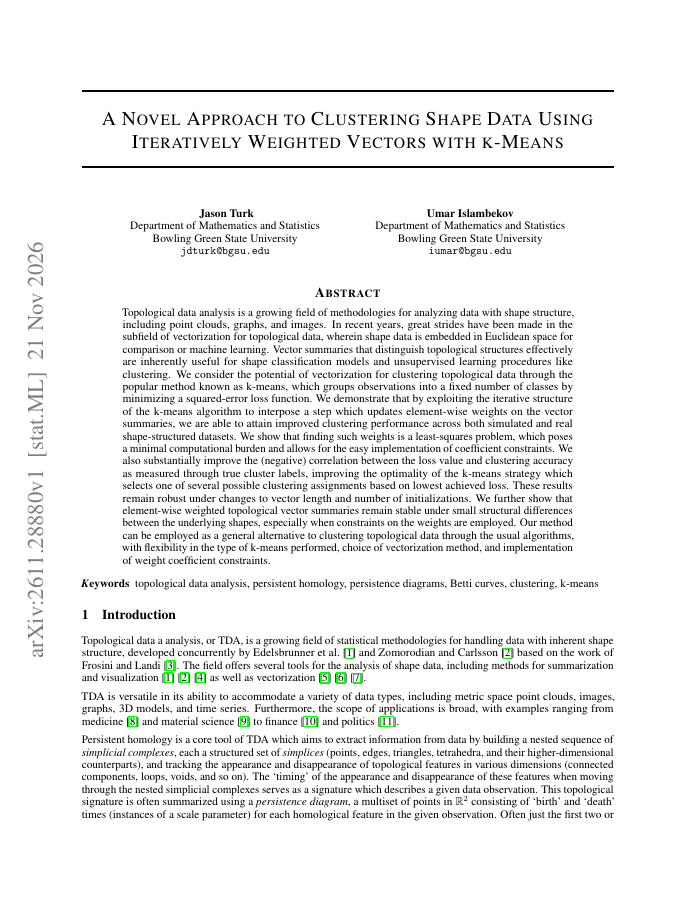
Topological data analysis provides a collection of methods for analyzing data with shape structure, including point clouds, graphs, and images. Recent advances in topological vectorization have enabled the embedding of shape data into Euclidean spaces, facilitating comparisons…
20 Nov 2026
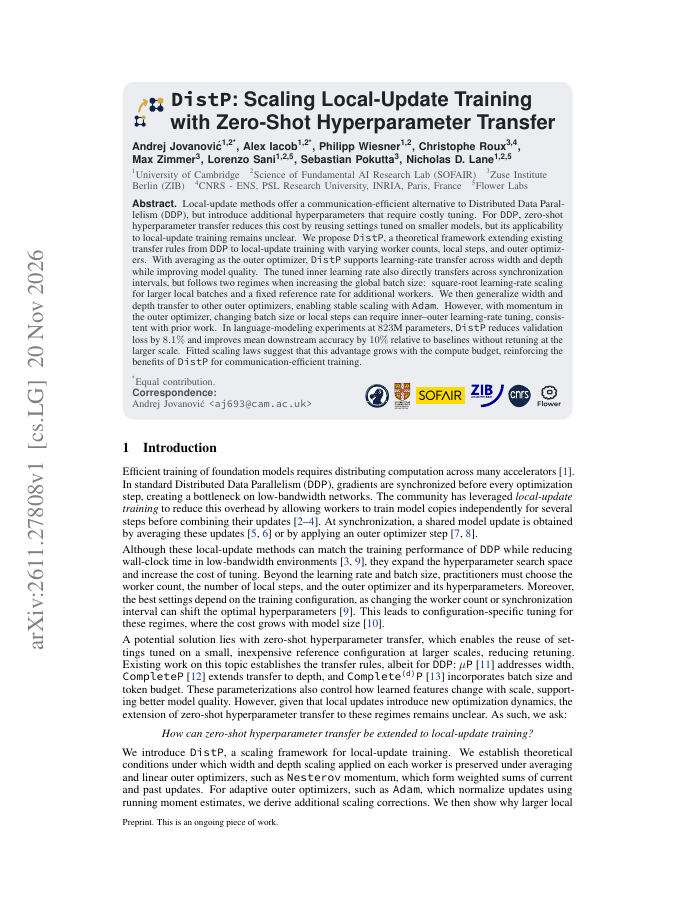
Local-update methods offer a communication-efficient alternative to Distributed Data Parallelism ($\mathtt{DDP}$), but introduce additional hyperparameters that require costly tuning.
20 Nov 2026
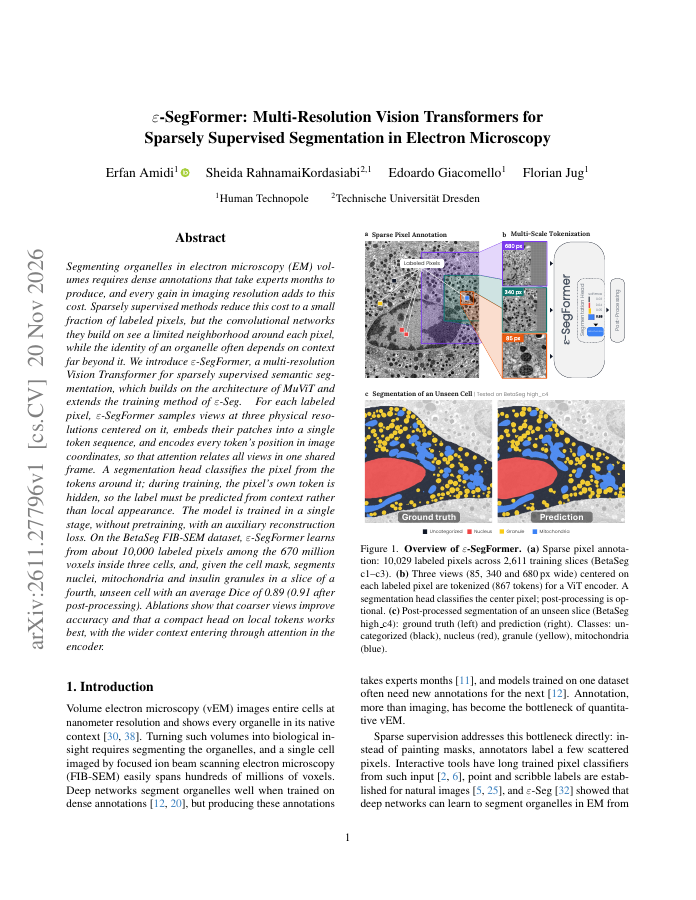
Segmenting organelles in electron microscopy (EM) volumes requires dense annotations that take experts months to produce, and every gain in imaging resolution adds to this cost.
20 Nov 2026
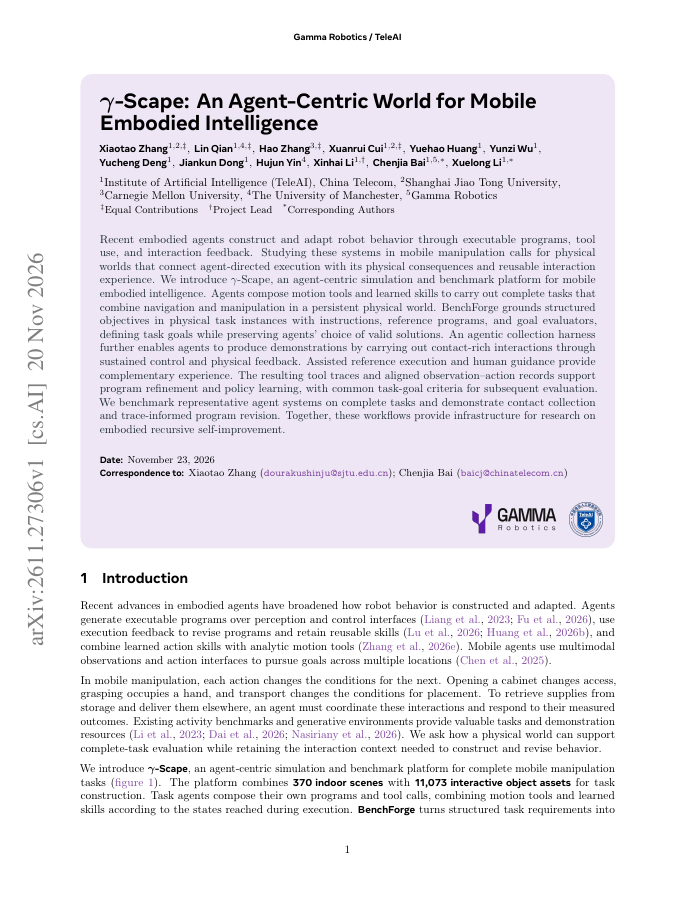
Recent embodied agents construct and adapt robot behavior through executable programs, tool use, and interaction feedback. Studying these systems in mobile manipulation calls for physical worlds that connect agent-directed execution with its physical consequences and reusable…
20 Nov 2026
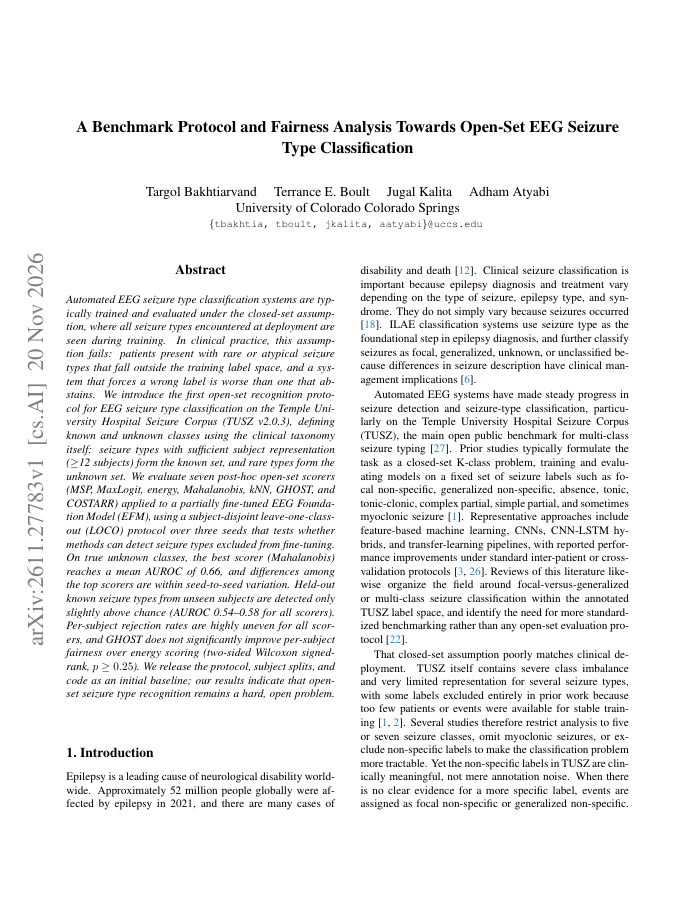
Automated EEG seizure type classification systems are typically trained and evaluated under the closed-set assumption, where all seizure types encountered at deployment are seen during training.
20 Nov 2026
Surgical triplet recognition requires identifying which instrument performs which action on which anatomical target, and following these interactions as they unfold over time.
20 Nov 2026
Quantization is a critical piece of the deployment pipeline in the era of large generative models. Low-bit quantization, particularly 2-bits or sub-2-bits, is a notoriously difficult problem, particularly when using a channelwise quantization scheme which has been shown as a…
20 Nov 2026
Artificial intelligence (AI), specifically machine learning (ML), is increasingly integral to Earth and environmental research, yet the suitability of current research data infrastructures for supporting AI workflows remains poorly defined.
20 Nov 2026
India's AI debate often swings between two insufficient options: replicating the compute-intensive, capital-heavy foundation-model programmes of the United States or China, or remaining a downstream adopter of foreign AI with localised interfaces and safeguards.