1 Mar 2026
Autoregressive (AR) language models build representations incrementally via left-to-right prediction, while diffusion language models (dLLMs) are trained through full-sequence denoising.
Trending research and the full catalog - each paper linked to the benchmarks, methods, and models it introduces.
Filtering here covers the 2,000 most recent papers, as much as one page can hold in memory. See the full index of 22,445 papers.
1 Mar 2026
Autoregressive (AR) language models build representations incrementally via left-to-right prediction, while diffusion language models (dLLMs) are trained through full-sequence denoising.
1 Mar 2026
Recent Artificial Intelligence (AI) models have matched or exceeded human experts in several benchmarks of biomedical task performance, but surgical benchmarks in particular are often missing from prominent medical benchmark suites.
1 Mar 2026
Computational social science (CSS) has largely operationalized ideology along a single left/right partisan axis when studying online discourse. This approach obscures how people interpret and engage with more specific ideological formations related to race, climate, gender, and…
1 Mar 2026
We present a physics-based neural network framework for the discovery of constitutive models in fully coupled thermomechanics. In contrast to classical formulations based on the Helmholtz energy, we adopt the internal energy and a dissipation potential as primary constitutive…
1 Mar 2026
A novel convolutional autoencoder and neural ODE (CAE-NODE) framework is proposed for a reduced-order model (ROM) applied to transient 2D counterflow flames, as an extension of AE-NODE methods in homogeneous reactive systems to spatially resolved flows.
1 Mar 2026
Guiding collective motion in biological groups is a fundamental challenge in understanding social interaction rules. In this study, we propose a deep reinforcement learning (RL) framework for closed-loop guidance of fish schools using virtual agents.
1 Mar 2026
WebGIS development requires consistency, yet agentic AI often fails due to LLM context constraints, forgetting, stochasticity, instruction failure, and adaptation rigidity.
1 Mar 2026
The extraction of structured information from raw text is a fundamental component of many NLP applications, including document retrieval, ranking, and relevance estimation.
1 Mar 2026
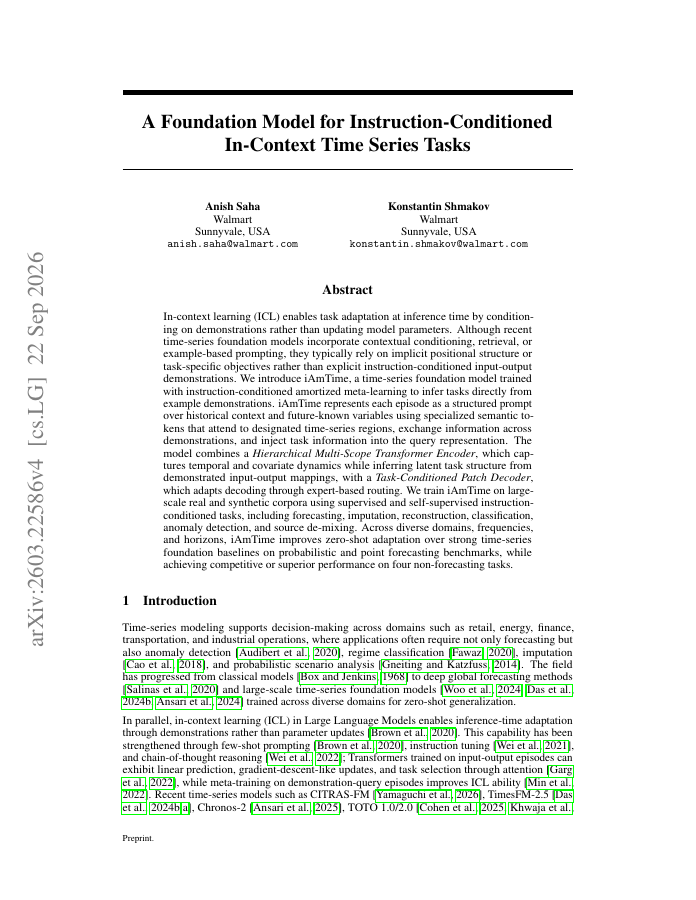
In-context learning (ICL) enables task adaptation at inference time by conditioning on demonstrations rather than updating model parameters. Although recent time-series foundation models incorporate contextual conditioning, retrieval, or example-based prompting, they typically…
1 Mar 2026
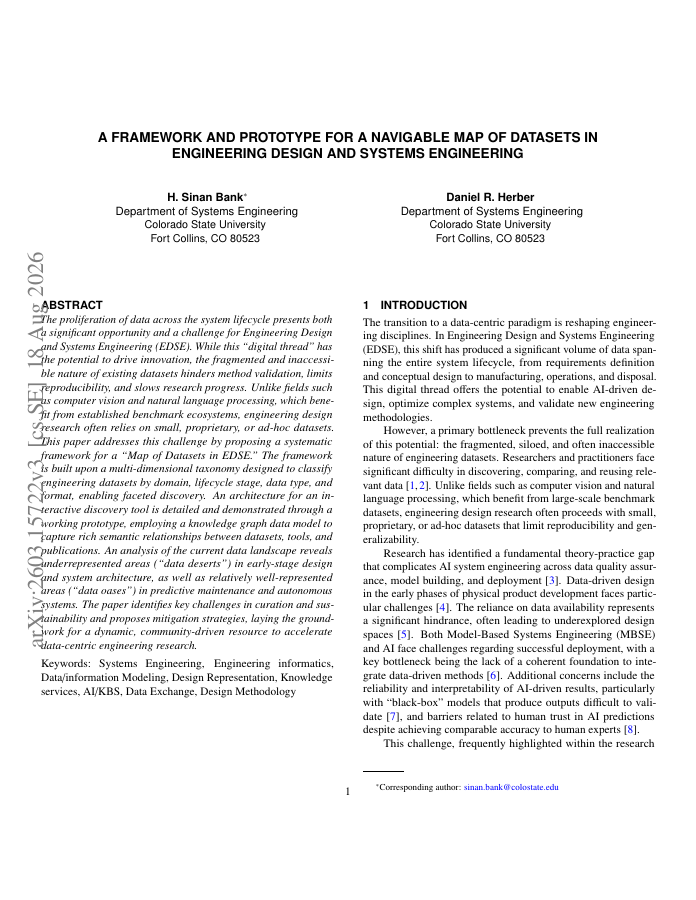
The proliferation of data across the system lifecycle presents both a significant opportunity and a challenge for Engineering Design and Systems Engineering (EDSE). While this "digital thread" has the potential to drive innovation, the fragmented and inaccessible nature…
1 Mar 2026
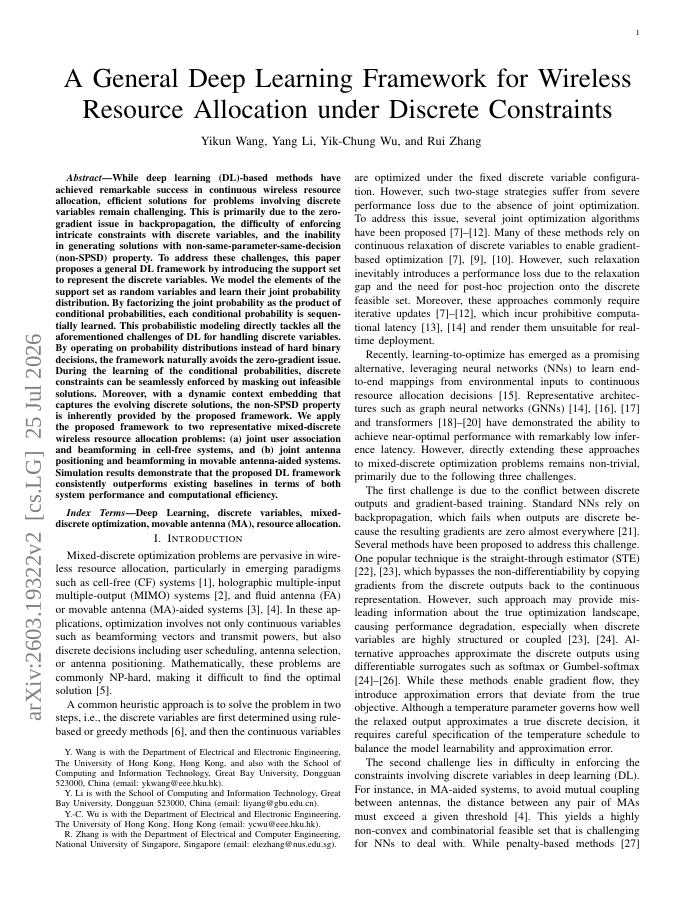
While deep learning (DL)-based methods have achieved remarkable success in continuous wireless resource allocation, efficient solutions for problems involving discrete variables remain challenging.
1 Mar 2026
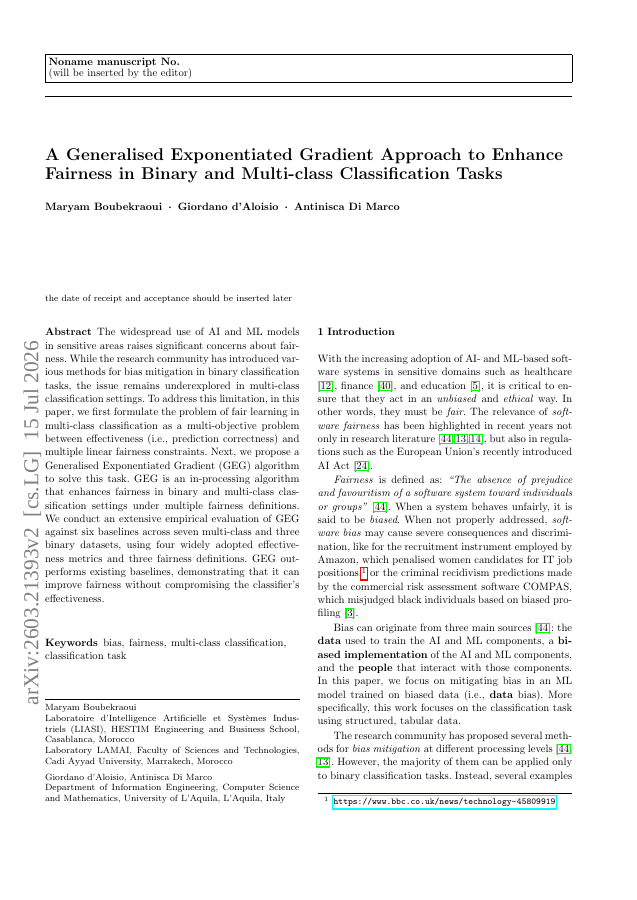
The widespread use of AI and ML models in sensitive areas raises significant concerns about fairness. While the research community has introduced various methods for bias mitigation in binary classification tasks, the issue remains under-explored in multi-class classification…
1 Mar 2026
Bock's 1971 algorithm is an exact primal--dual method for the minimum-cost arborescence problem, but its Algol presentation obscures the interaction of its maintained arrays and label-directed control flow.
1 Mar 2026
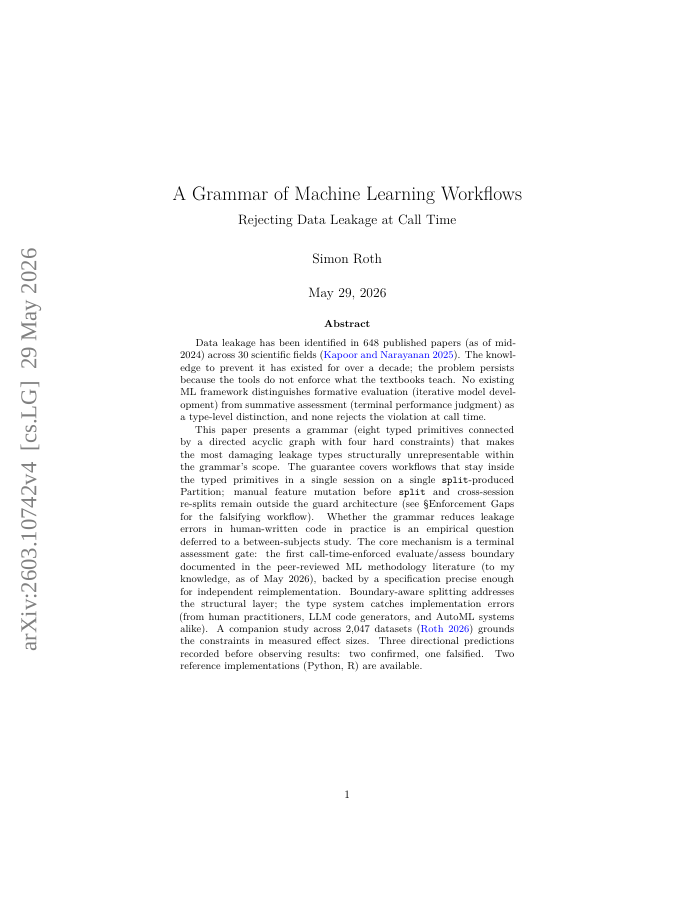
Data leakage has been identified in 648 published papers across 30 scientific fields. The knowledge to prevent it has existed for over a decade; the problem persists because the tools do not enforce what the textbooks teach.
1 Mar 2026
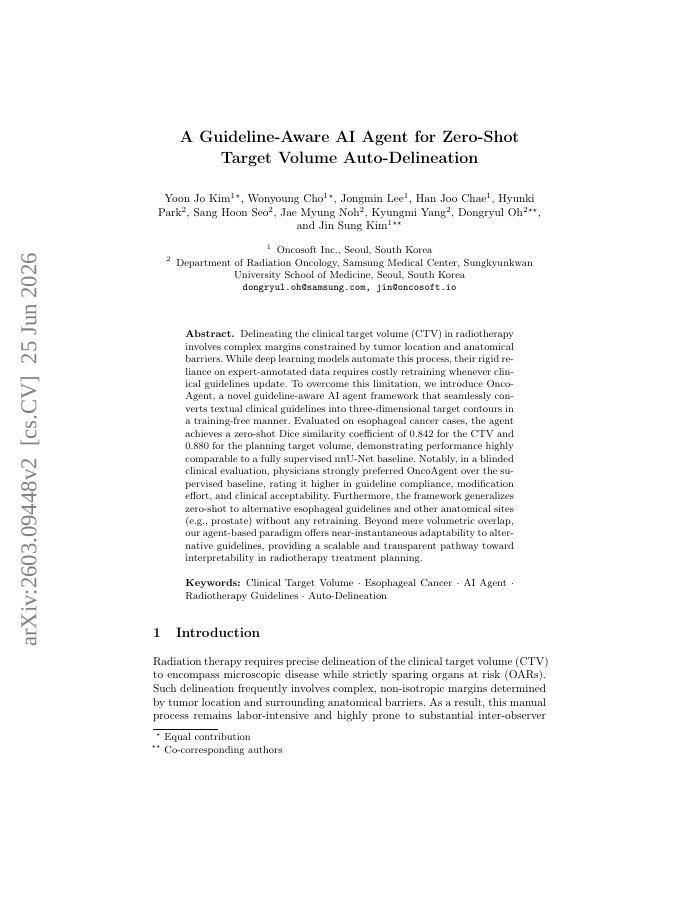
Delineating the clinical target volume (CTV) in radiotherapy involves complex margins constrained by tumor location and anatomical barriers. While deep learning models automate this process, their rigid reliance on expert-annotated data requires costly retraining whenever…
1 Mar 2026
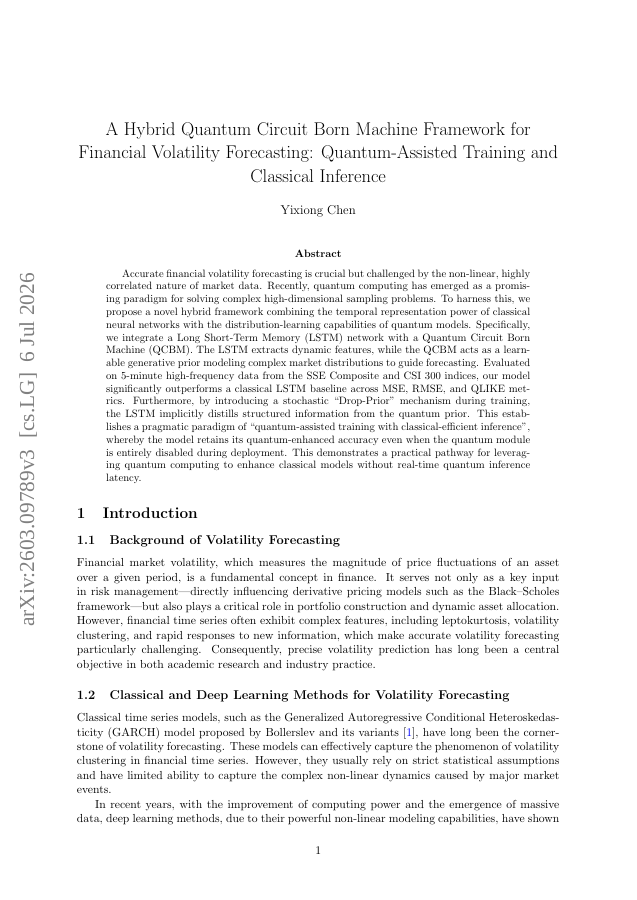
Accurate financial volatility forecasting is crucial but challenged by the non-linear, highly correlated nature of market data. Recently, quantum computing has emerged as a promising paradigm for solving complex high-dimensional sampling problems.
1 Mar 2026
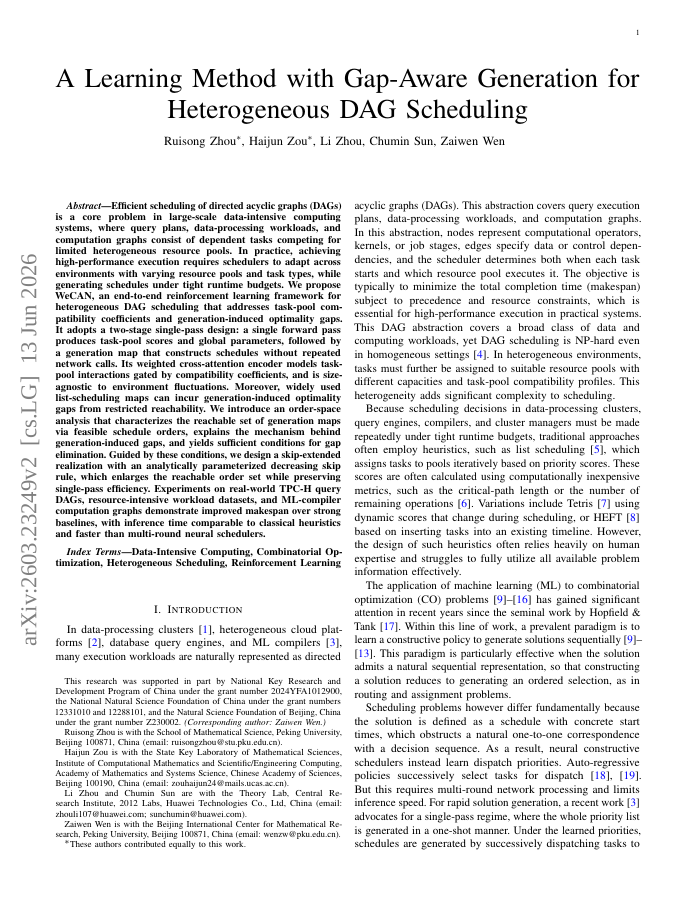
Efficient scheduling of directed acyclic graphs (DAGs) is a core problem in large-scale data-intensive computing systems, where query plans, data-processing workloads, and computation graphs consist of dependent tasks competing for limited heterogeneous resource pools.
1 Mar 2026
Brand advertising plays a critical role in building long-term consumer awareness and loyalty, making it a key objective for advertisers across digital platforms. Although real-time bidding has been extensively studied, there is limited literature on algorithms specifically…
1 Mar 2026
Federated learning (FL) is a communication-efficient framework for solving distributed optimization problems. Standard FL methods aggregate local updates into a single global model that is shared by all agents, effectively imposing consensus.
1 Mar 2026
Accurate modeling of gas flow through porous media is critical for many technological applications, including reservoir performance prediction, carbon capture and sequestration, and fuel cells and batteries.
1 Mar 2026
We propose a control-theoretic framework for evolutionary clustering based on quasi-stationary Mean Field Games. Each cluster is represented by a probability density whose evolution is governed by a Fokker--Planck equation, while the associated velocity field is determined…
1 Mar 2026
We present a method for learning large-scale, broad-coverage construction grammars from corpora of language use. Starting from utterances annotated with constituency structure and semantic frames, the method facilitates the learning of human-interpretable computational…
1 Mar 2026
Accurately estimating human mobility in peripheral regional economies presents a fundamental measurement challenge: physical ground-truth sensors are sparse, behavioral intent signals are heterogeneous, and environmental friction introduces systematic bias into demand inference.
1 Mar 2026
Artificial intelligence in molecular science must move beyond pattern recognition toward chemically valid and interpretable reasoning. We present a task-adaptive large reasoning model that integrates chemical knowledge through a synergistic multispecialist architecture,…