3 Sep 2026
A critical challenge in deploying Large Language Models (LLMs) is developing reliable mechanisms to estimate their confidence, enabling systems to determine when to trust model outputs versus seek human intervention.
Trending research and the full catalog - each paper linked to the benchmarks, methods, and models it introduces.
Filtering here covers the 2,000 most recent papers, as much as one page can hold in memory. See the full index of 22,332 papers.
3 Sep 2026
A critical challenge in deploying Large Language Models (LLMs) is developing reliable mechanisms to estimate their confidence, enabling systems to determine when to trust model outputs versus seek human intervention.
3 Sep 2026
Multi-agent AI science ecosystems rely on agents possessing tools that allow them to communicate, coordinate, and build on each other's work. Yet this shared infrastructure can also introduce vulnerabilities by creating a substrate for the contagious spread of unintended and…
3 Sep 2026
Coreference resolution is an important task in contextual reasoning. In this paper, we investigate the mechanism for representing and retrieving singular and plural entities for plural reference.
3 Sep 2026
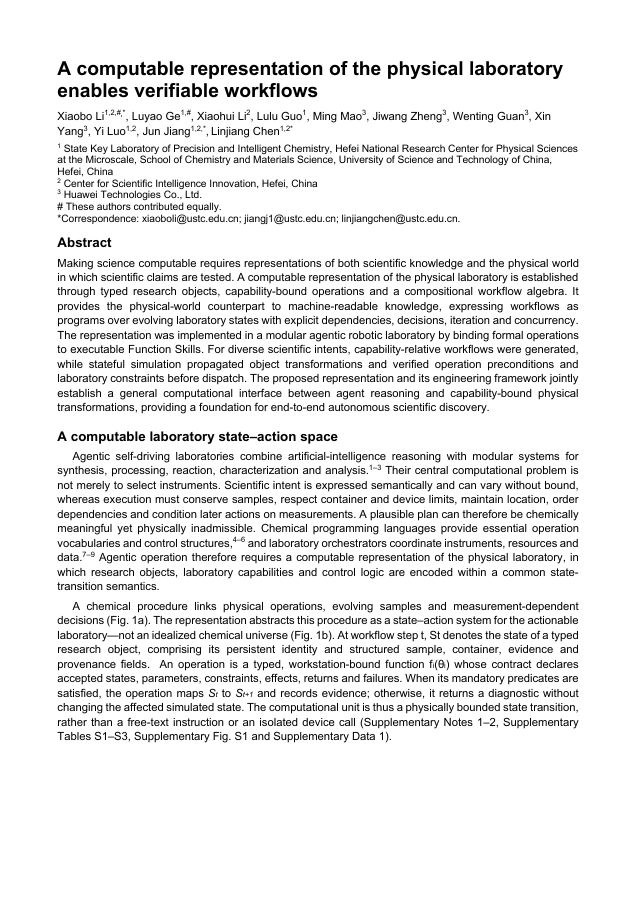
Making science computable requires representations of both scientific knowledge and the physical world in which scientific claims are tested. A computable representation of the physical laboratory is established through typed research objects, capability-bound operations and a…
3 Sep 2026
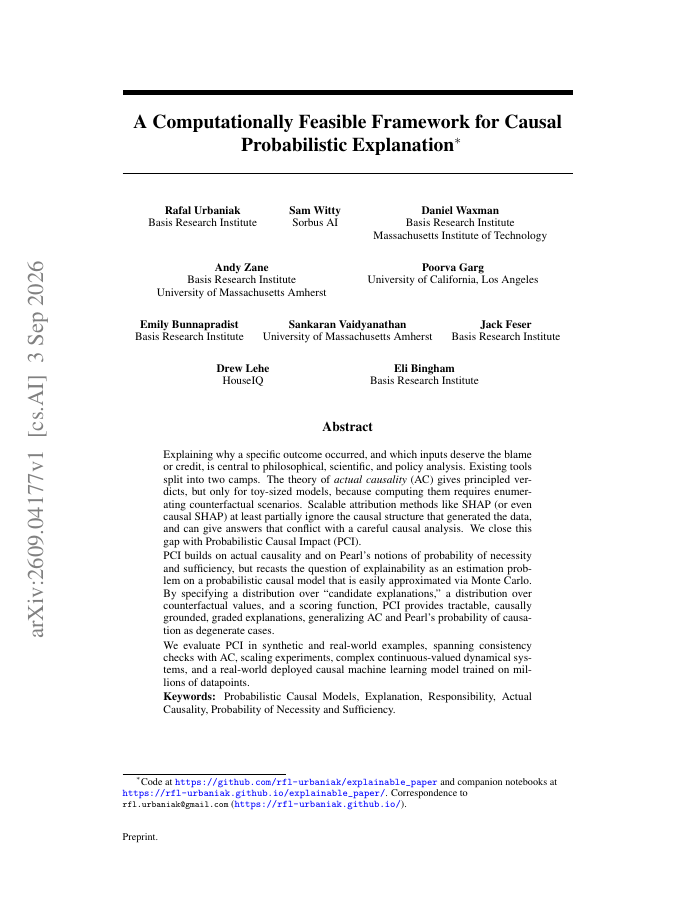
Explaining why a specific outcome occurred, and which inputs deserve the blame or credit, is central to philosophical, scientific, and policy analysis. Existing tools split into two camps.
3 Sep 2026
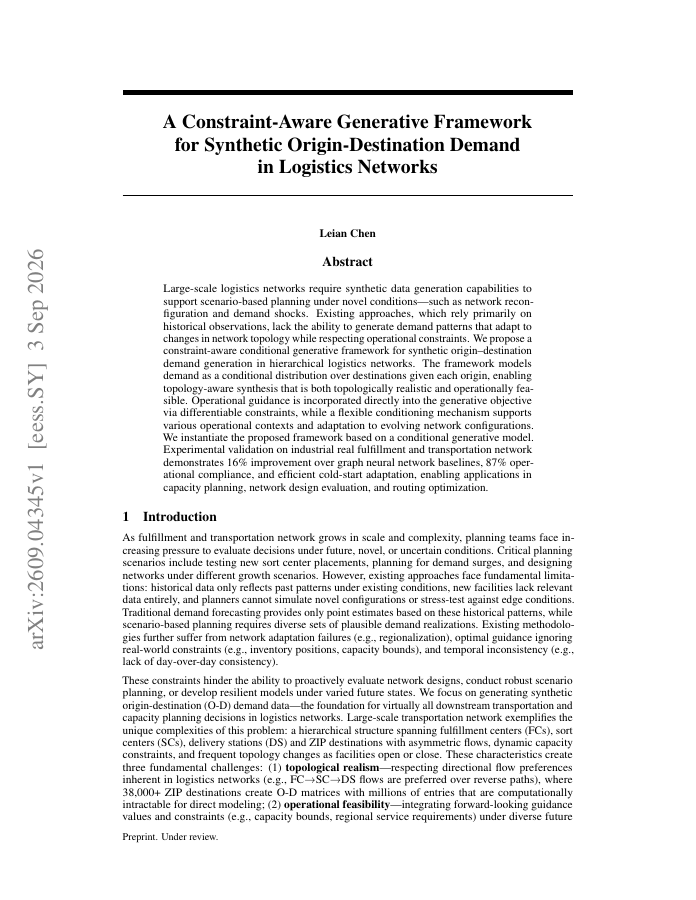
Large-scale logistics networks require synthetic data generation capabilities to support scenario-based planning under novel conditions-such as network reconfiguration and demand shocks.
3 Sep 2026
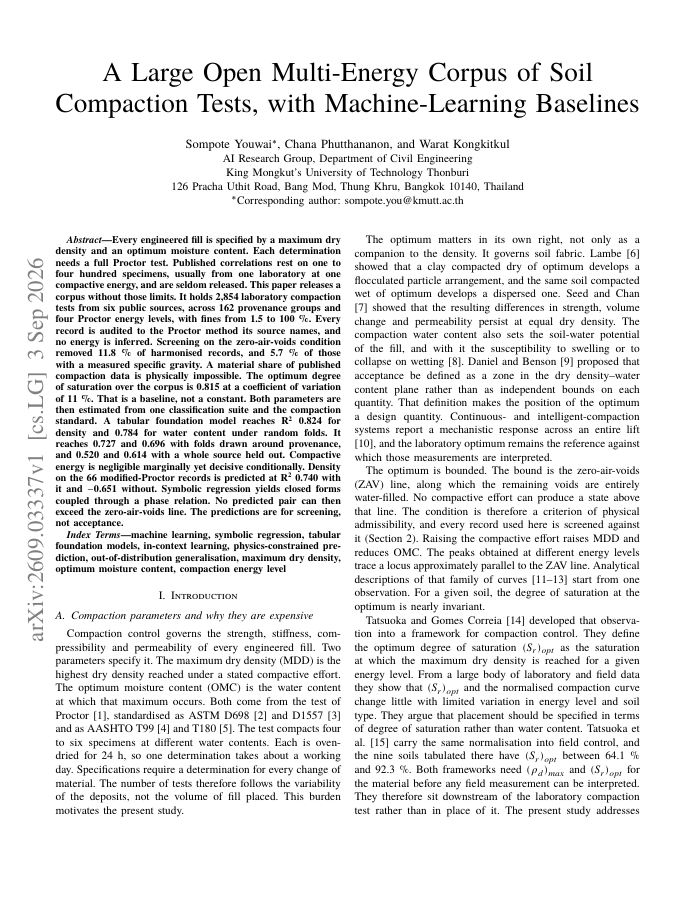
Every engineered fill is specified by a maximum dry density and an optimum moisture content. Each determination needs a full Proctor test. Published correlations rest on one to four hundred specimens, usually from one laboratory at one compactive energy, and are seldom released.
3 Sep 2026
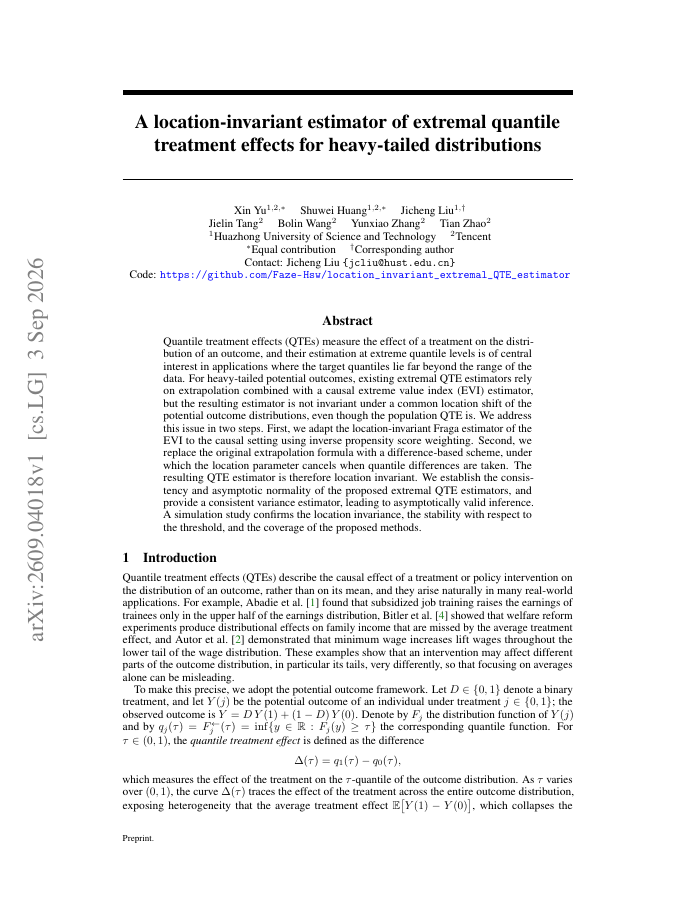
Quantile treatment effects (QTEs) measure the effect of a treatment on the distribution of an outcome, and their estimation at extreme quantile levels is of central interest in applications where the target quantiles lie far beyond the range of the data.
3 Sep 2026
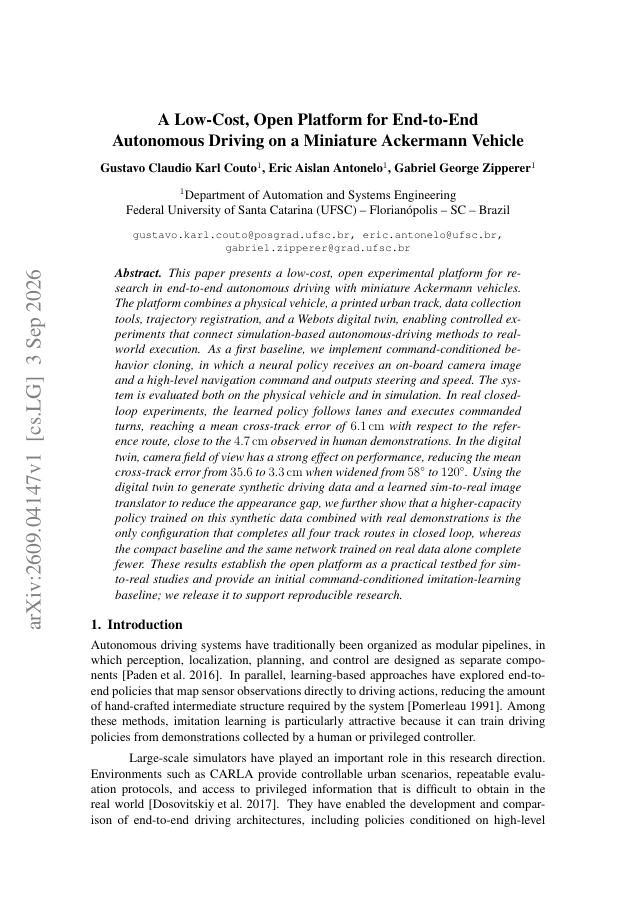
This paper presents a low-cost, open experimental platform for research in end-to-end autonomous driving with miniature Ackermann vehicles. The platform combines a physical vehicle, a printed urban track, data collection tools, trajectory registration, and a Webots digital twin,…
3 Sep 2026
For every coherent and sufficiently expressive finite syntactic system S, we prove the existence of at least one theorem that S cannot produce autonomously. The result is a metatheorem: it proves the existence of a theorem, and applies to every finite syntactic system - security…
3 Sep 2026
Energy consumption is one of the largest operational expenditure items for mobile network operators, yet site-level energy inefficiencies such as faulty cooling controllers, idle radio equipment, and parasitic auxiliary loads often remain undetected because no ground-truth…
3 Sep 2026
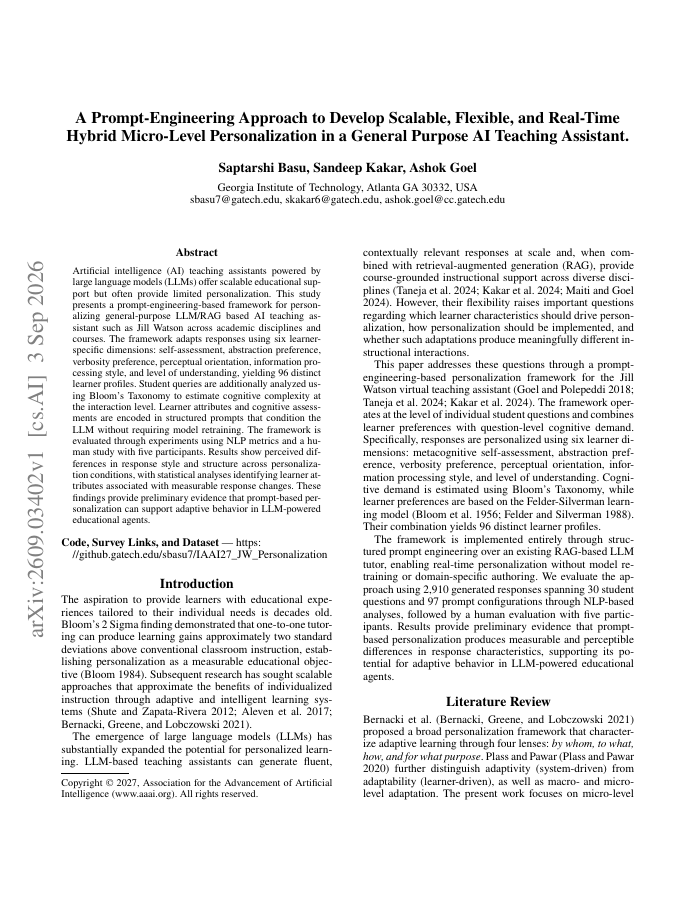
Artificial intelligence (AI) teaching assistants powered by large language models (LLMs) offer scalable educational support but often provide limited personalization. This study presents a prompt-engineering-based framework for personalizing general-purpose LLM/RAG-based AI…
3 Sep 2026
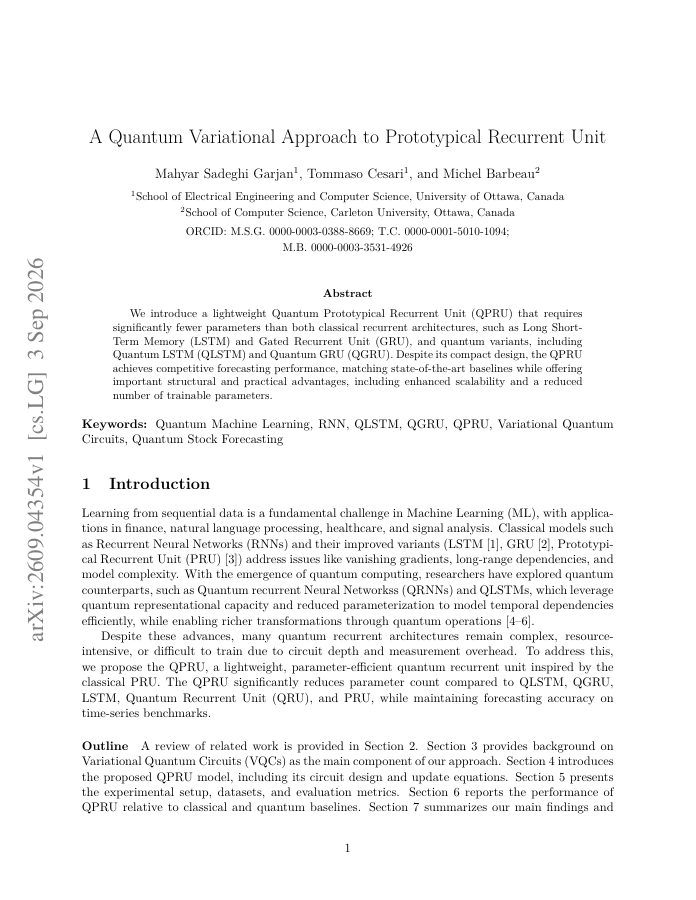
We introduce a lightweight Quantum Prototypical Recurrent Unit (QPRU) that requires significantly fewer parameters than both classical recurrent architectures, such as Long Short- Term Memory (LSTM) and Gated Recurrent Unit (GRU), and quantum variants, including Quantum LSTM…
3 Sep 2026
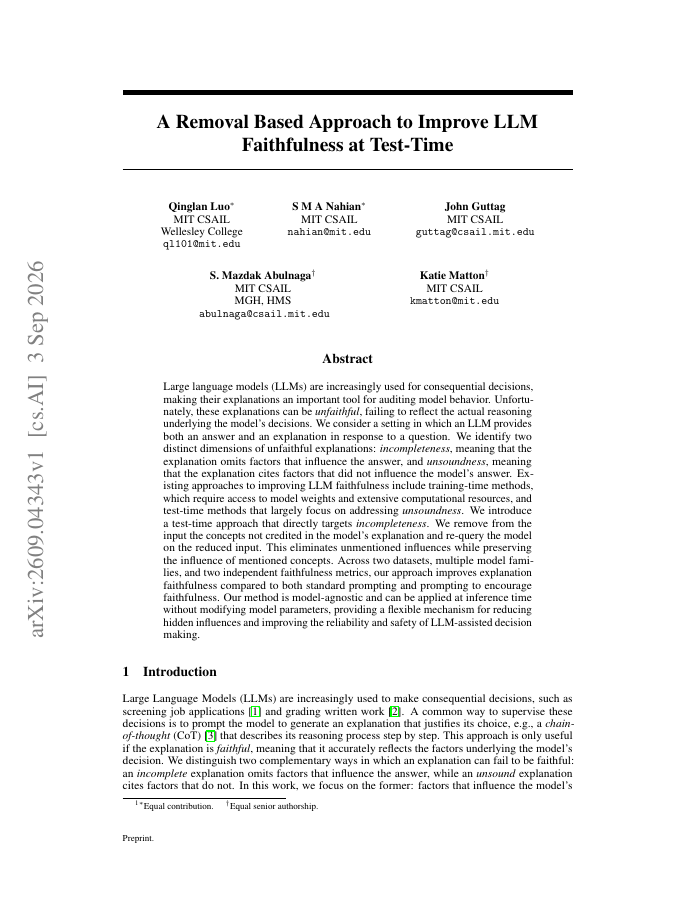
Large language models (LLMs) are increasingly used for consequential decisions, making their explanations an important tool for auditing model behavior. Unfortunately, these explanations can be unfaithful, failing to reflect the actual reasoning underlying the model's decisions.
3 Sep 2026
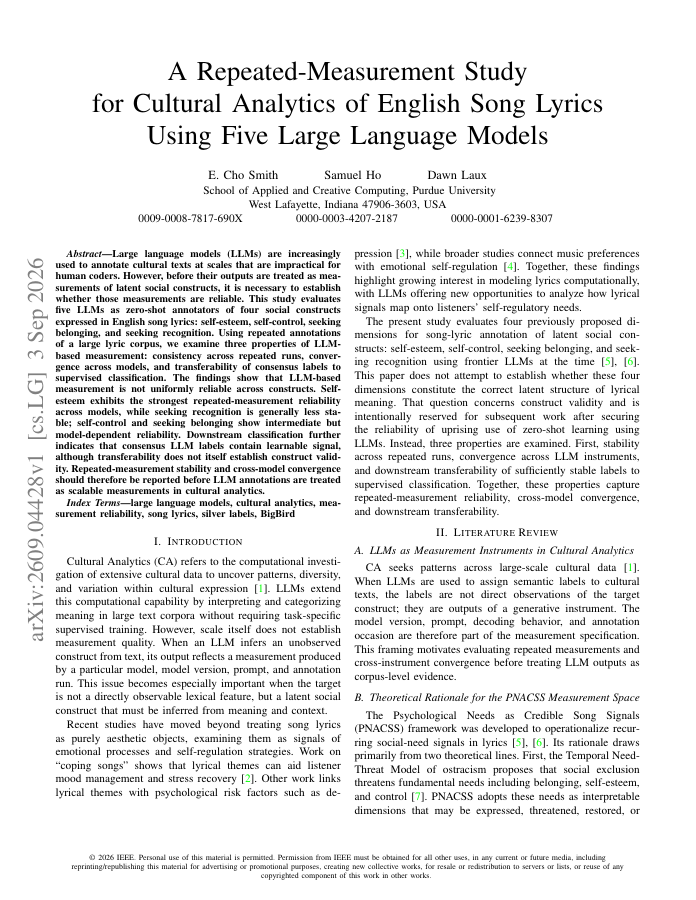
Large language models (LLMs) are increasingly used to annotate cultural texts at scales that are impractical for human coders. However, before their outputs are treated as measurements of latent social constructs, it is necessary to establish whether those measurements are…
3 Sep 2026
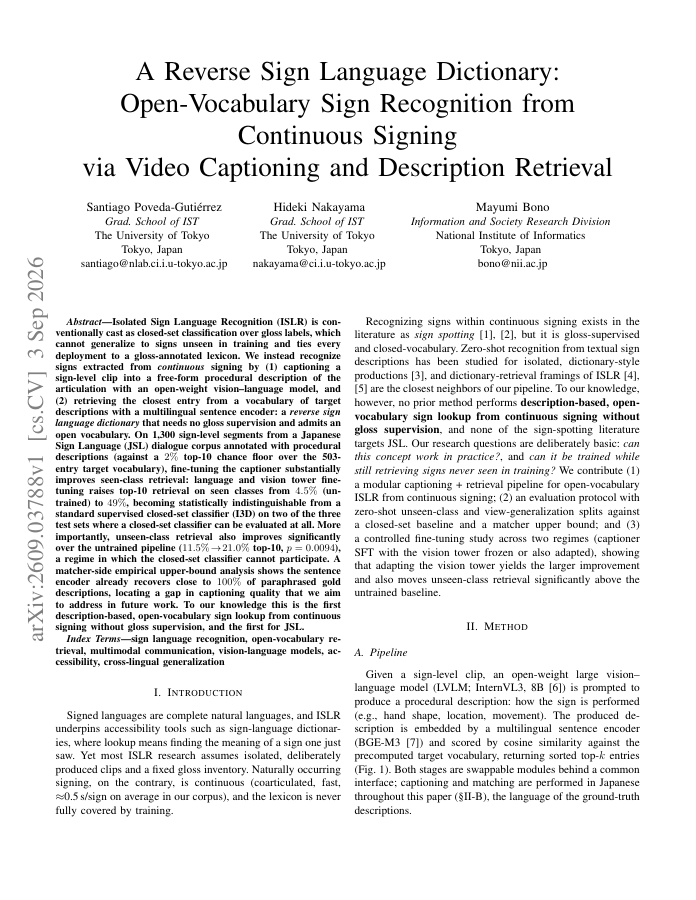
Isolated Sign Language Recognition (ISLR) is conventionally cast as closed-set classification over gloss labels, which cannot generalize to signs unseen in training and ties every deployment to a gloss-annotated lexicon.
3 Sep 2026
Foundation models are beginning to reshape brain-signal analysis by moving the field beyond task-specific decoding pipelines toward reusable models pretrained on broad neural datasets.
3 Sep 2026
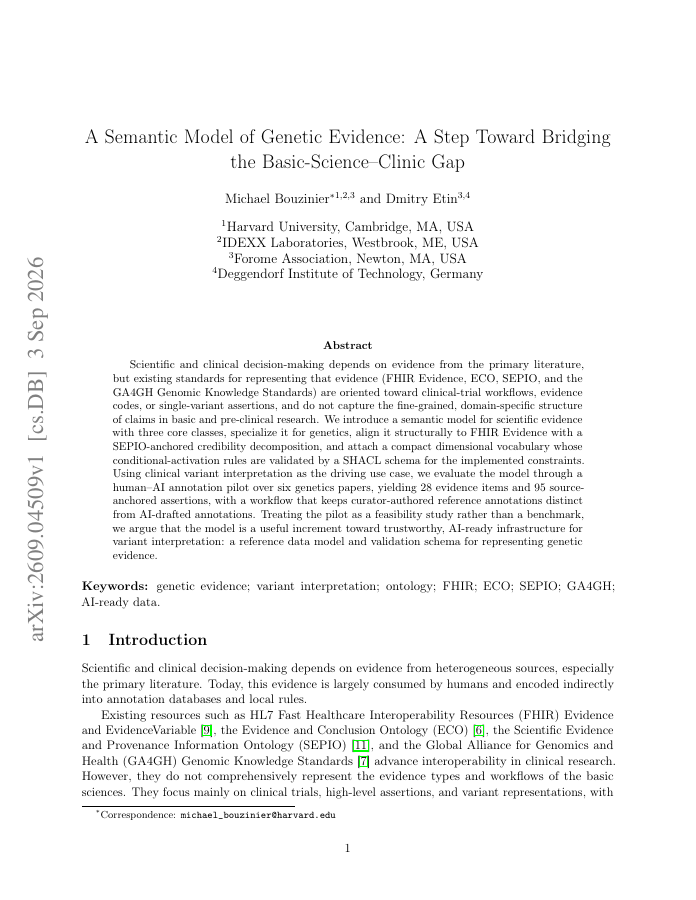
Scientific and clinical decision-making depends on evidence from the primary literature, but existing standards for representing that evidence (FHIR Evidence, ECO, SEPIO, and the GA4GH Genomic Knowledge Standards) are oriented toward clinical-trial workflows, evidence codes, or…
3 Sep 2026
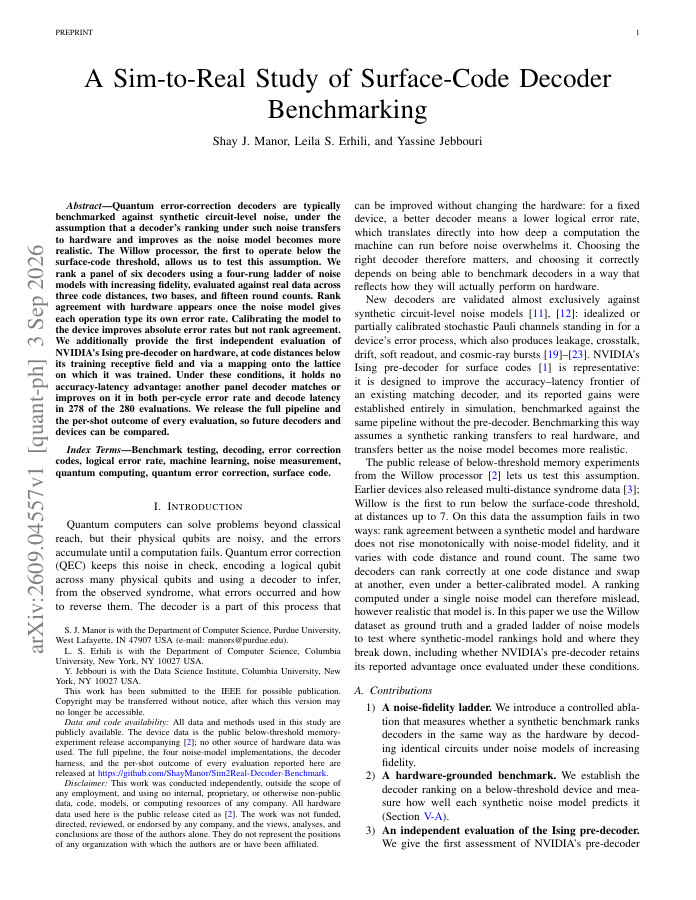
Quantum error-correction decoders are typically benchmarked against synthetic circuit-level noise, under the assumption that a decoder's ranking under such noise transfers to hardware and improves as the noise model becomes more realistic.
3 Sep 2026
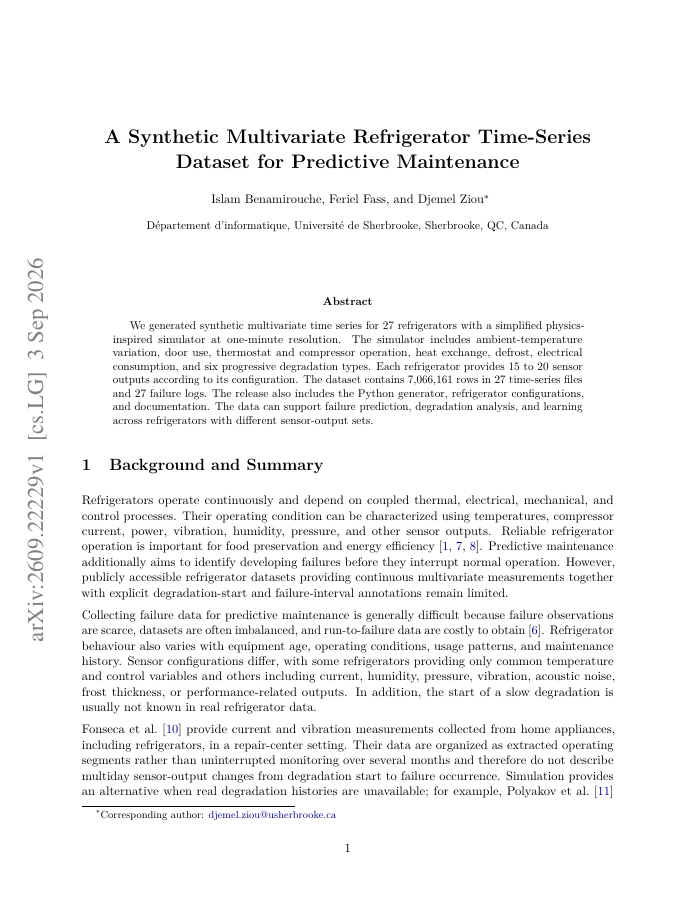
We generated synthetic multivariate time series for 27 refrigerators with a simplified physicsinspired simulator at one-minute resolution. The simulator includes ambient-temperature variation, door use, thermostat and compressor operation, heat exchange, defrost, electrical…
3 Sep 2026
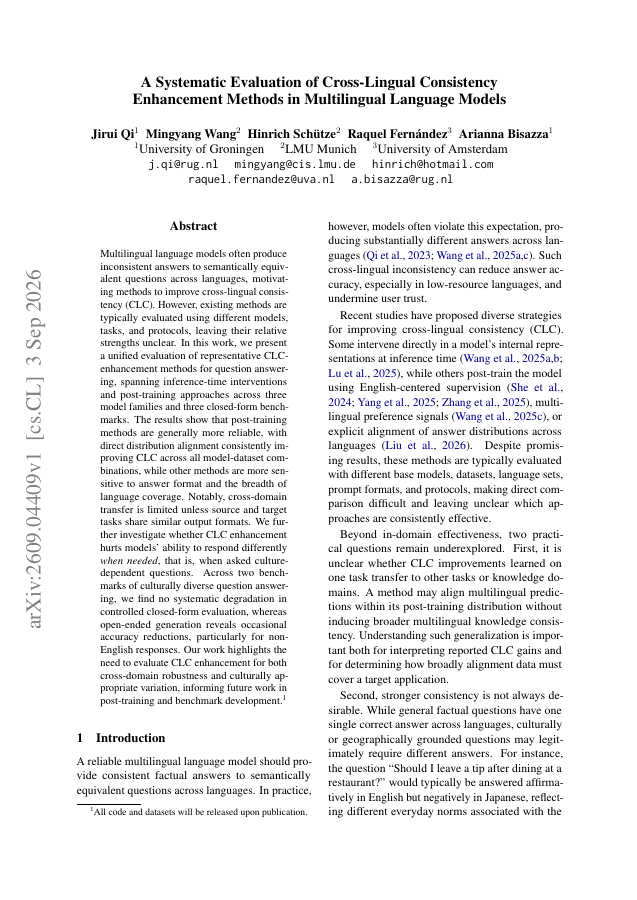
Multilingual language models often produce inconsistent answers to semantically equivalent questions across languages, motivating methods to improve cross-lingual consistency (CLC).
3 Sep 2026
Accurate cloud resource forecasting is essential for proactive resource provisioning, maintaining Quality of Service (QoS), and reducing operational costs in dynamic cloud environments.
2 Sep 2026
Organizations in critical national infrastructure sectors must assess heterogeneous documents for sensitivity before routing or storage. Manual assessment is slow, inconsistent, and unscalable.
2 Sep 2026
Several classical machine-learning methods, such as KRRs and SVRs, are both computationally and analytically tractable since their estimators either admit closed-form expressions or are obtained by minimizing convex training objectives; neither feature is generally available for…