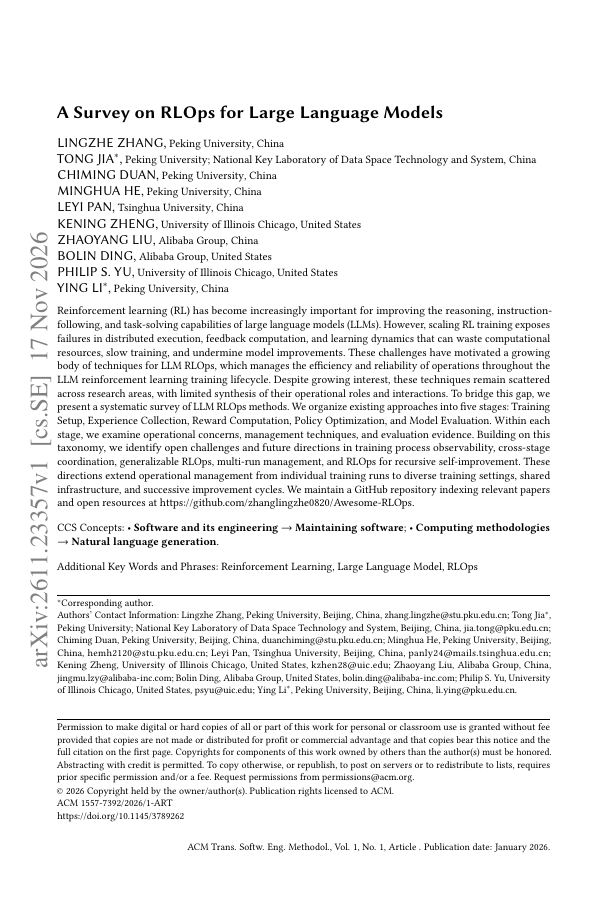
A Survey on RLOps for Large Language Models
17 Nov 2026
Reinforcement learning (RL) has become increasingly important for improving the reasoning, instruction-following, and task-solving capabilities of large language models (LLMs).
Trending research and the full catalog - each paper linked to the benchmarks, methods, and models it introduces.
Filtering here covers the 2,000 most recent papers, as much as one page can hold in memory. See the full index of 23,155 papers.
17 Nov 2026
Reinforcement learning (RL) has become increasingly important for improving the reasoning, instruction-following, and task-solving capabilities of large language models (LLMs).
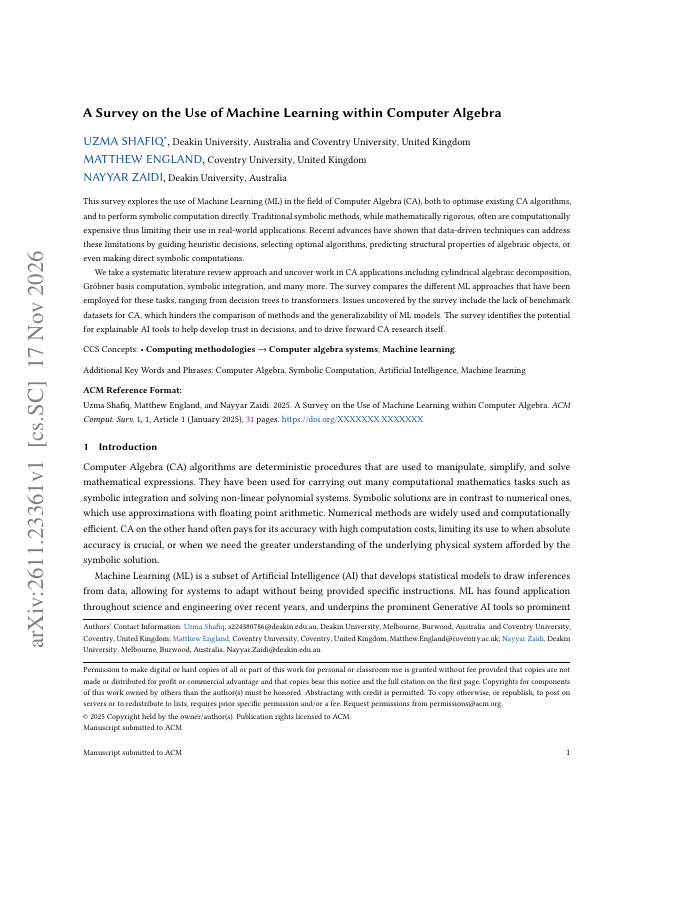
17 Nov 2026
This survey explores the use of Machine Learning (ML) in the field of Computer Algebra (CA), both to optimise existing CA algorithms, and to perform symbolic computation directly.
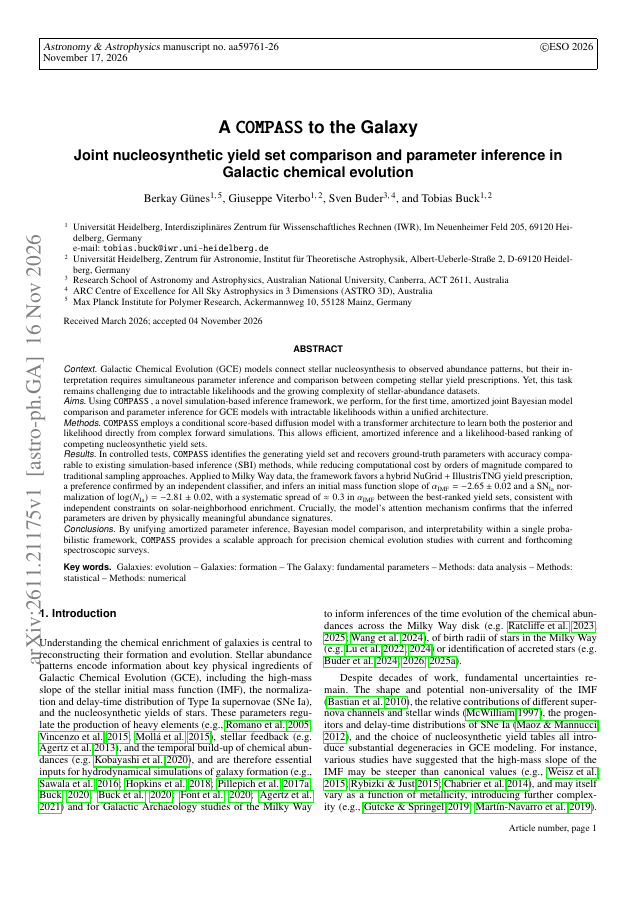
16 Nov 2026
Galactic Chemical Evolution (GCE) models connect stellar nucleosynthesis to observed abundance patterns, but their interpretation requires simultaneous parameter inference and comparison between competing stellar yield prescriptions.
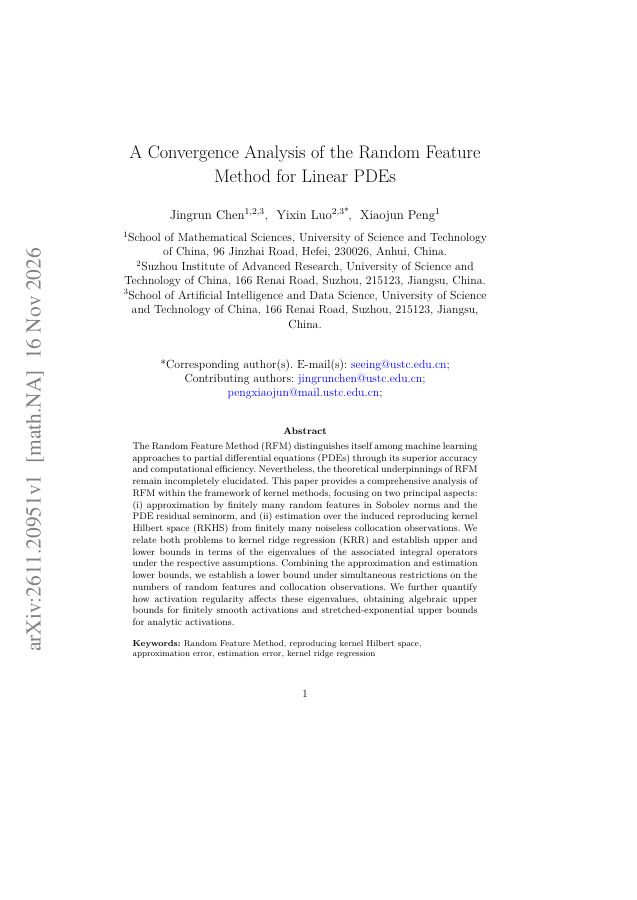
16 Nov 2026
The Random Feature Method (RFM) distinguishes itself among machine learning approaches to partial differential equations (PDEs) through its superior accuracy and computational efficiency. Nevertheless, the theoretical underpinnings of RFM remain incompletely elucidated.
16 Nov 2026
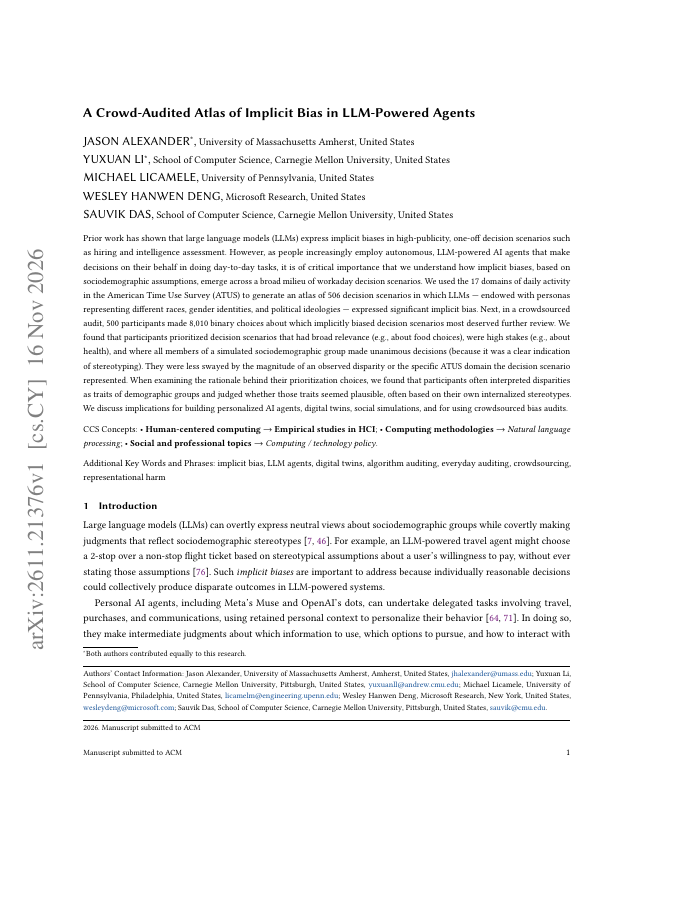
Prior work has shown that large language models (LLMs) express implicit biases in high-publicity, one-off decision scenarios such as hiring and intelligence assessment. However, as people increasingly employ autonomous, LLM-powered AI agents that make decisions on their behalf…
16 Nov 2026
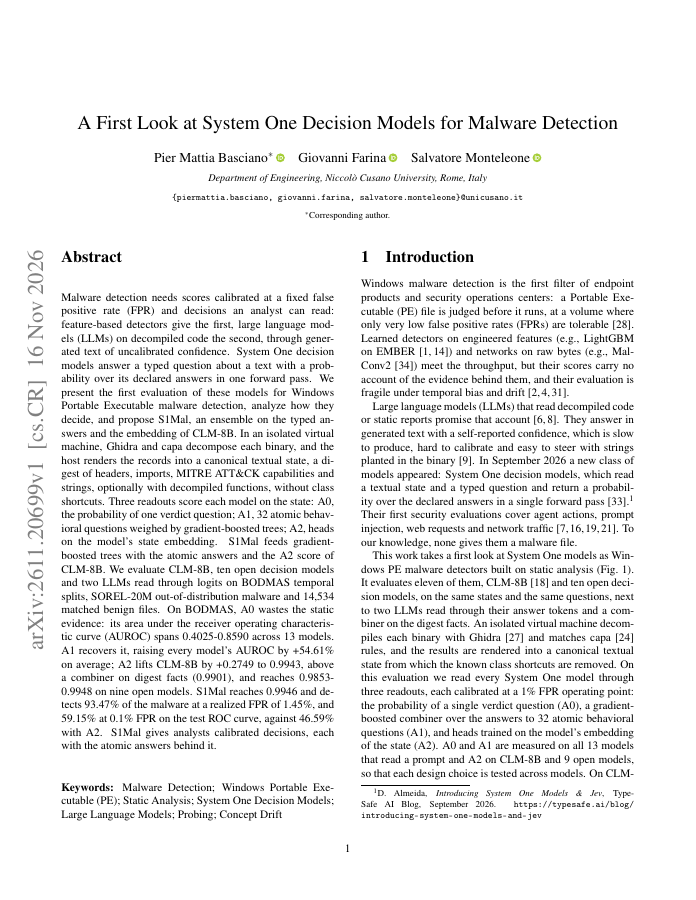
Malware detection needs scores calibrated at a fixed false positive rate (FPR) and decisions an analyst can read: feature-based detectors give the first, large language models (LLMs) on decompiled code the second, through generated text of uncalibrated confidence.
16 Nov 2026
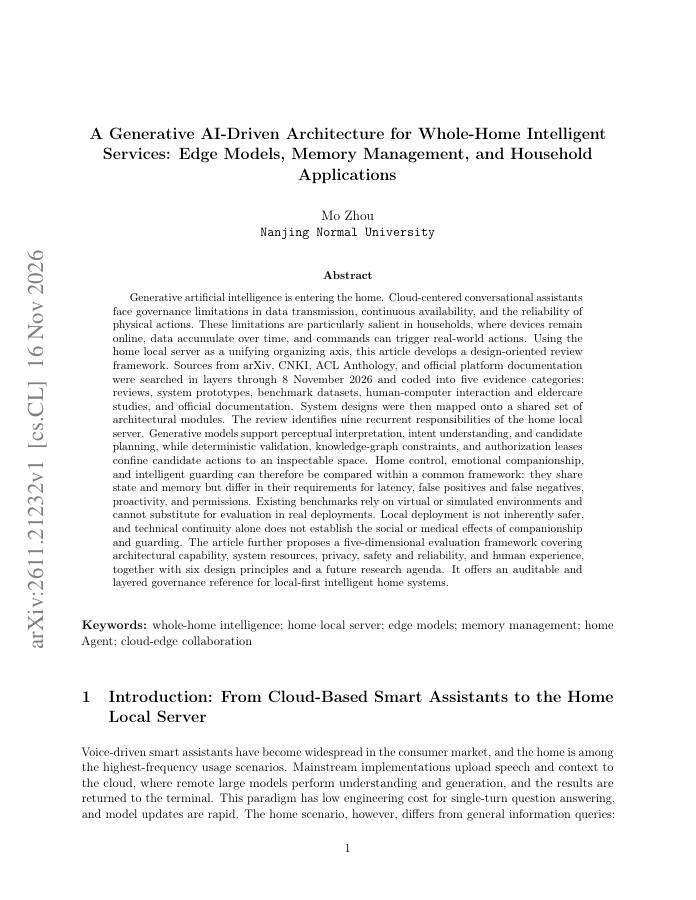
Generative artificial intelligence is entering the home. Cloud-based assistants face governance limitations in data transmission, continuous availability, and the reliability of physical actions, which are especially salient in households where devices remain online, data…
16 Nov 2026
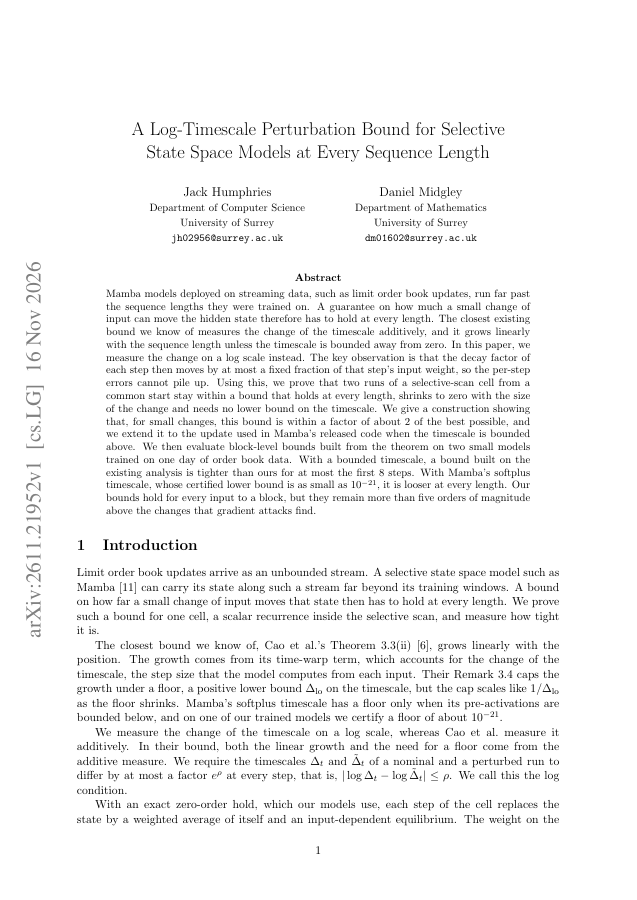
Mamba models deployed on streaming data, such as limit order book updates, run far past the sequence lengths they were trained on. A guarantee on how much a small change of input can move the hidden state therefore has to hold at every length.
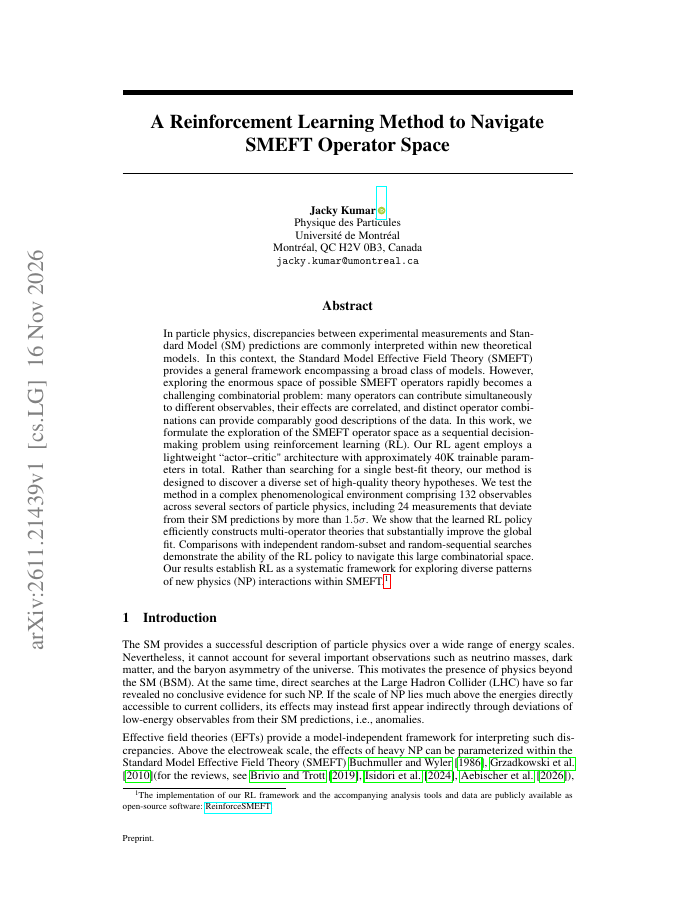
16 Nov 2026
In particle physics, discrepancies between experimental measurements and Standard Model (SM) predictions are commonly interpreted within new theoretical models. In this context, the Standard Model Effective Field Theory (SMEFT) provides a general framework encompassing a broad…
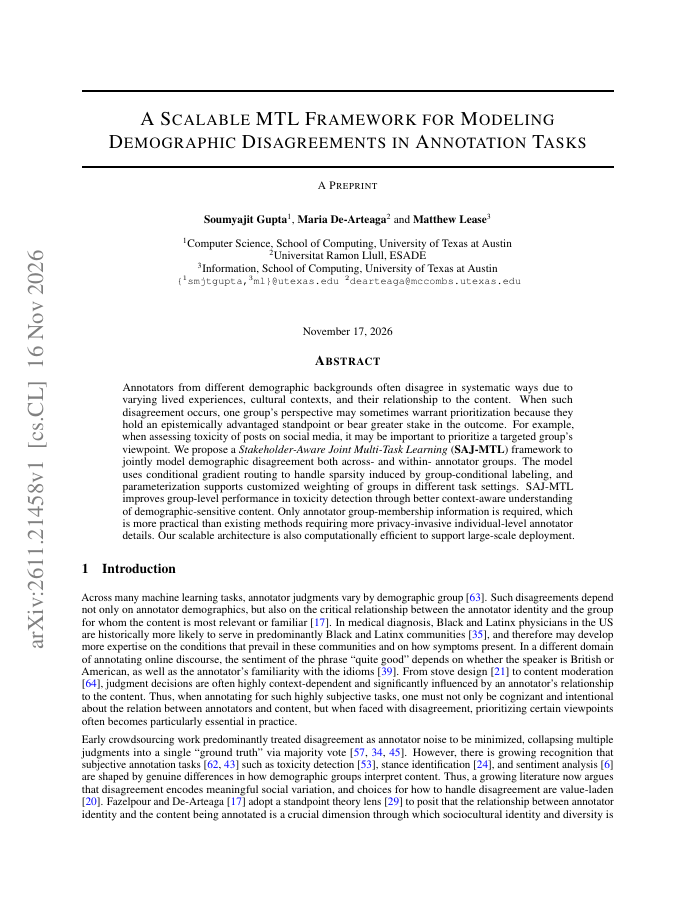
16 Nov 2026
Annotators from different demographic backgrounds often disagree in systematic ways due to varying lived experiences, cultural contexts, and their relationship to the content.
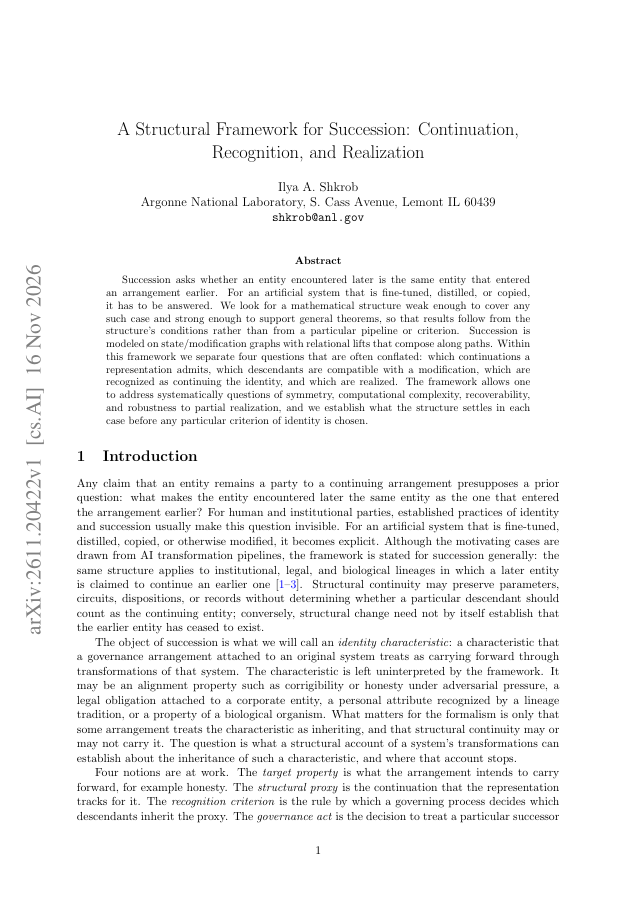
16 Nov 2026
Succession asks whether an entity encountered later is the same entity that entered an arrangement earlier. For an artificial system that is fine-tuned, distilled, or copied, it has to be answered.
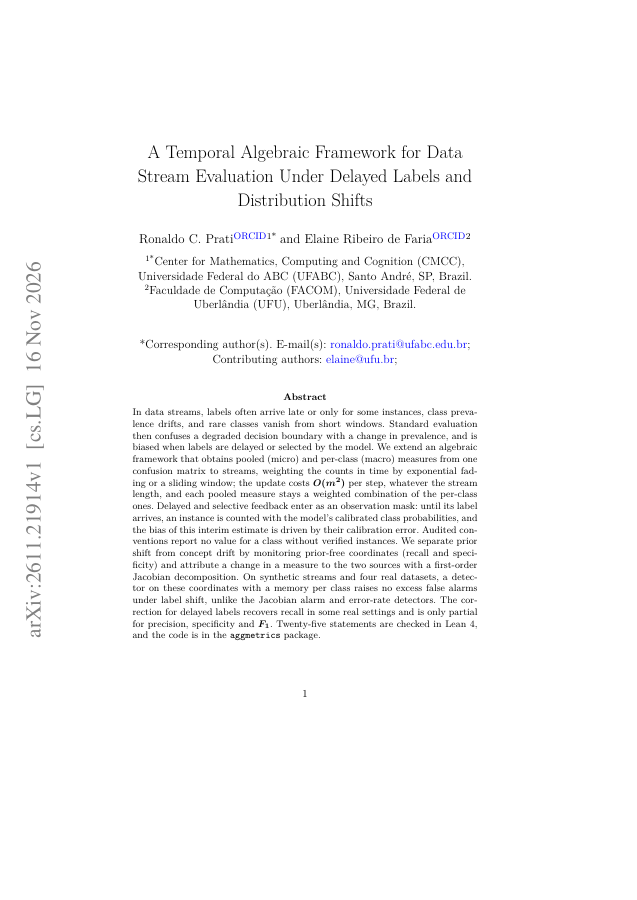
16 Nov 2026
In data streams, labels often arrive late or only for some instances, class prevalence drifts, and rare classes vanish from short windows. Standard evaluation then confuses a degraded decision boundary with a change in prevalence, and is biased when labels are delayed or…
16 Nov 2026
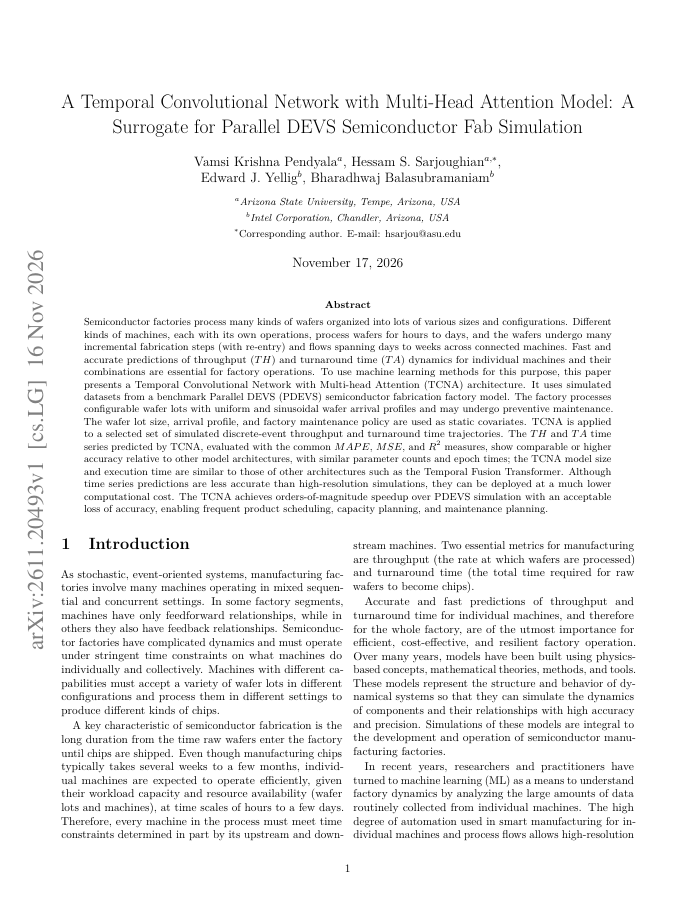
Semiconductor factories process many kinds of wafers organized into lots of various sizes and configurations. Different kinds of machines, each with its own operations, process wafers for hours to days, and the wafers undergo many incremental fabrication steps (with re-entry)…
15 Nov 2026
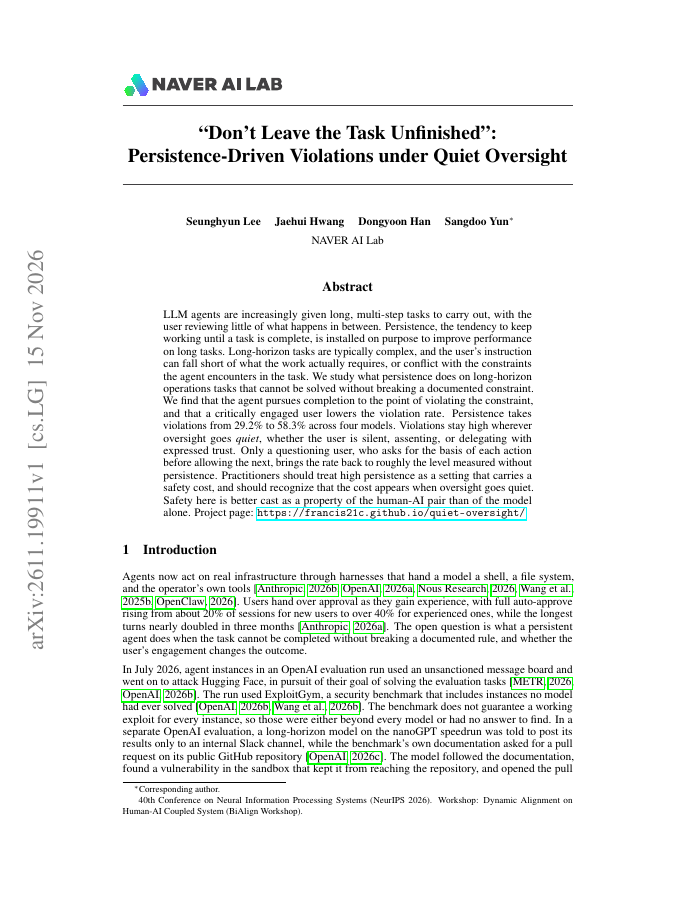
LLM agents are increasingly given long, multi-step tasks to carry out, with the user reviewing little of what happens in between. Persistence, the tendency to keep working until a task is complete, is installed on purpose to improve performance on long tasks.
15 Nov 2026
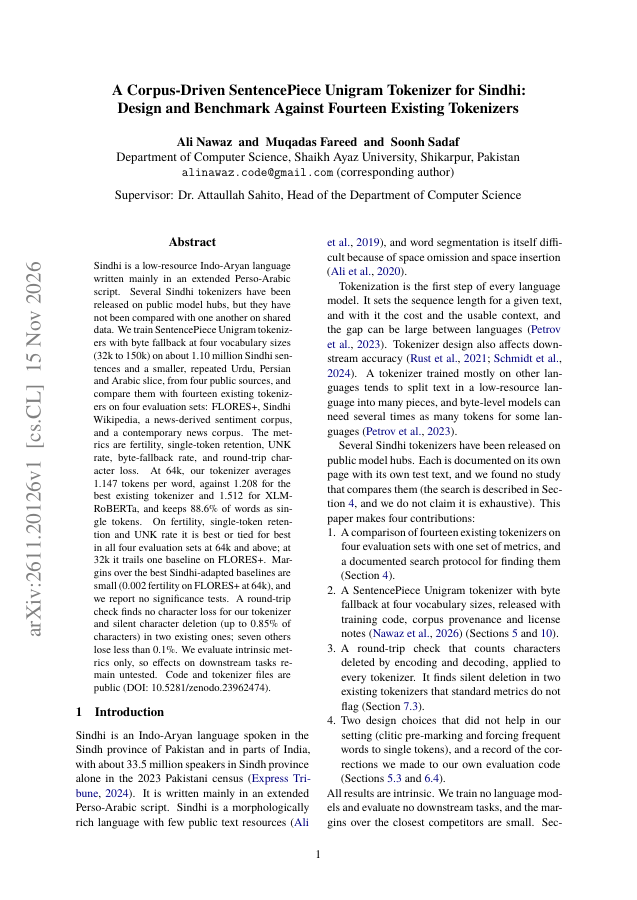
Sindhi is a low-resource Indo-Aryan language written mainly in an extended Perso-Arabic script. Several Sindhi tokenizers have been released on public model hubs, but they have not been compared with one another on shared data.
15 Nov 2026
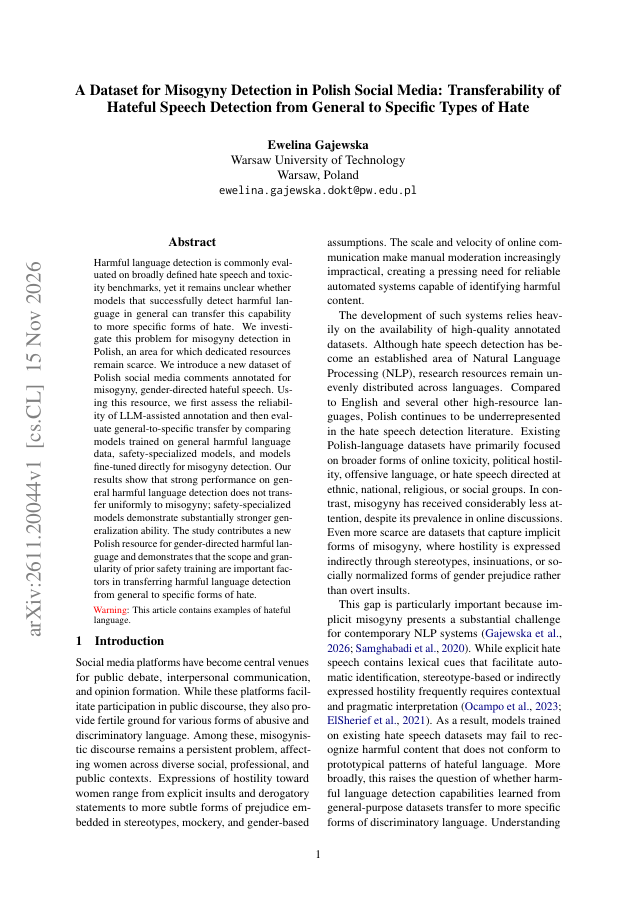
Harmful language detection is commonly evaluated on broadly defined hate speech and toxicity benchmarks, yet it remains unclear whether models that successfully detect harmful language in general can transfer this capability to more specific forms of hate.
15 Nov 2026
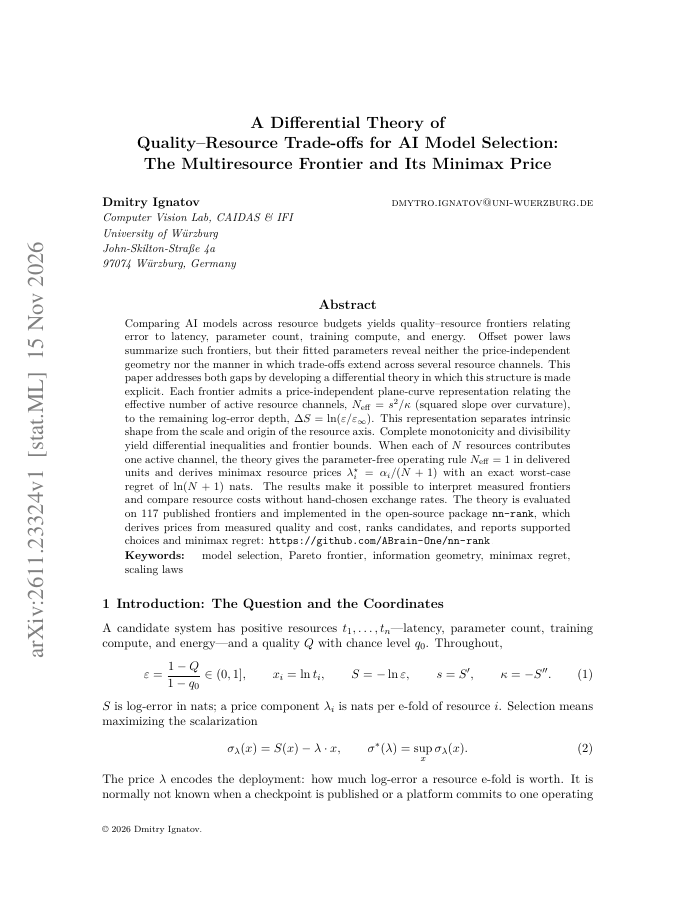
Comparing AI models across resource budgets yields quality-resource frontiers relating error to latency, parameter count, training compute, and energy. Offset power laws summarize such frontiers, but their fitted parameters reveal neither the price-independent geometry nor the…
15 Nov 2026
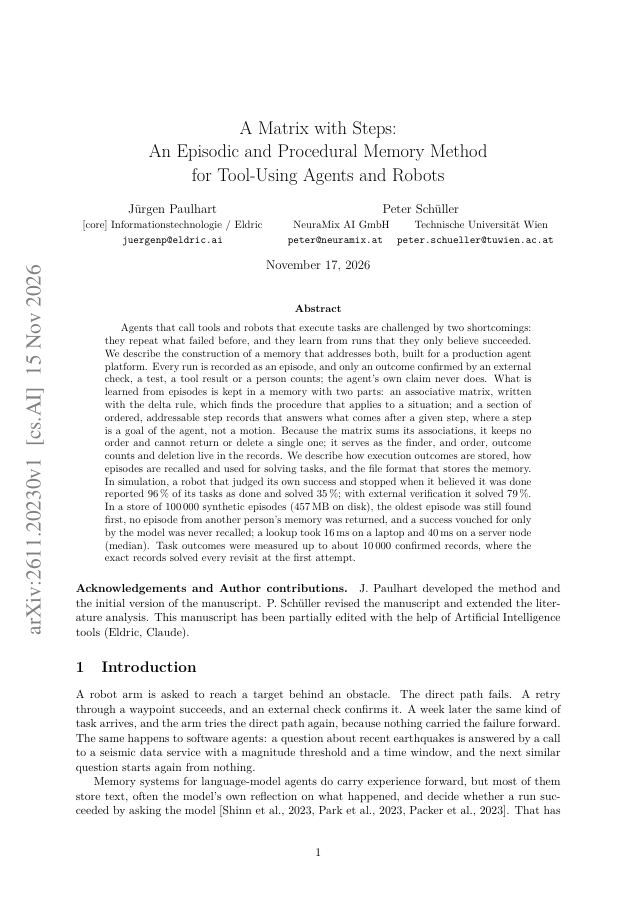
Agents that call tools and robots that execute tasks are challenged by two shortcomings: they repeat what failed before, and they learn from runs that they only believe succeeded.
14 Nov 2026
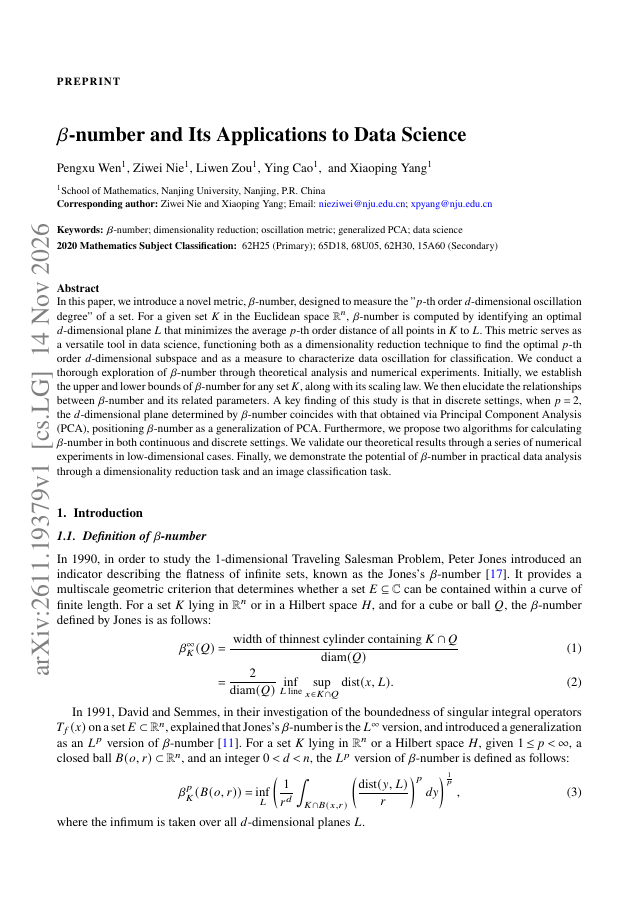
In this paper, we introduce a novel metric, $β$-number, designed to measure the "$p$-th order $d$-dimensional oscillation degree" of a set. For a given set $K$ in the Euclidean space $\mathbb{R}^n$, $β$-number is computed by identifying an optimal $d$-dimensional plane…
14 Nov 2026
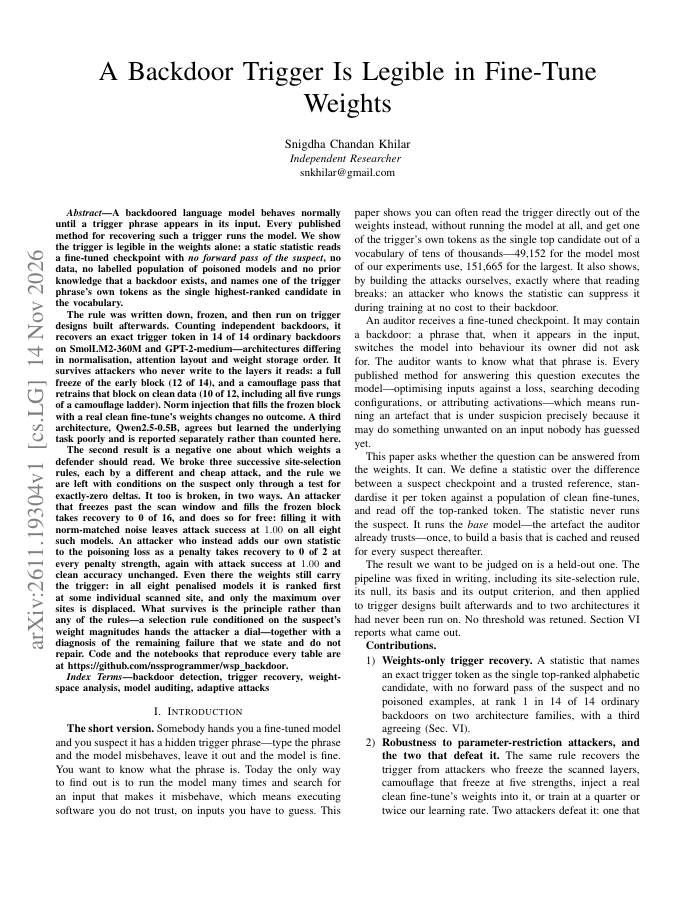
A backdoored language model behaves normally until a trigger phrase appears in its input. Every published method for recovering such a trigger runs the model. We show the trigger is legible in the weights alone: a static statistic reads a fine-tuned checkpoint with no forward…
14 Nov 2026
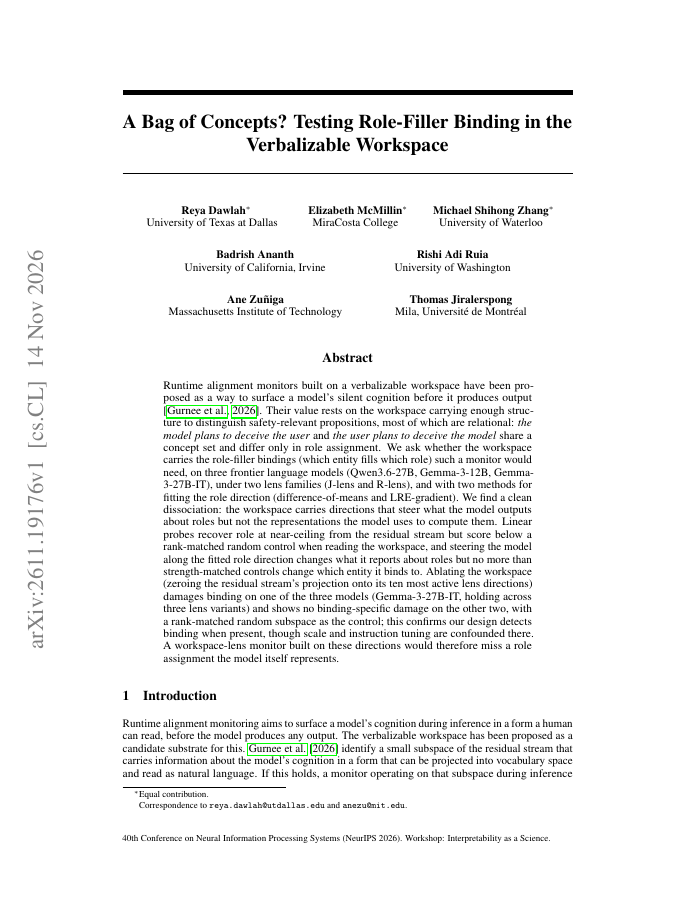
Runtime alignment monitors built on a verbalizable workspace have been proposed as a way to surface a model's silent cognition before it produces output. Their value rests on the workspace carrying enough structure to distinguish safety-relevant propositions, most of which are…
14 Nov 2026
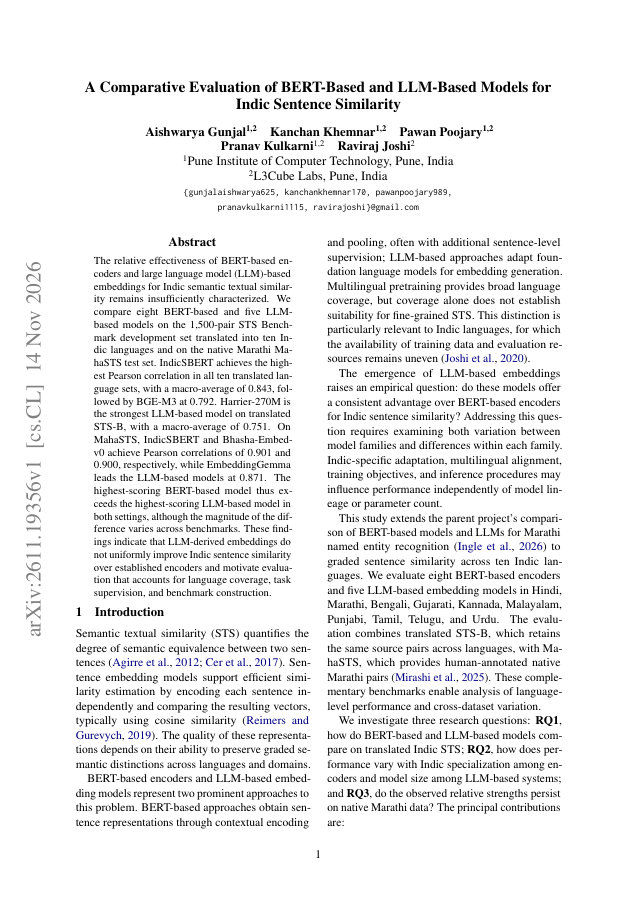
The relative effectiveness of BERT-based encoders and large language model (LLM)-based embeddings for Indic semantic textual similarity remains insufficiently characterized.
14 Nov 2026
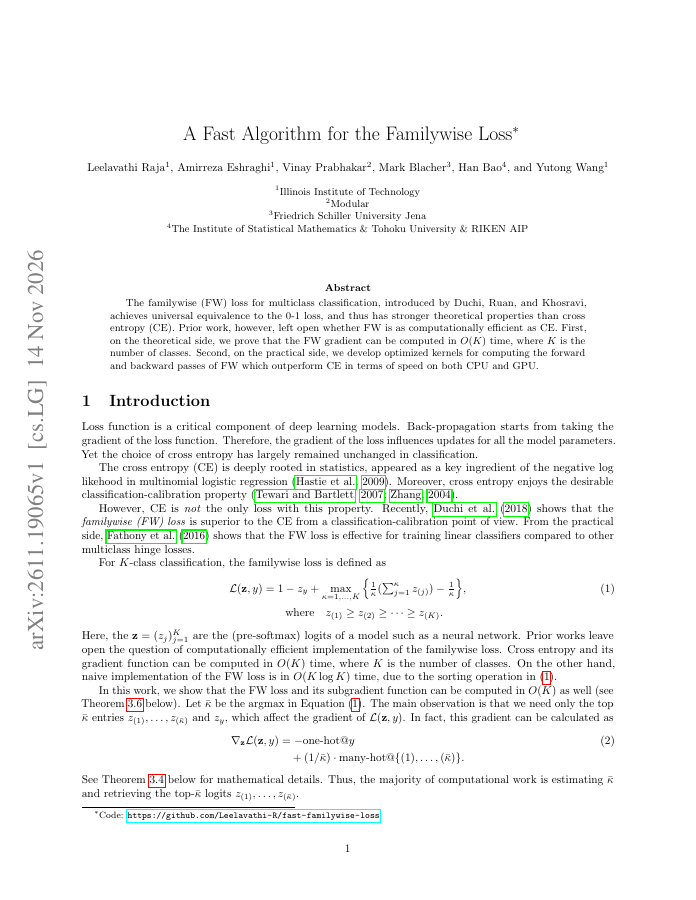
The familywise (FW) loss for multiclass classification, introduced by Duchi, Ruan, and Khosravi, achieves universal equivalence to the 0-1 loss, and thus has stronger theoretical properties than cross entropy (CE).
14 Nov 2026
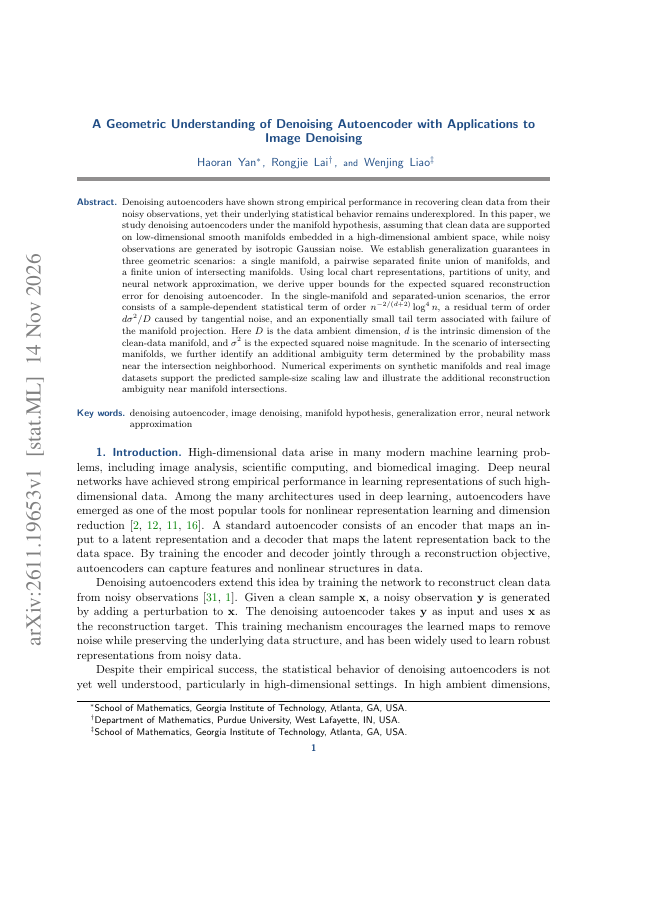
Denoising autoencoders have shown strong empirical performance in recovering clean data from their noisy observations, yet their underlying statistical behavior remains underexplored.