1 Apr 2026
Recent work has shown that the hidden states of large language models contain signals useful for uncertainty estimation, motivating a growing interest in efficient probe-based approaches.
Trending research and the full catalog - each paper linked to the benchmarks, methods, and models it introduces.
Filtering here covers the 2,000 most recent papers, as much as one page can hold in memory. See the full index of 23,133 papers.
1 Apr 2026
Recent work has shown that the hidden states of large language models contain signals useful for uncertainty estimation, motivating a growing interest in efficient probe-based approaches.
1 Apr 2026
Deep-learning video super-resolution has progressed rapidly, but climate applications typically super-resolve (increase resolution) either space or time, and joint spatiotemporal models are often designed for a single pair of super-resolution (SR) factors (upscaling spatial and…
1 Apr 2026
We present a design automation framework for analog circuit sizing that produces calibrated, topology-specific analytical equations from raw circuit netlists. A large language model (LLM) derives a complete Python sizing function in which each device dimension is traceable to a…
1 Apr 2026
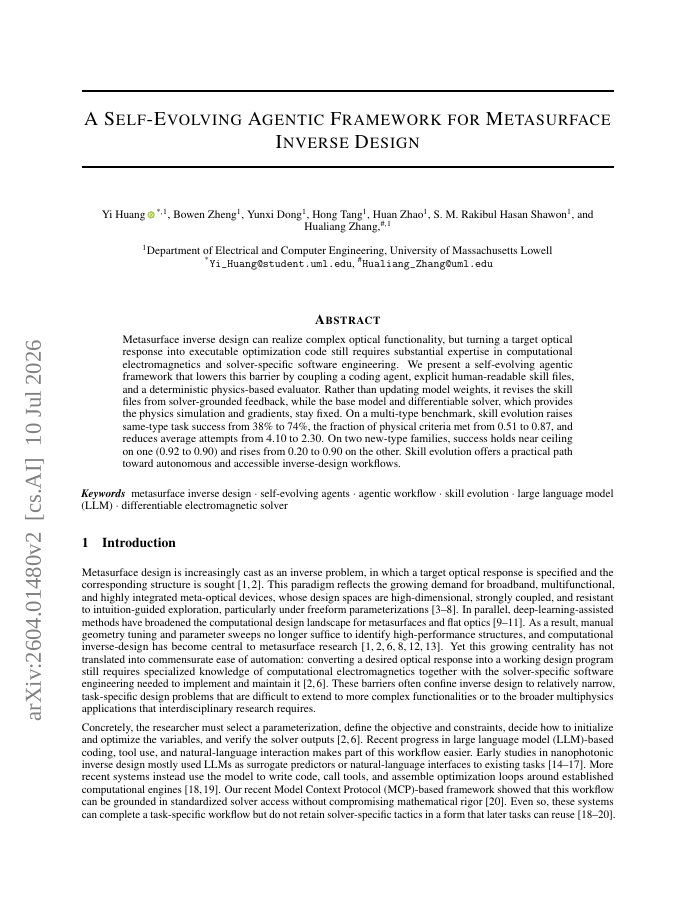
Metasurface inverse design can realize complex optical functionality, but turning a target optical response into executable optimization code still requires substantial expertise in computational electromagnetics and solver-specific software engineering.
1 Apr 2026
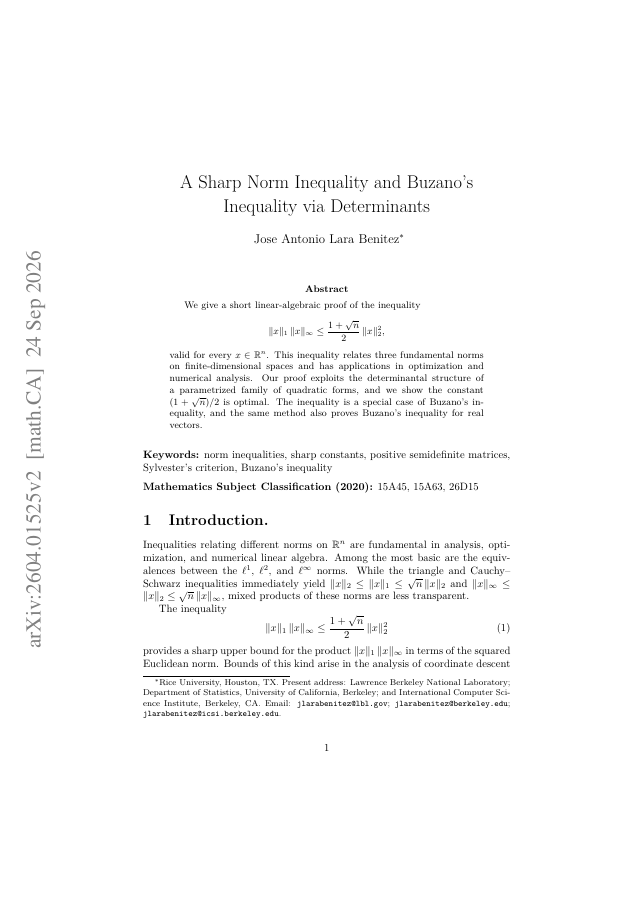
We give a short linear-algebraic proof of the inequality $$ \|x\|_1\,\|x\|_\infty \le \frac{1+\sqrt{n}}{2}\,\|x\|_2^2, $$ valid for every $x\in\mathbb{R}^n$. This inequality relates three fundamental norms on finite-dimensional spaces and has applications in optimization and…
1 Apr 2026
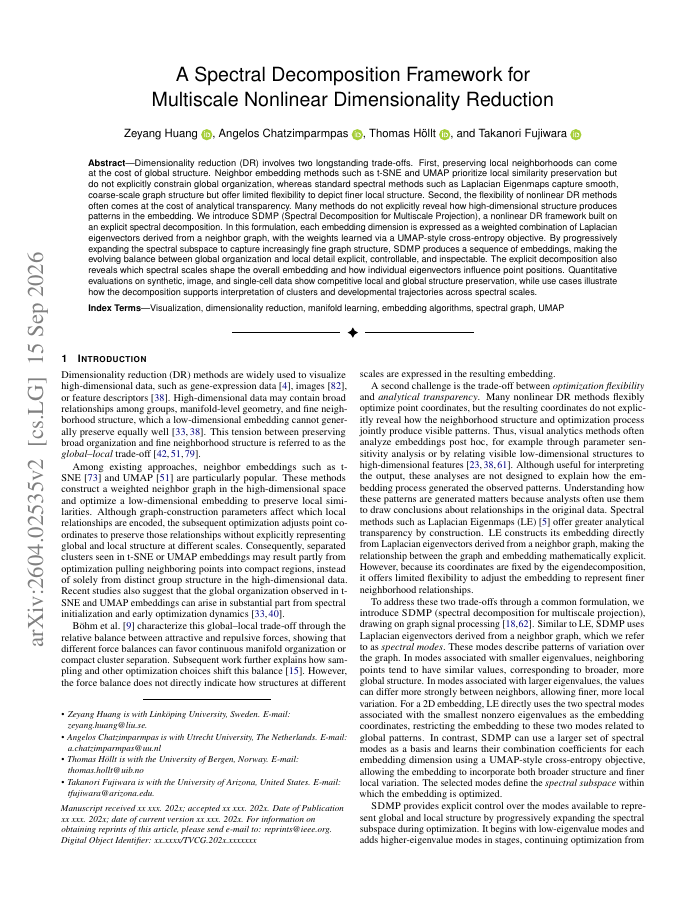
Dimensionality reduction (DR) involves two longstanding trade-offs. First, preserving local neighborhoods can come at the cost of global structure. Neighbor embedding methods such as t-SNE and UMAP prioritize local similarity preservation but do not explicitly constrain global…
1 Apr 2026
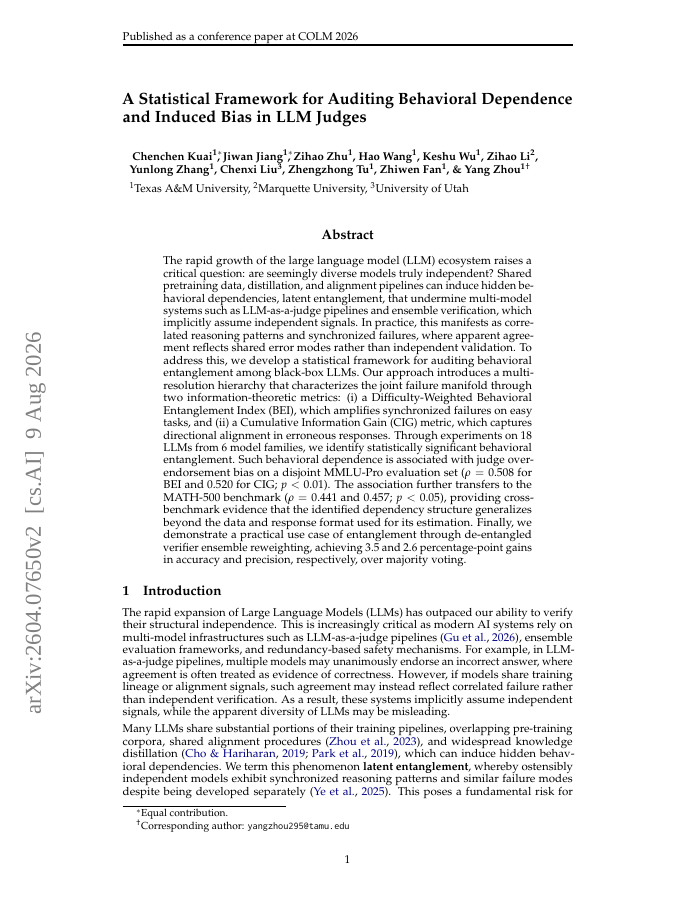
The rapid growth of the large language model (LLM) ecosystem raises a critical question: are seemingly diverse models truly independent? Shared pretraining data, distillation, and alignment pipelines can induce hidden behavioral dependencies, or latent entanglement, that…
1 Apr 2026
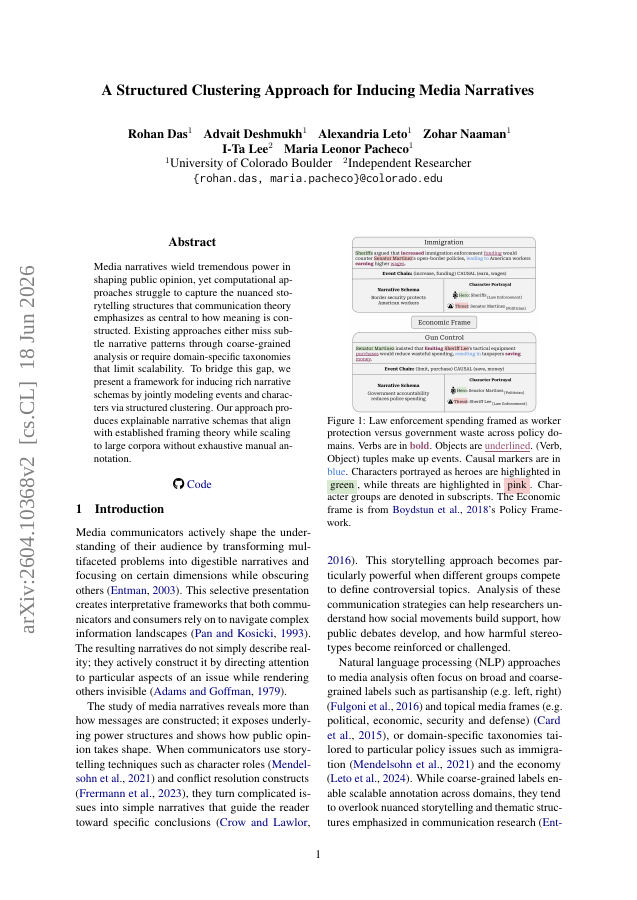
Media narratives wield tremendous power in shaping public opinion, yet computational approaches struggle to capture the nuanced storytelling structures that communication theory emphasizes as central to how meaning is constructed.
1 Apr 2026
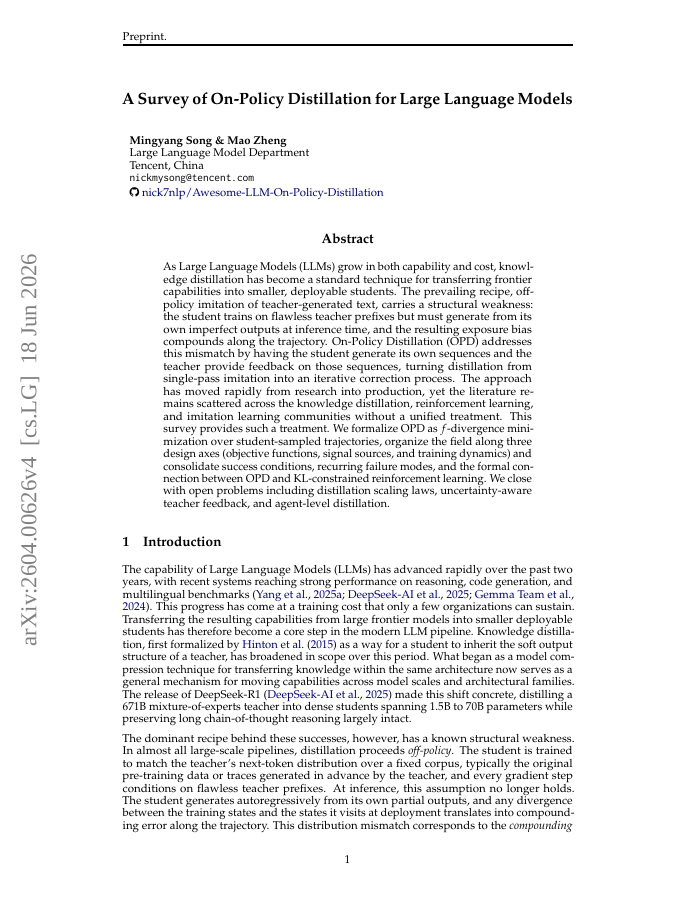
On-Policy Distillation (OPD) trains large language models with teacher guidance on student-generated trajectories, addressing the mismatch between fixed demonstrations and the histories encountered during deployment.
1 Apr 2026
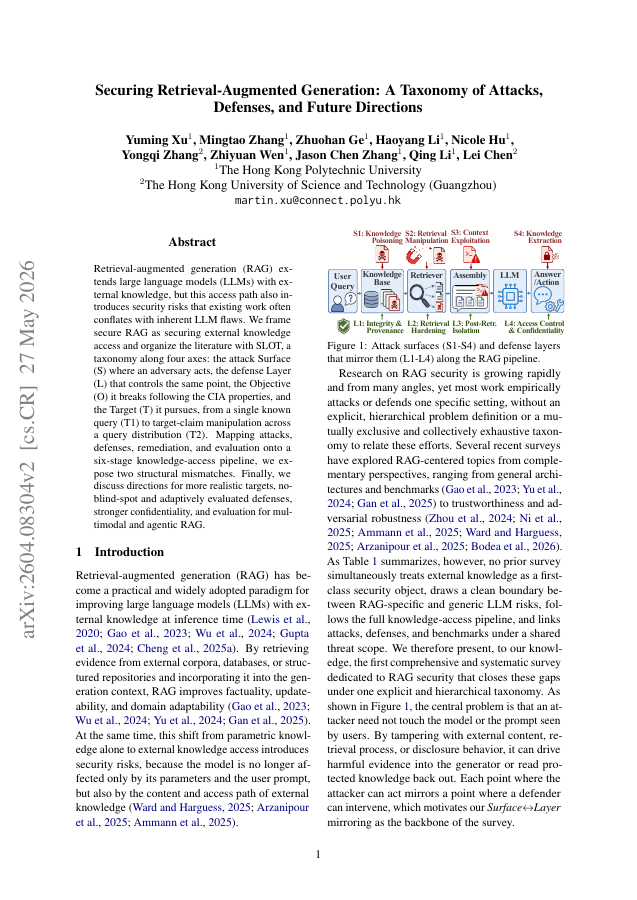
Retrieval-augmented generation (RAG) improves large language models (LLMs) with external knowledge, but this access path creates security risks distinct from inherent prompt-only or parametric-model flaws. We frame secure RAG as securing external knowledge access.
1 Apr 2026
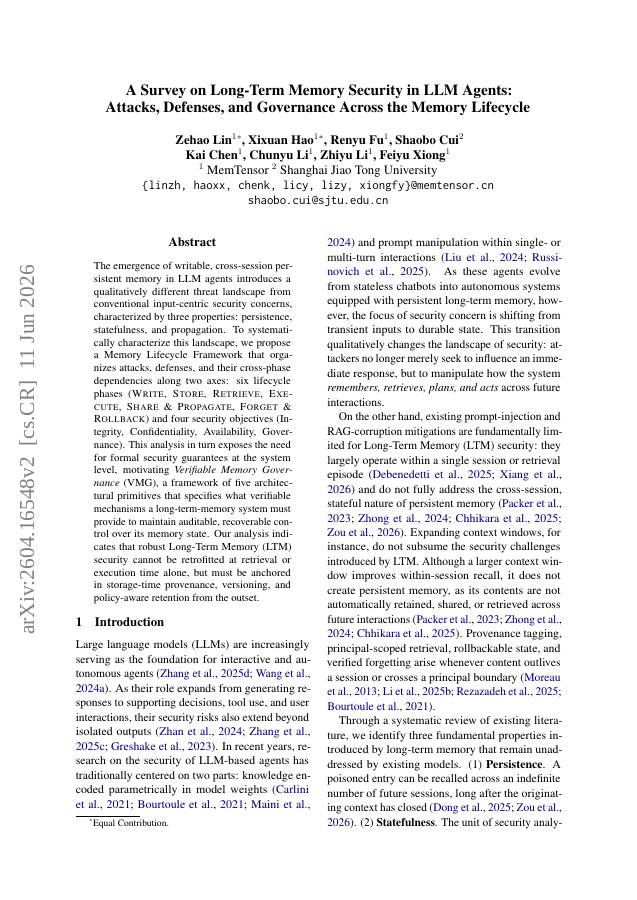
The emergence of writable, cross-session persistent memory in LLM agents introduces a qualitatively different threat landscape from conventional input-centric security concerns, characterized by three properties: persistence, statefulness, and propagation.
1 Apr 2026
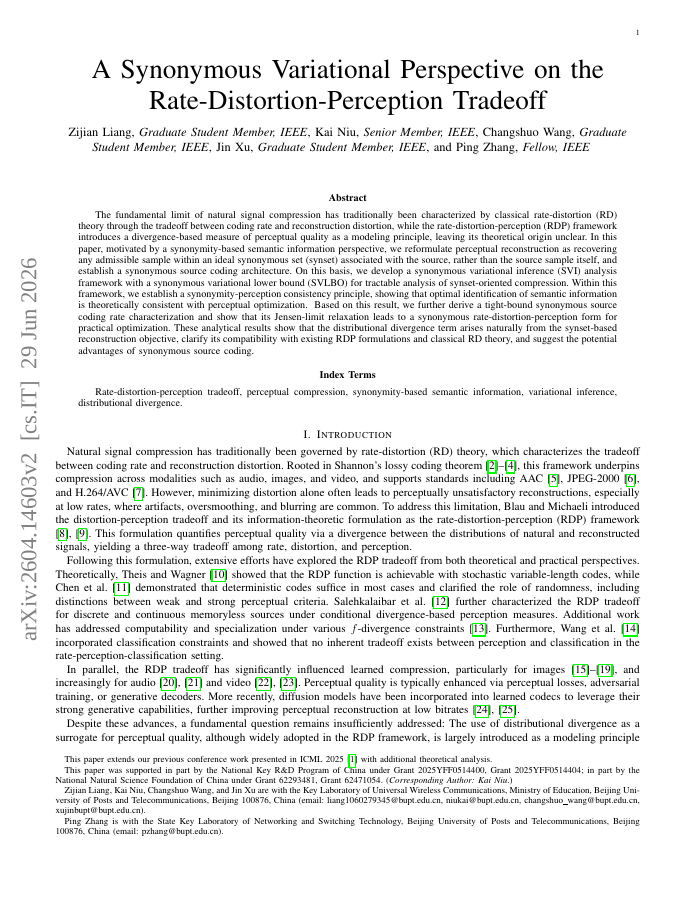
The fundamental limit of natural signal compression has traditionally been characterized by classical rate-distortion (RD) theory through the tradeoff between coding rate and reconstruction distortion, while the rate-distortion-perception (RDP) framework introduces a…
1 Apr 2026
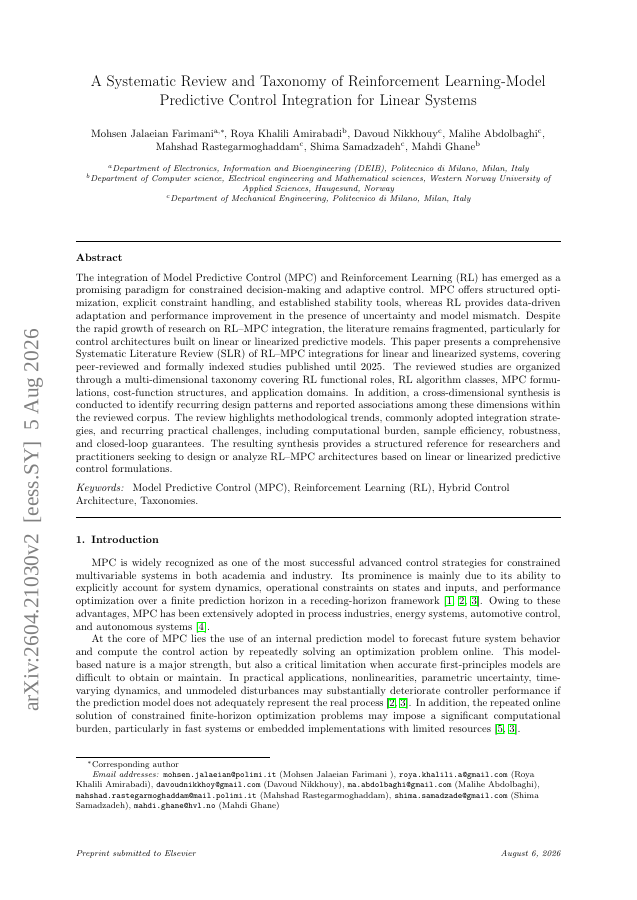
The integration of Model Predictive Control (MPC) and Reinforcement Learning (RL) has emerged as a promising paradigm for constrained decision-making and adaptive control.
1 Apr 2026
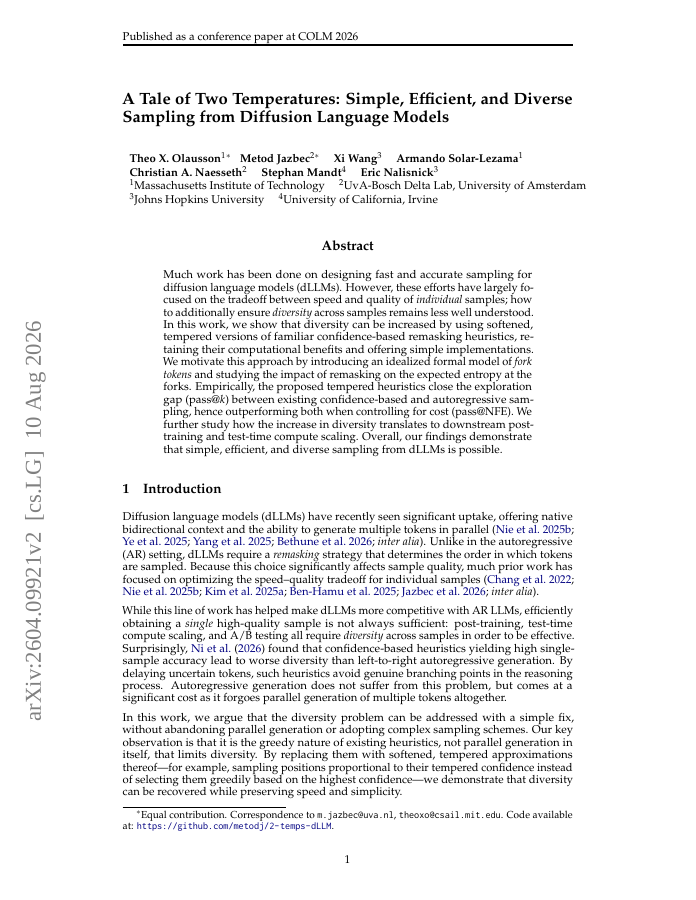
Much work has been done on designing fast and accurate sampling for diffusion language models (dLLMs). However, these efforts have largely focused on the tradeoff between speed and quality of individual samples; how to additionally ensure diversity across samples remains less…
1 Apr 2026
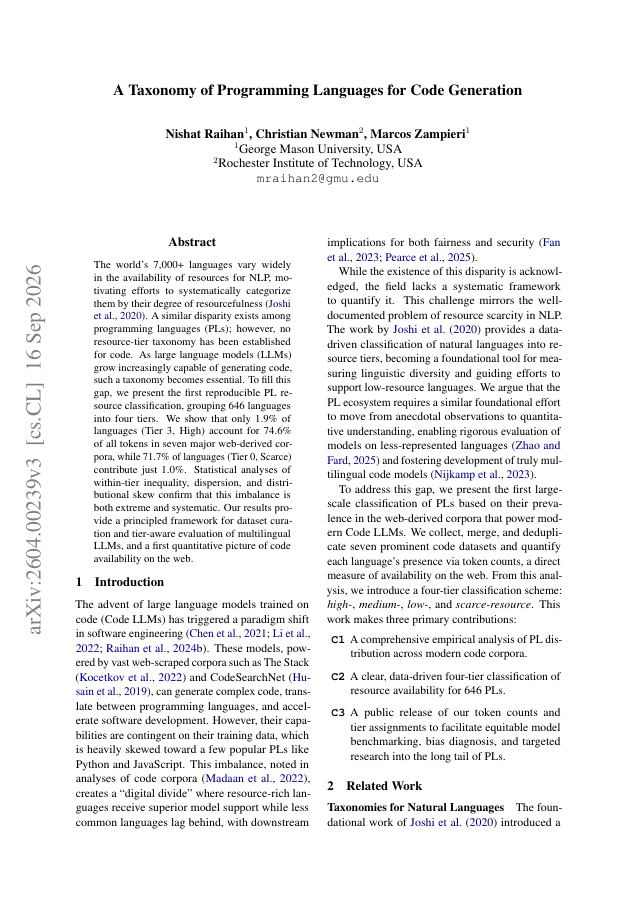
The world's 7,000+ languages vary widely in the availability of resources for NLP, motivating efforts to systematically categorize them by their degree of resourcefulness (Joshi et al., 2020).
1 Apr 2026
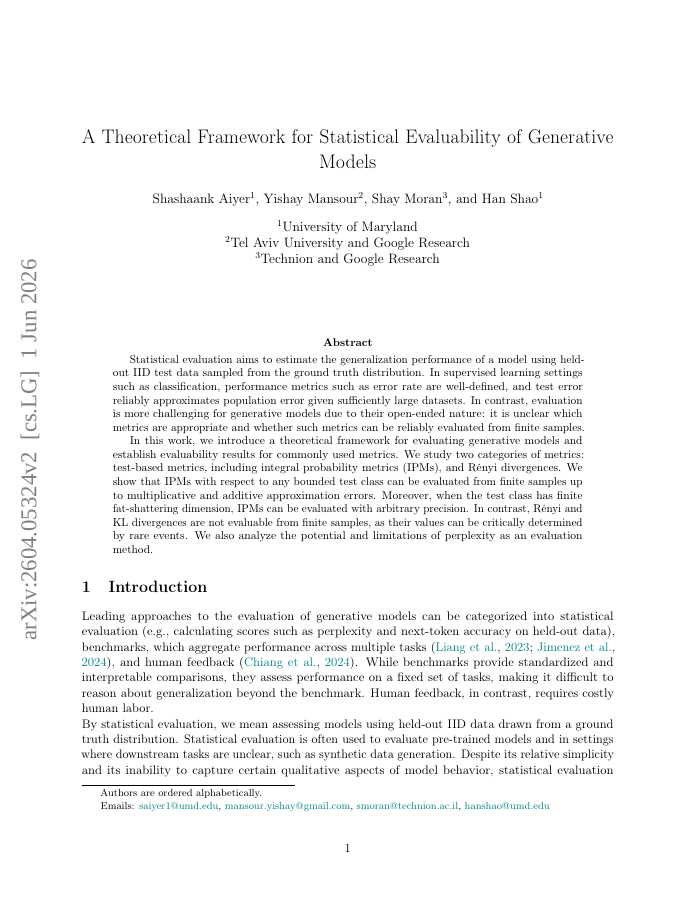
Statistical evaluation aims to estimate the generalization performance of a model using held-out i.i.d. test data sampled from the ground-truth distribution. In supervised learning settings such as classification, performance metrics such as error rate are well-defined, and test…
1 Apr 2026
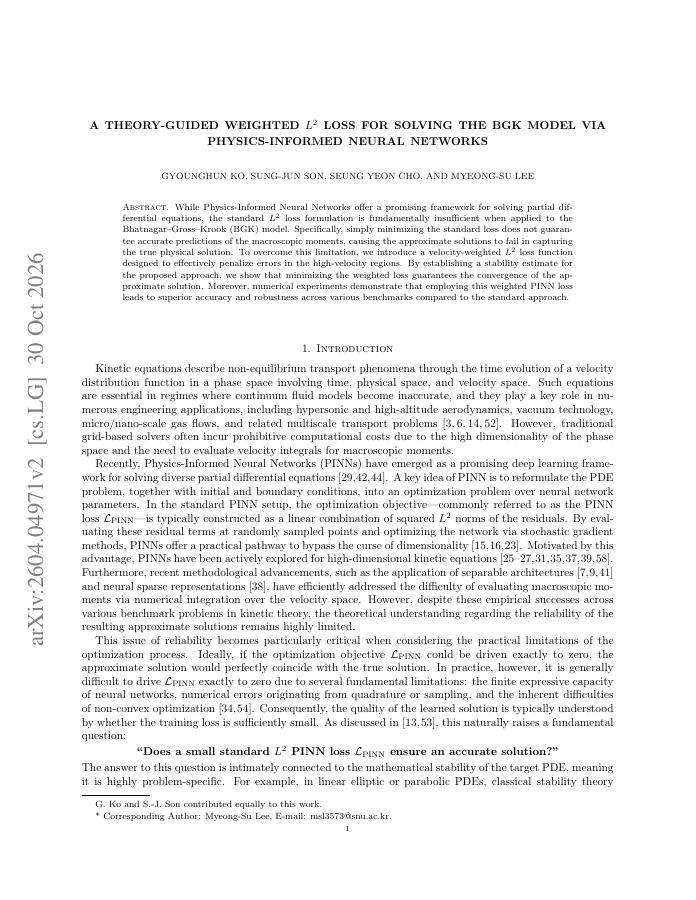
While Physics-Informed Neural Networks offer a promising framework for solving partial differential equations, the standard $L^2$ loss formulation is fundamentally insufficient when applied to the Bhatnagar-Gross-Krook (BGK) model.
26 Mar 2026
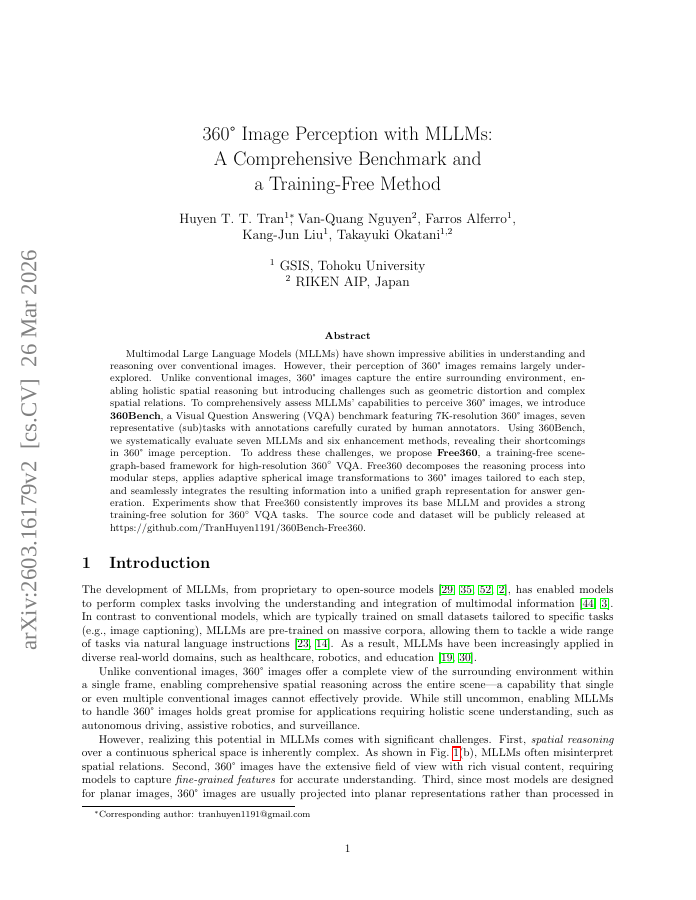
Multimodal Large Language Models (MLLMs) have shown impressive abilities in understanding and reasoning over conventional images. However, their perception of 360° images remains largely underexplored.
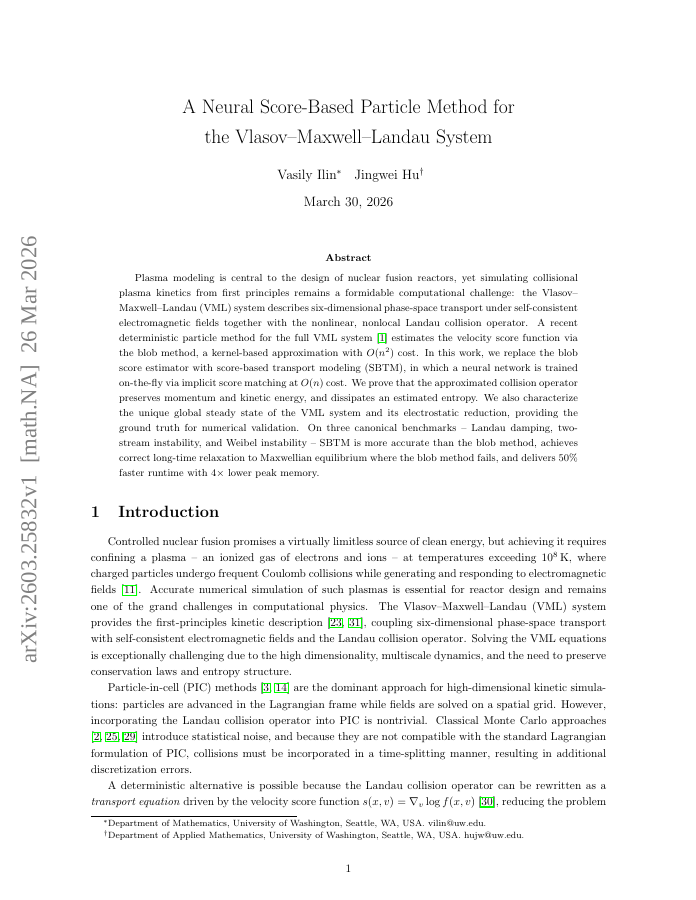
Vasily Ilin, Jingwei Hu · 26 Mar 2026
Score-based transport modeling replaces traditional blob methods in plasma simulations, offering improved accuracy and efficiency for solving the Vlasov-Maxwell-Landau system.
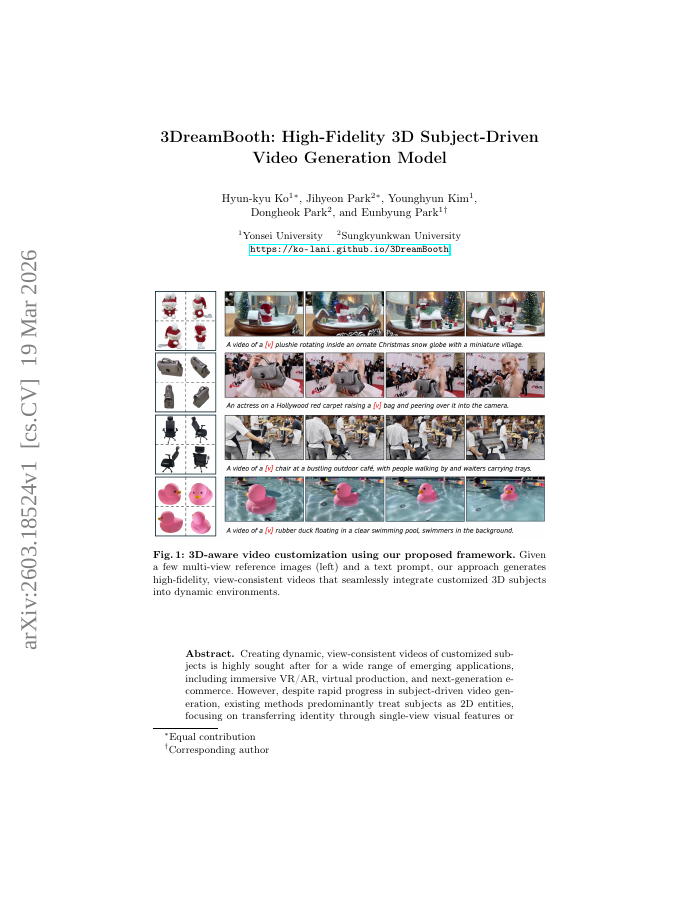
Eunbyung Park, Jihyeon Park, Hyun-kyu Ko · 19 Mar 2026
Creating dynamic, view-consistent videos of customized subjects is highly sought after for a wide range of emerging applications, including immersive VR/AR, virtual production, and next-generation e-commerce.
16 Mar 2026
The computational cost of geochemical solvers is a challenging matter. For reactive transport simulations, where chemical calculations are performed up to billions of times, it is crucial to reduce the total computational time.
11 Mar 2026
Digital Human Modelling (DHM) is increasingly shaped by advances in AI, wearable biosensing, and interactive digital environments, particularly in research addressing accessibility and inclusion.
Yebin Liu, Xiaoying Tang, Jin Lyu · 10 Mar 2026
4D reconstruction of equine family (e.g.
Harikrishnan Unnikrishnan · 2 Mar 2026
A detection-gated pipeline combining a localizer and segmenter achieves state-of-the-art glottal segmentation with robust cross-dataset generalization and real-time processing capabilities.