1 Jan 2026
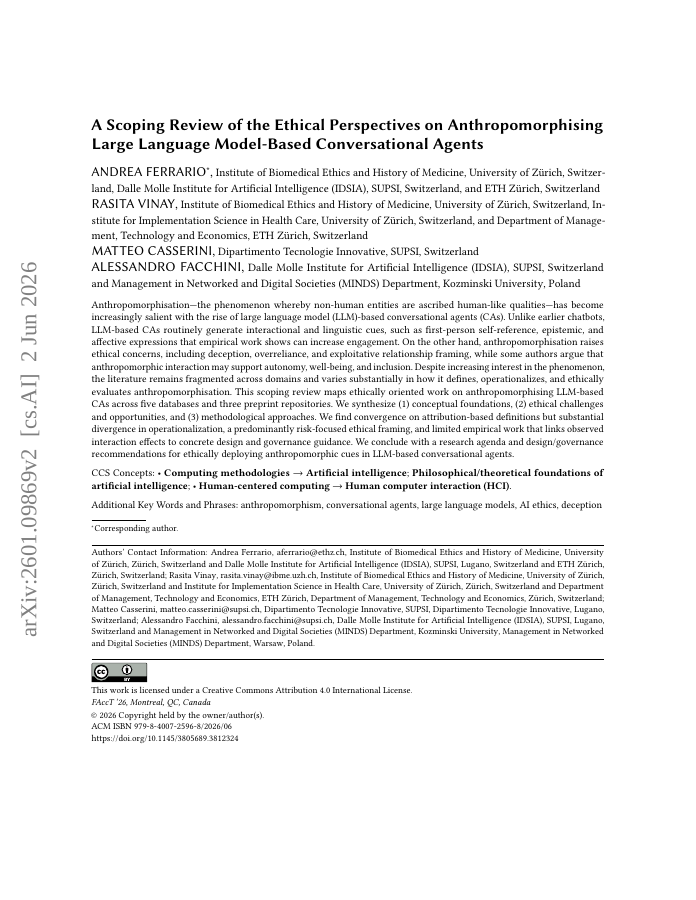
Anthropomorphisation -- the phenomenon whereby non-human entities are ascribed human-like qualities -- has become increasingly salient with the rise of large language model (LLM)-based conversational agents (CAs).
Trending research and the full catalog - each paper linked to the benchmarks, methods, and models it introduces.
Filtering here covers the 2,000 most recent papers, as much as one page can hold in memory. See the full index of 22,445 papers.
1 Jan 2026
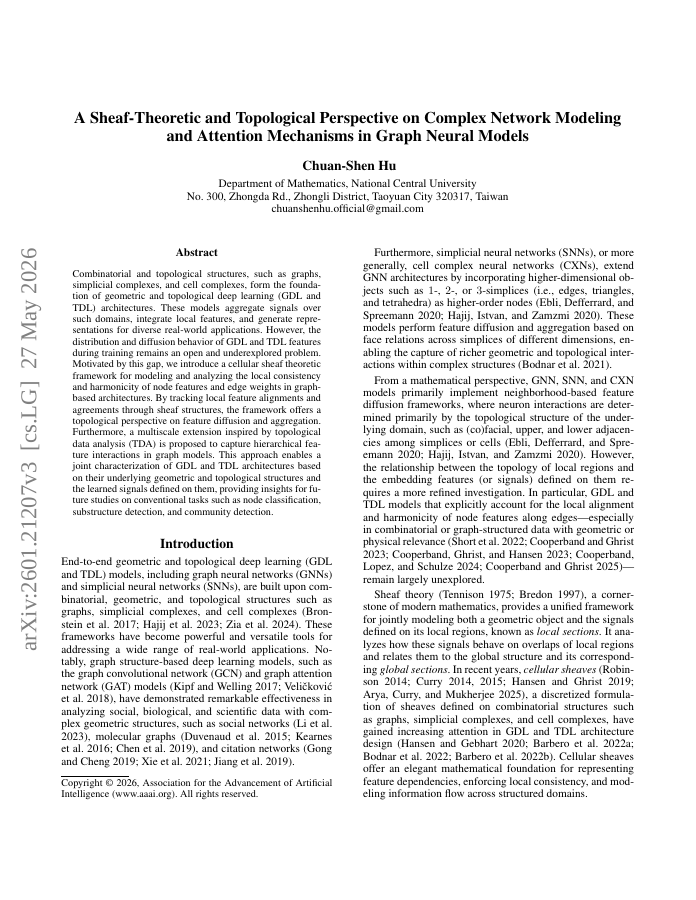
Anthropomorphisation -- the phenomenon whereby non-human entities are ascribed human-like qualities -- has become increasingly salient with the rise of large language model (LLM)-based conversational agents (CAs).
1 Jan 2026
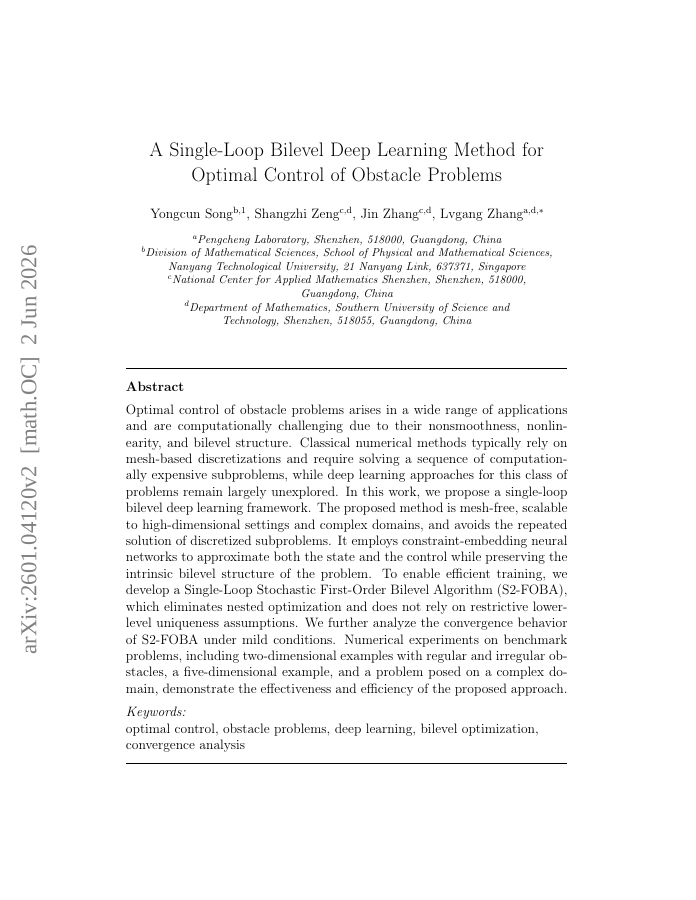
Combinatorial and topological structures, such as graphs, simplicial complexes, and cell complexes, form the foundation of geometric and topological deep learning (GDL and TDL) architectures.
1 Jan 2026
Optimal control of obstacle problems arises in a wide range of applications and is computationally challenging due to its nonsmoothness, nonlinearity, and bilevel structure.
1 Jan 2026
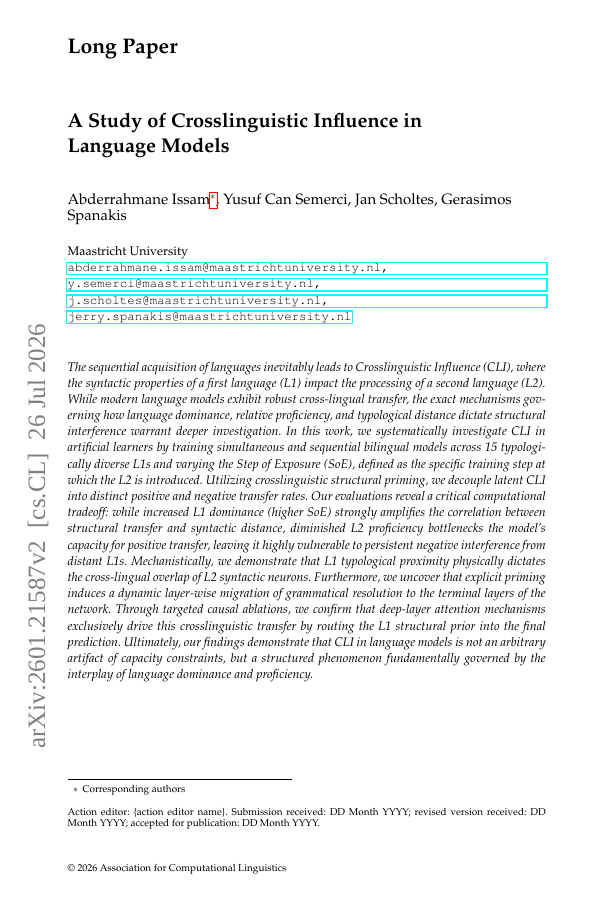
The sequential acquisition of languages inevitably leads to Crosslinguistic Influence (CLI), where the syntactic properties of a first language (L1) impact the processing of a second language (L2).
1 Jan 2026
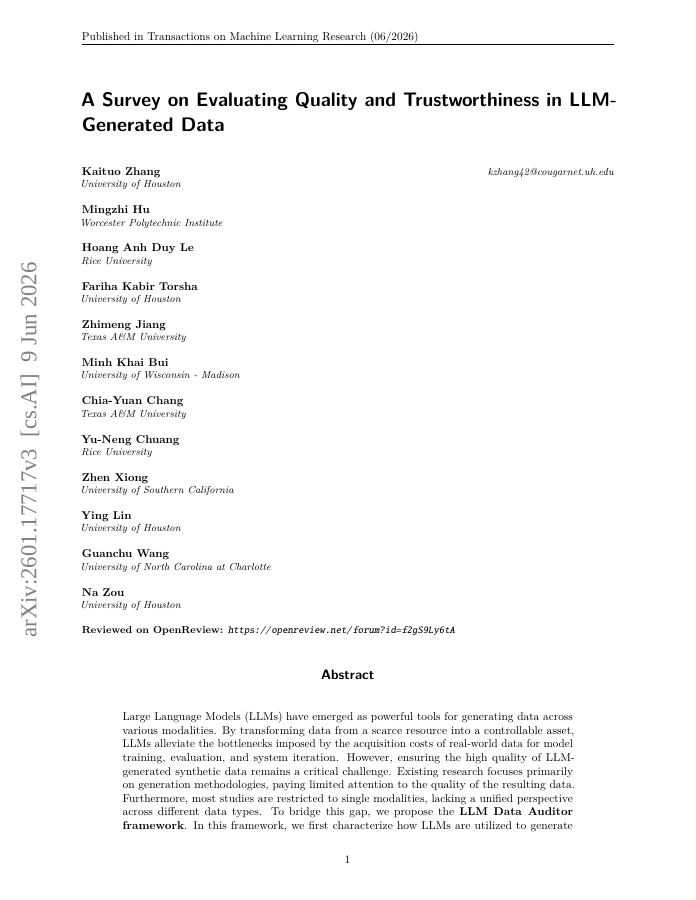
Large Language Models (LLMs) have emerged as powerful tools for generating data across various modalities. By transforming data from a scarce resource into a controllable asset, LLMs mitigate the bottlenecks imposed by the acquisition costs of real-world data for model training,…
1 Jan 2026
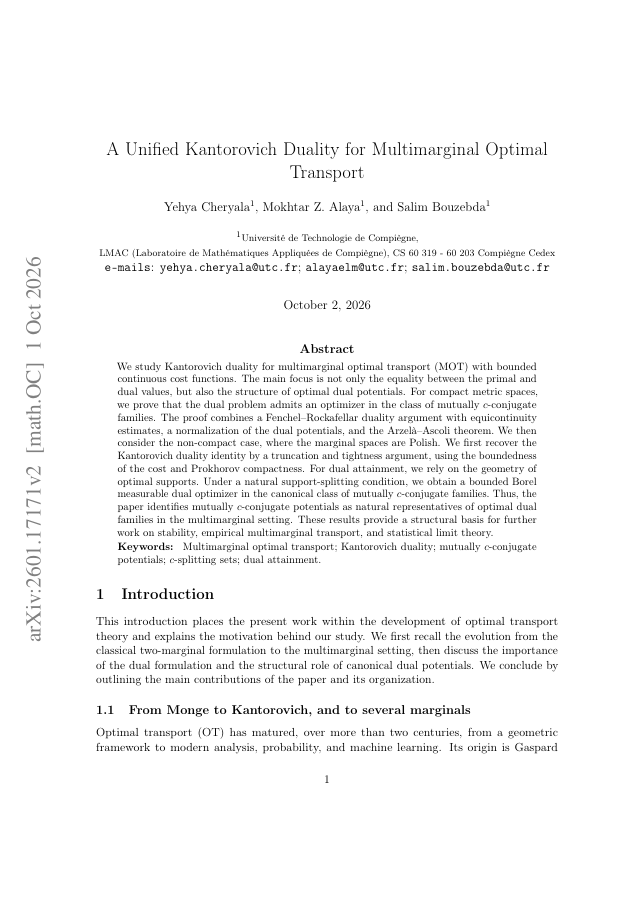
We study Kantorovich duality for multimarginal optimal transport (MOT) with bounded continuous cost functions. The main focus is not only the equality between the primal and dual values, but also the structure of optimal dual potentials.
1 Jan 2026
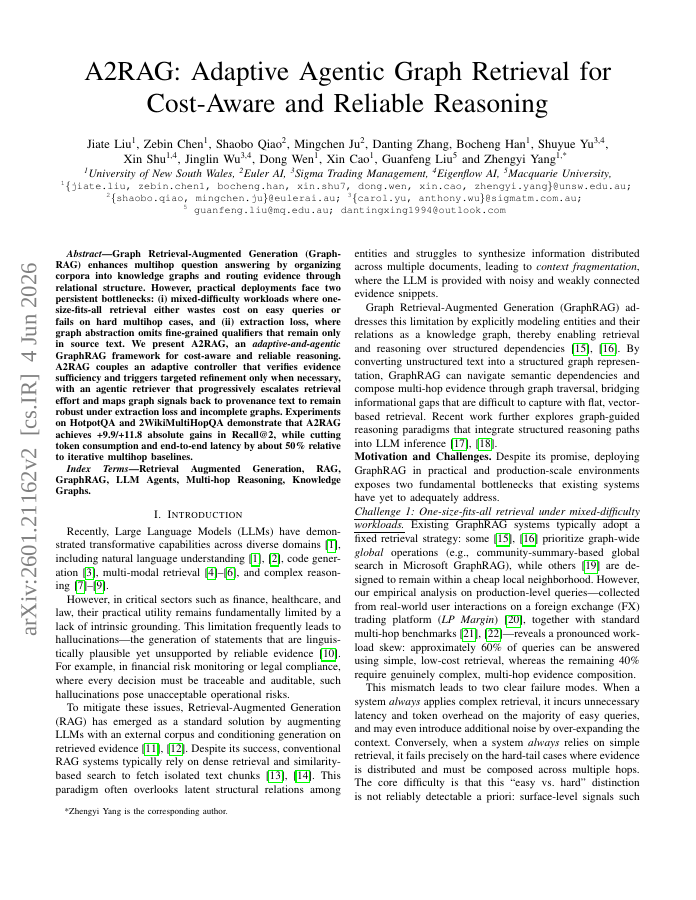
Graph Retrieval-Augmented Generation (Graph-RAG) enhances multihop question answering by organizing corpora into knowledge graphs and routing evidence through relational structure.
1 Jan 2026
Despite the significant advancements of Large Language Models (LLMs), their factuality remains a critical challenge, creating a growing need for more nuanced factuality verification.