19 Nov 2026
Training-data auditing asks whether data of interest were used to train a large language model (LLM), a question central to privacy auditing, copyright protection, and benchmark-contamination detection.
Trending research and the full catalog - each paper linked to the benchmarks, methods, and models it introduces.
Filtering here covers the 2,000 most recent papers, as much as one page can hold in memory. See the full index of 23,060 papers.
19 Nov 2026
Training-data auditing asks whether data of interest were used to train a large language model (LLM), a question central to privacy auditing, copyright protection, and benchmark-contamination detection.
18 Nov 2026
Coding agents now resolve repository issues and generate compact playable games, but whether they can build a large 3D game from scratch remains open. Such games tightly couple mechanics, scenes, assets, and interaction logic, and their quality rests on player enjoyment, which…
18 Nov 2026
Agentic AI platforms-systems in which LLM agents plan, invoke tools, retain memory and coordinate to change the state of enterprise systems-are being procured faster than they can be measured.
18 Nov 2026
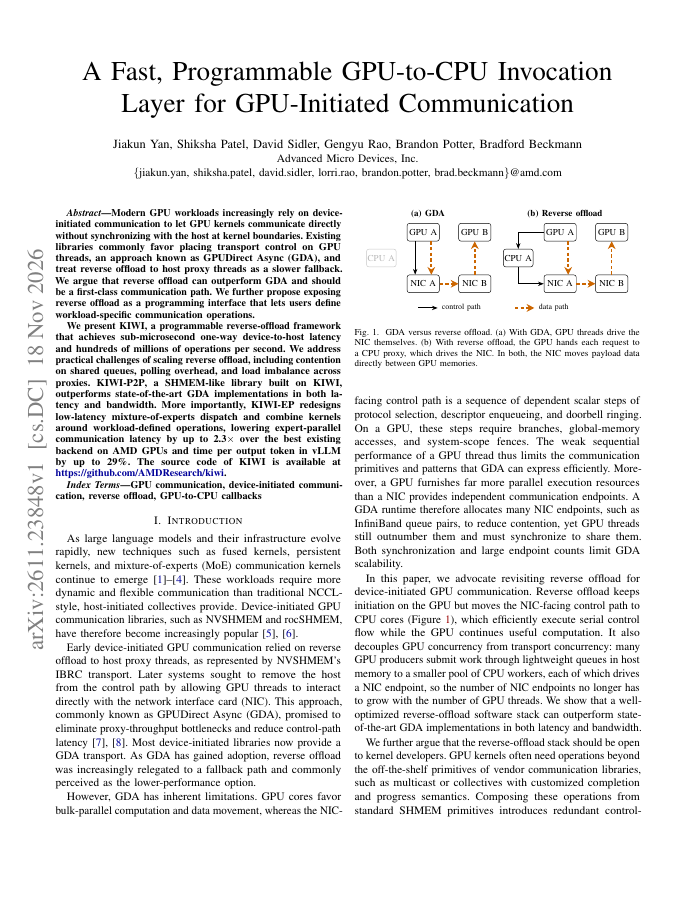
Modern GPU workloads increasingly rely on device-initiated communication to let GPU kernels communicate directly without synchronizing with the host at kernel boundaries.
18 Nov 2026
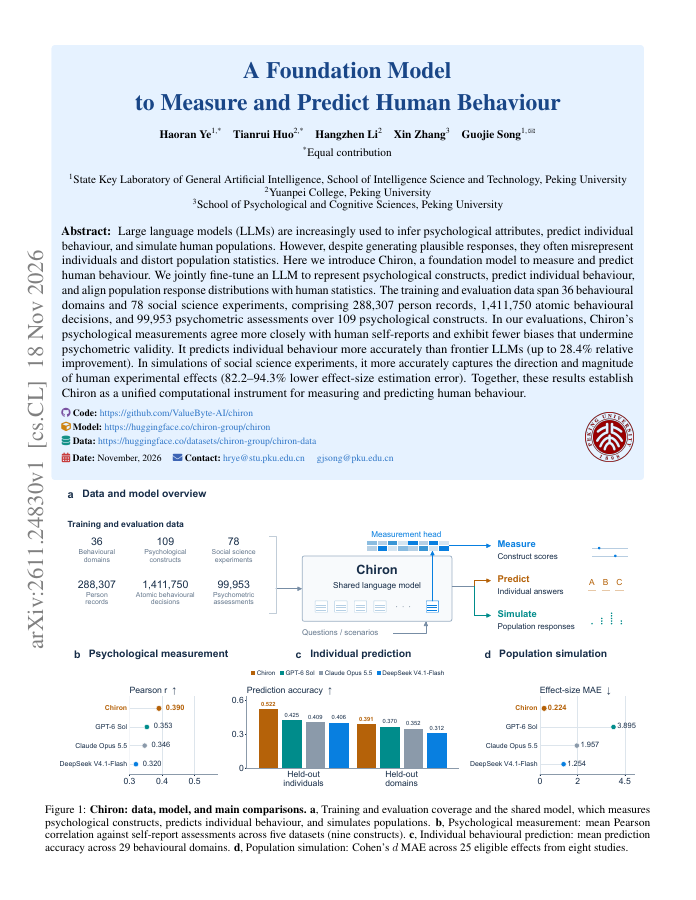
Large language models (LLMs) are increasingly used to infer psychological attributes, predict individual behaviour, and simulate human populations. However, despite generating plausible responses, they often misrepresent individuals and distort population statistics.
18 Nov 2026
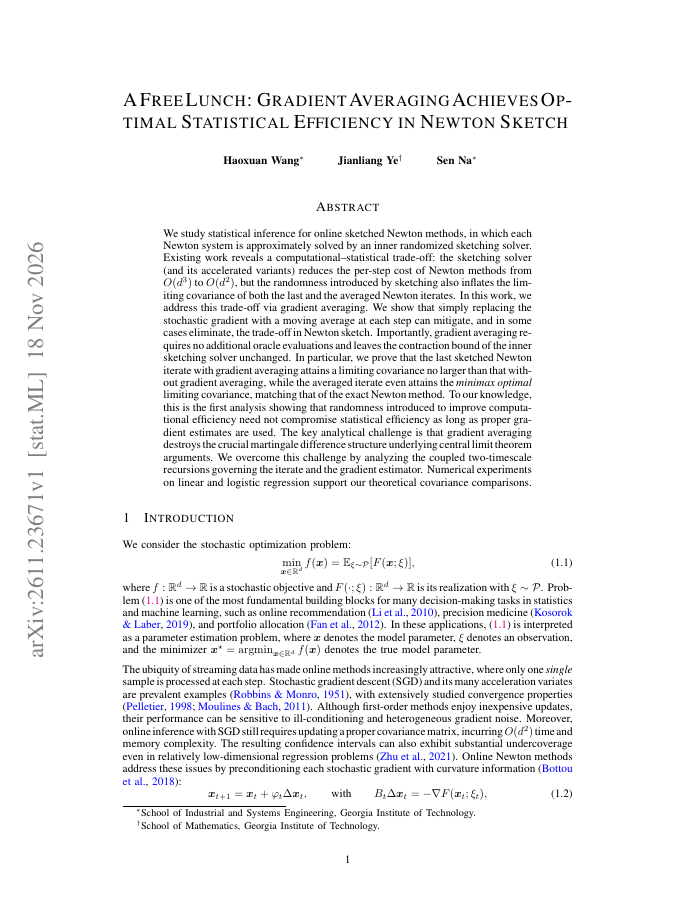
We study statistical inference for online sketched Newton methods, in which each Newton system is approximately solved by an inner randomized sketching solver. Existing work reveals a computational--statistical trade-off: the sketching solver (and its accelerated variants)…
18 Nov 2026
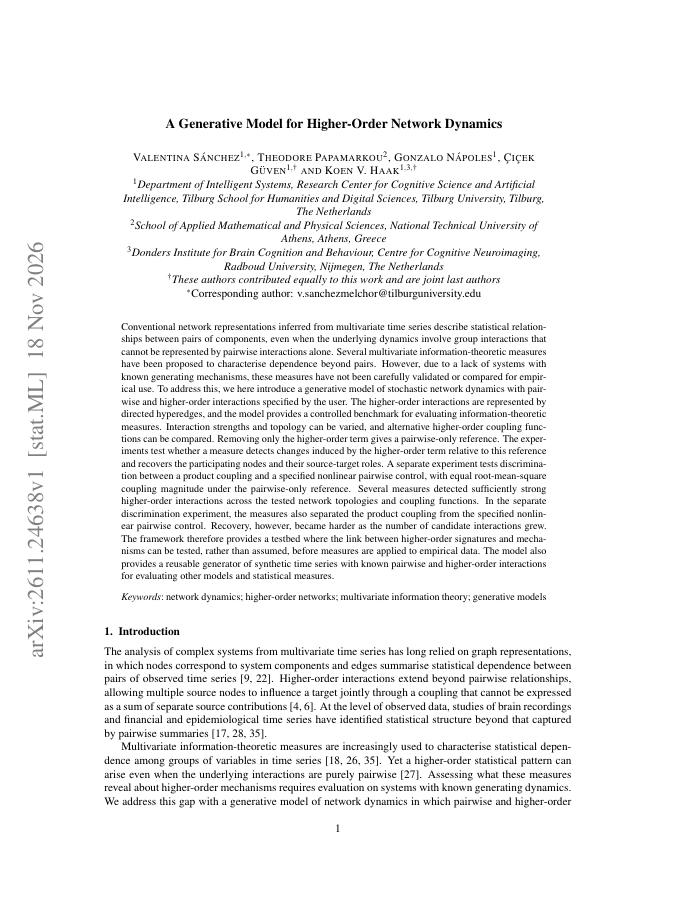
Conventional network representations inferred from multivariate time series describe statistical relationships between pairs of components, even when the underlying dynamics involve group interactions that cannot be represented by pairwise interactions alone.
18 Nov 2026
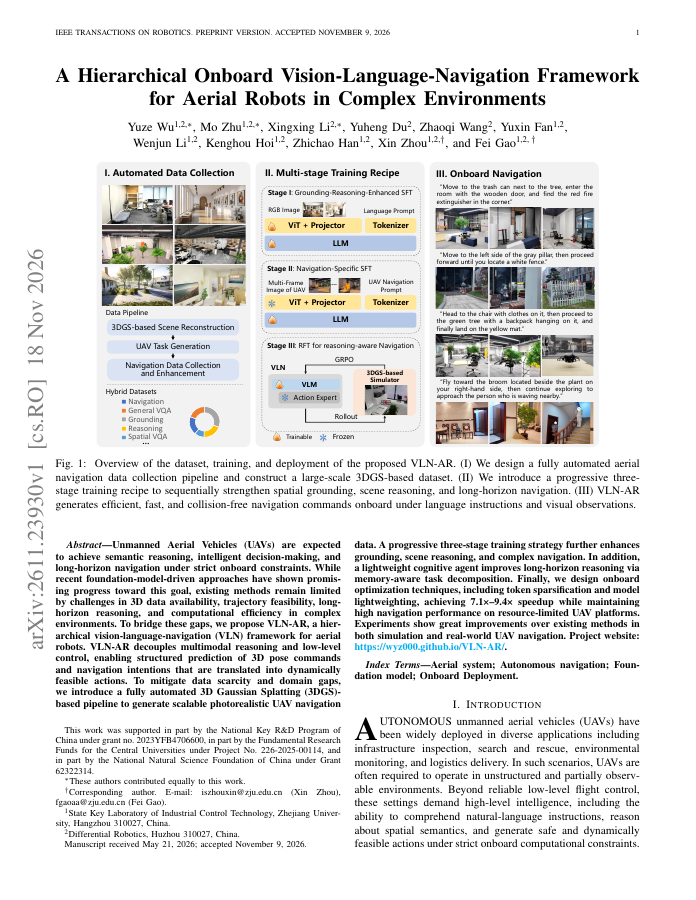
Unmanned Aerial Vehicles (UAVs) are expected to achieve semantic reasoning, intelligent decision-making, and long-horizon navigation under strict onboard constraints. While recent foundation-model-driven approaches have shown promising progress toward this goal, existing methods…
18 Nov 2026
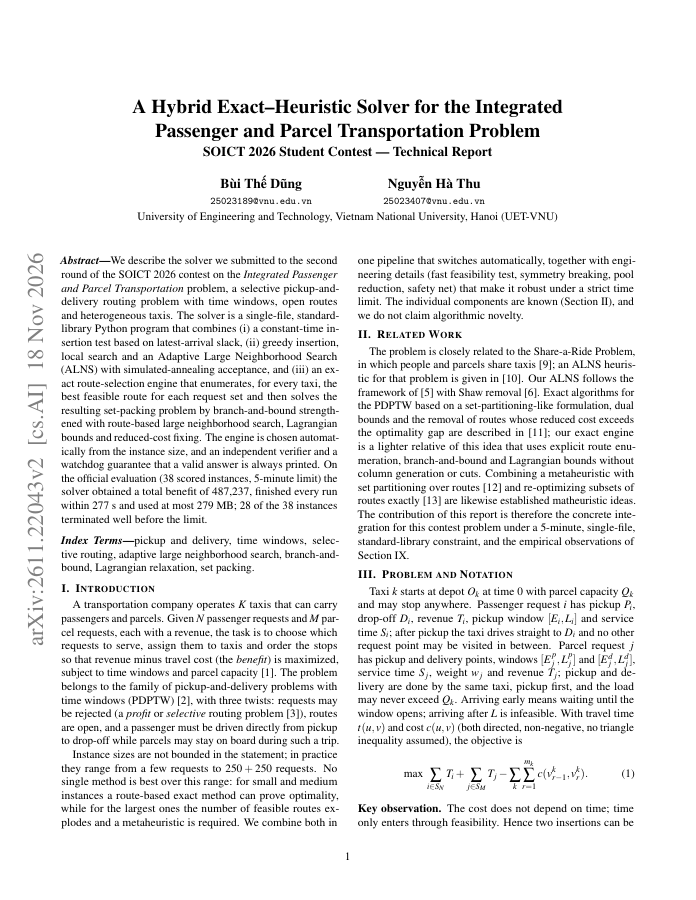
We describe the solver we submitted to the second round of the SOICT 2026 contest on the Integrated Passenger and Parcel Transportation problem, a selective pickup-and-delivery routing problem with time windows, open routes and heterogeneous taxis.
18 Nov 2026
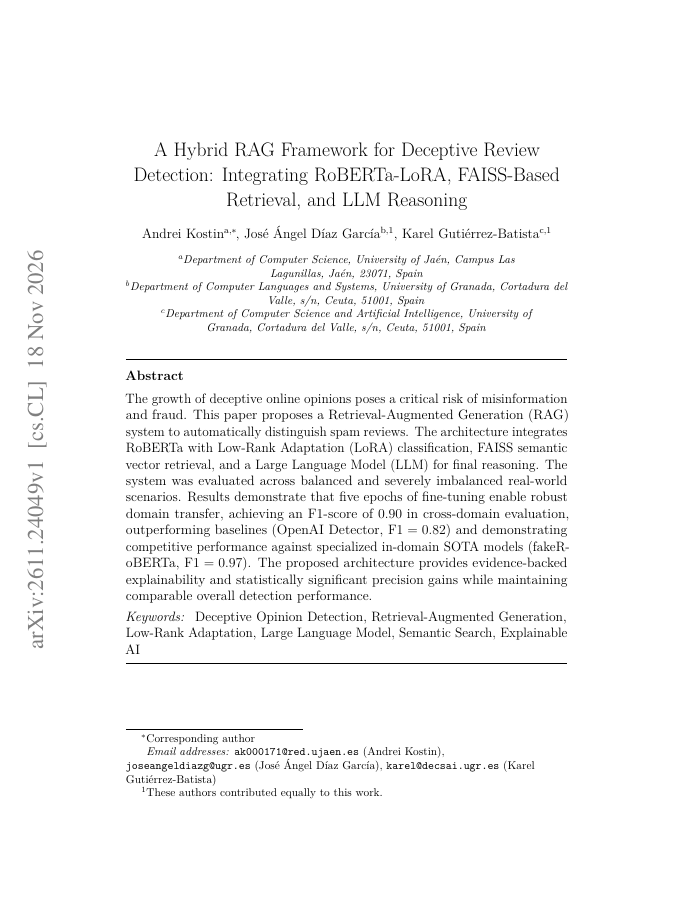
The growth of deceptive online opinions poses a critical risk of misinformation and fraud. This paper proposes a Retrieval-Augmented Generation (RAG) system to automatically distinguish spam reviews.
18 Nov 2026
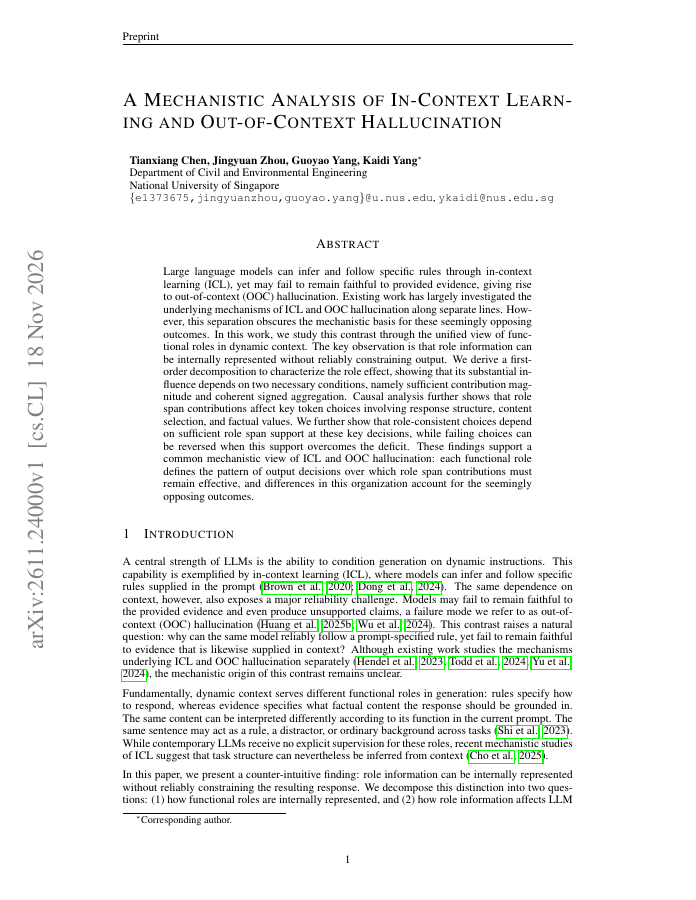
Large language models can infer and follow specific rules through in-context learning (ICL), yet may fail to remain faithful to provided evidence, giving rise to out-of-context (OOC) hallucination.
18 Nov 2026
Language models often produce high-quality individual samples but poor sets, with repeated samples clustering around the same semantic modes. We formalize diverse generation as sampling a size-$K$ subset of complete strings from a determinantal point process (DPP), where the…
18 Nov 2026
Linear concept erasure can make a target unreadable to a specified family of linear classifiers applied to a model's current internal features. In an open-weight release, however, an attacker can modify the layers that produce those features.
18 Nov 2026
A System 1 model answers a multiple-choice question in a single pass. A frozen language model turns the question and each option into vectors, two small, trained heads place them in a shared space, and the closest option wins.
18 Nov 2026
The search for a low-dimensional subspace that governs neural network training has been a persistent goal in optimization. Yet subspaces defined by Hessian eigenvalue magnitude, such as the dominant/bulk decomposition underlying Dom-SGD and Bulk-SGD, have repeatedly failed to…
17 Nov 2026
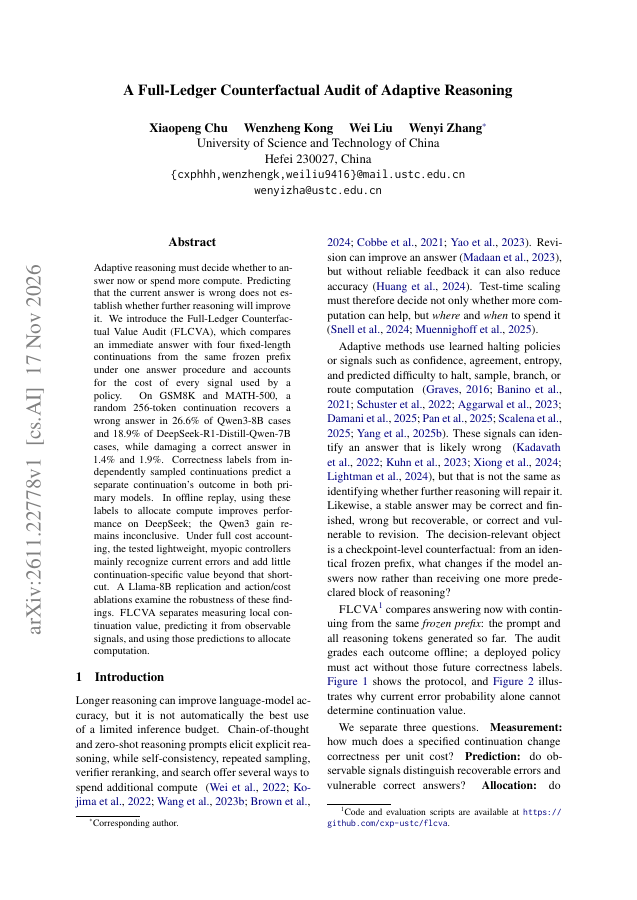
Adaptive reasoning must decide whether to answer now or spend more compute. Predicting that the current answer is wrong does not establish whether further reasoning will improve it.
17 Nov 2026
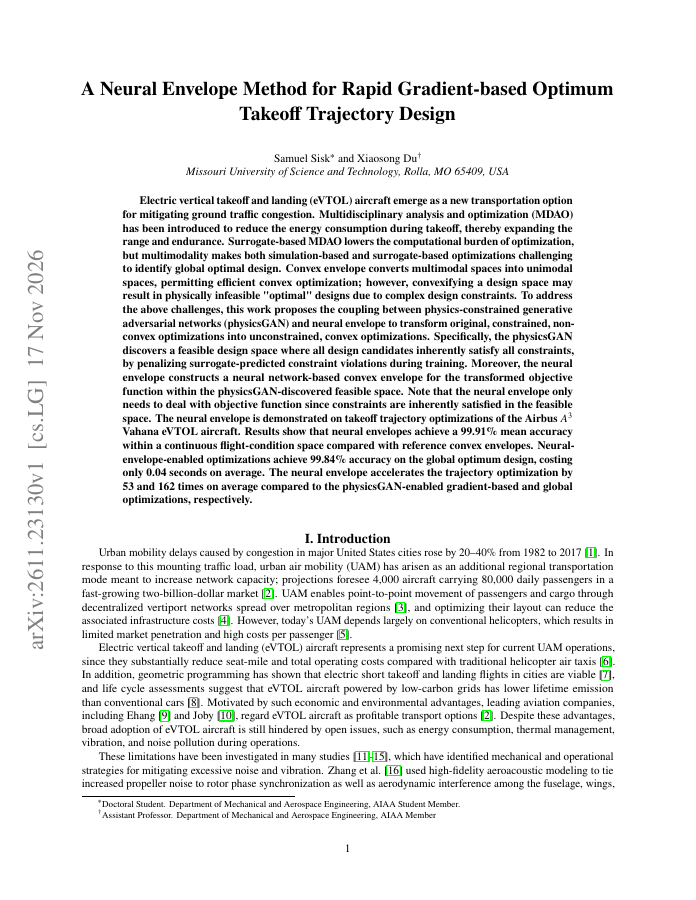
Urban air mobility arises to mitigate ground traffic congestion. Multidisciplinary analysis and optimization (MDAO) has been introduced to reduce the energy consumption, thereby expanding aircraft performance.
17 Nov 2026
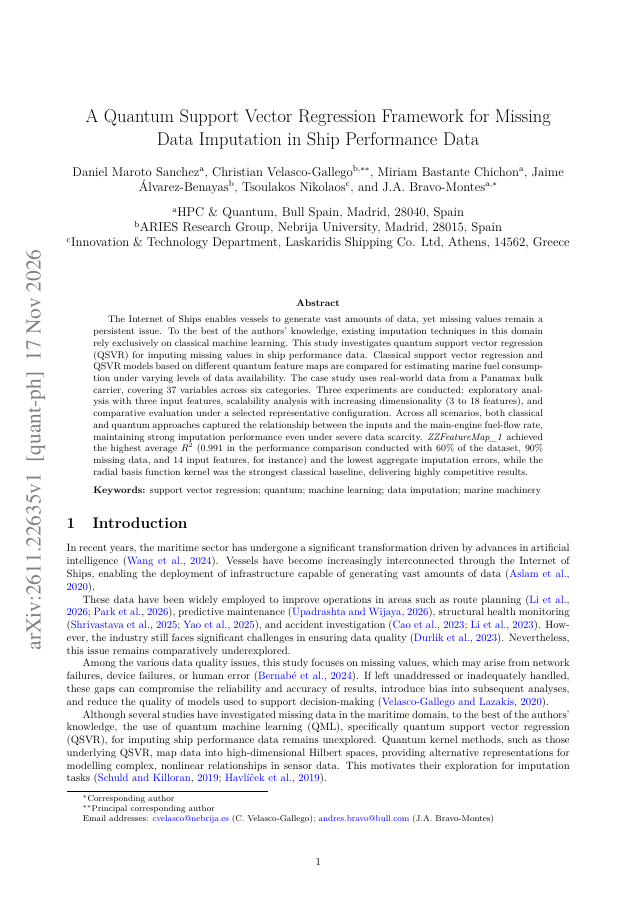
The Internet of Ships enables vessels to generate vast amounts of data, yet missing values remain a persistent issue. To the best of the authors' knowledge, existing imputation techniques in this domain rely exclusively on classical machine learning.
17 Nov 2026
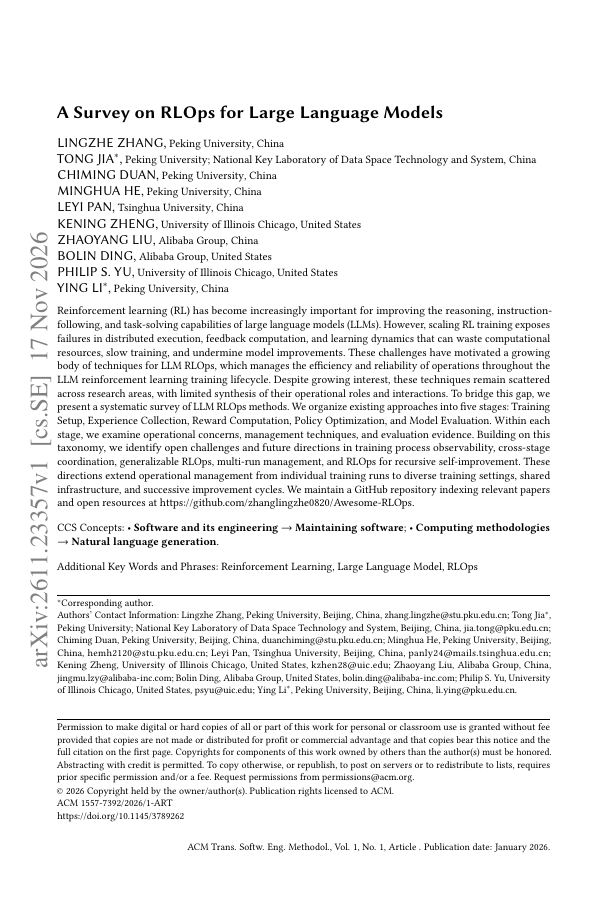
Reinforcement learning (RL) has become increasingly important for improving the reasoning, instruction-following, and task-solving capabilities of large language models (LLMs).
17 Nov 2026
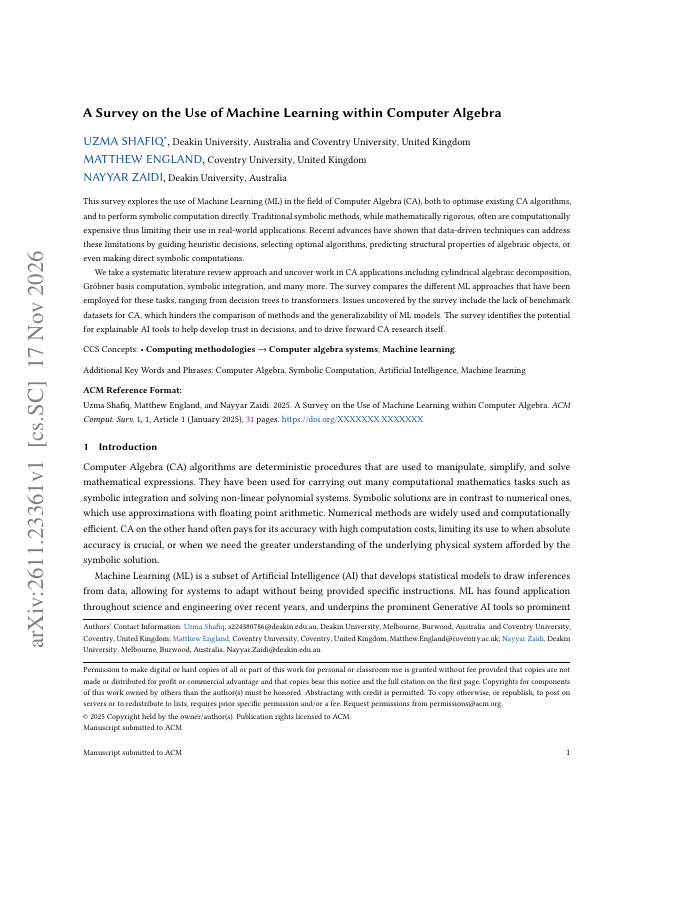
This survey explores the use of Machine Learning (ML) in the field of Computer Algebra (CA), both to optimise existing CA algorithms, and to perform symbolic computation directly.
17 Nov 2026
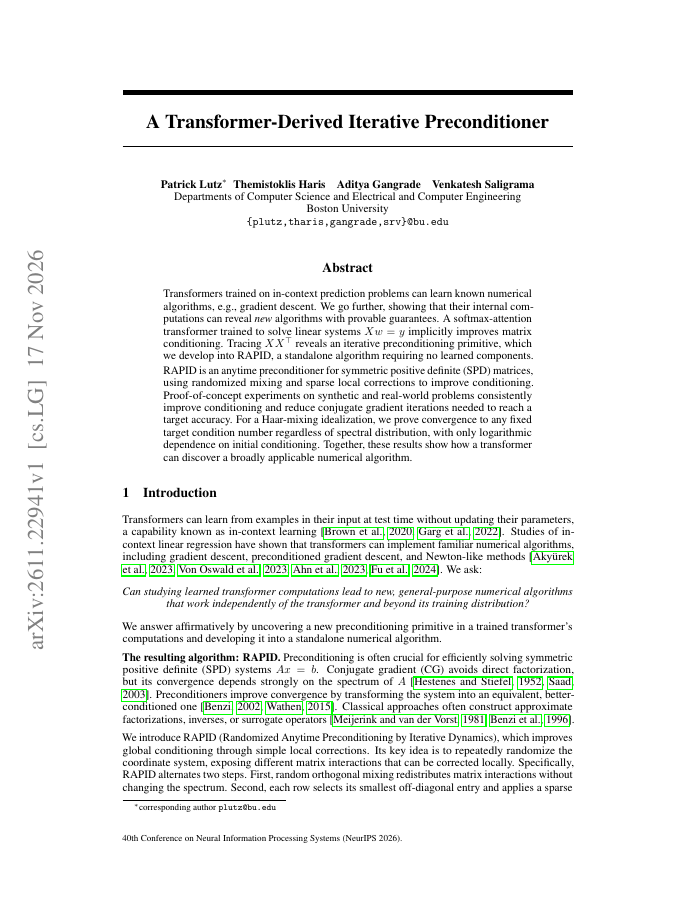
Transformers trained on in-context prediction problems can learn known numerical algorithms, e.g., gradient descent. We go further, showing that their internal computations can reveal new algorithms with provable guarantees.
16 Nov 2026
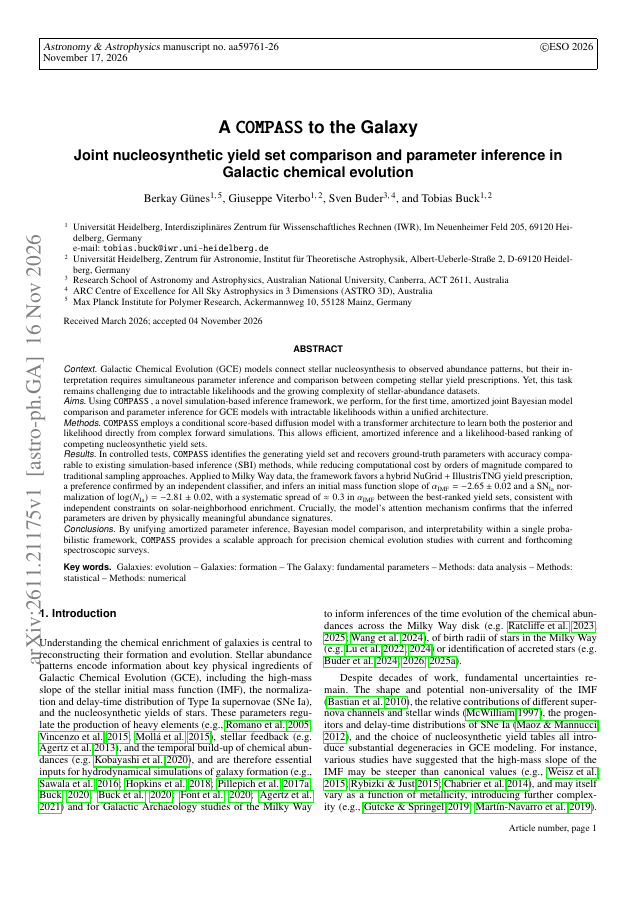
Galactic Chemical Evolution (GCE) models connect stellar nucleosynthesis to observed abundance patterns, but their interpretation requires simultaneous parameter inference and comparison between competing stellar yield prescriptions.
16 Nov 2026
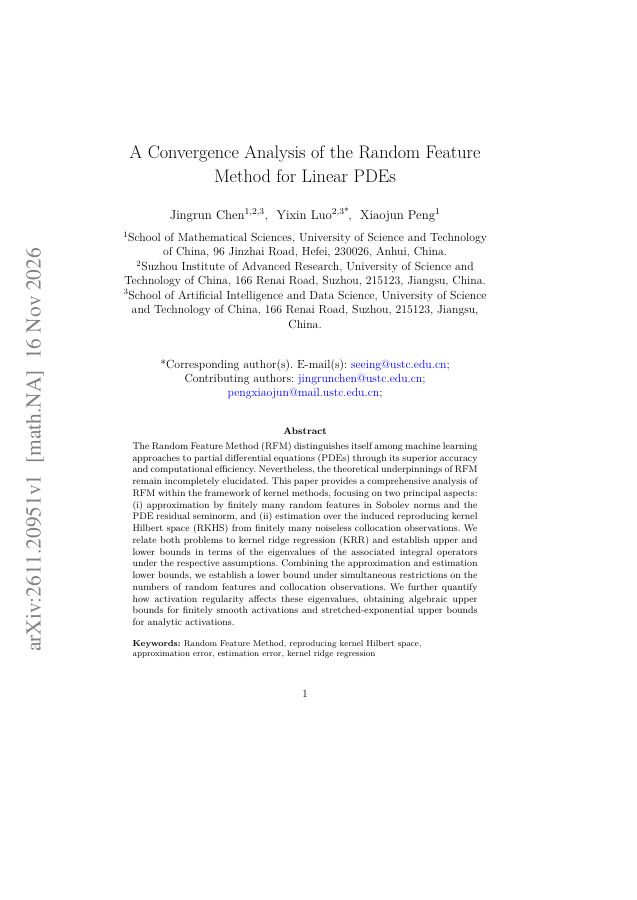
The Random Feature Method (RFM) distinguishes itself among machine learning approaches to partial differential equations (PDEs) through its superior accuracy and computational efficiency. Nevertheless, the theoretical underpinnings of RFM remain incompletely elucidated.
16 Nov 2026
Prior work has shown that large language models (LLMs) express implicit biases in high-publicity, one-off decision scenarios such as hiring and intelligence assessment. However, as people increasingly employ autonomous, LLM-powered AI agents that make decisions on their behalf…