16 Sep 2026
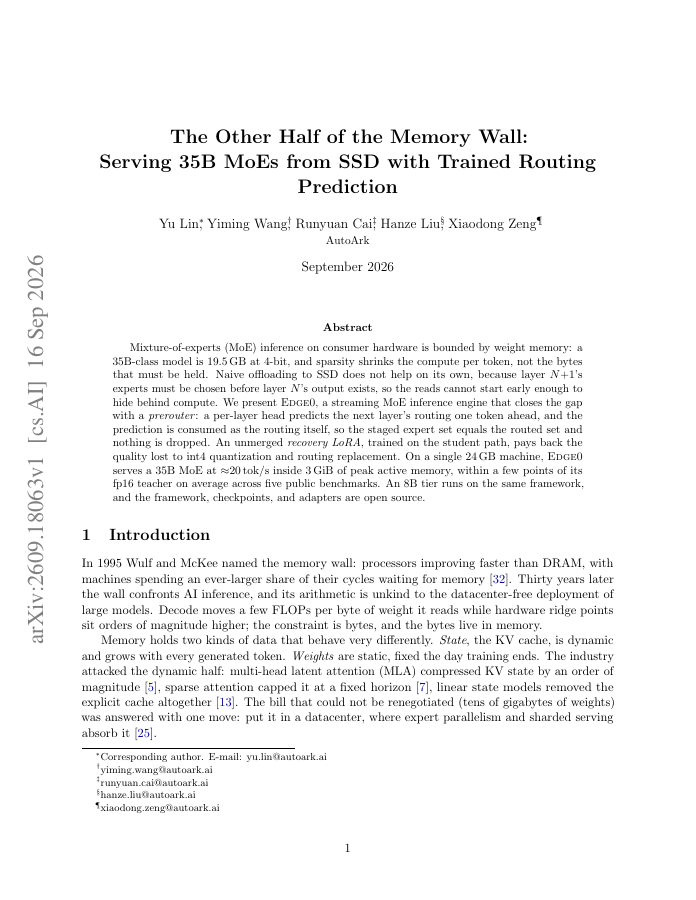
Mixture-of-experts (MoE) inference on consumer hardware is bounded by weight memory: a 35B-class model is 19.5GB at 4-bit, and sparsity shrinks the compute per token, not the bytes that must be held.
Trending research and the full catalog - each paper linked to the benchmarks, methods, and models it introduces.
Filtering here covers the 2,000 most recent papers, as much as one page can hold in memory. See the full index of 23,060 papers.
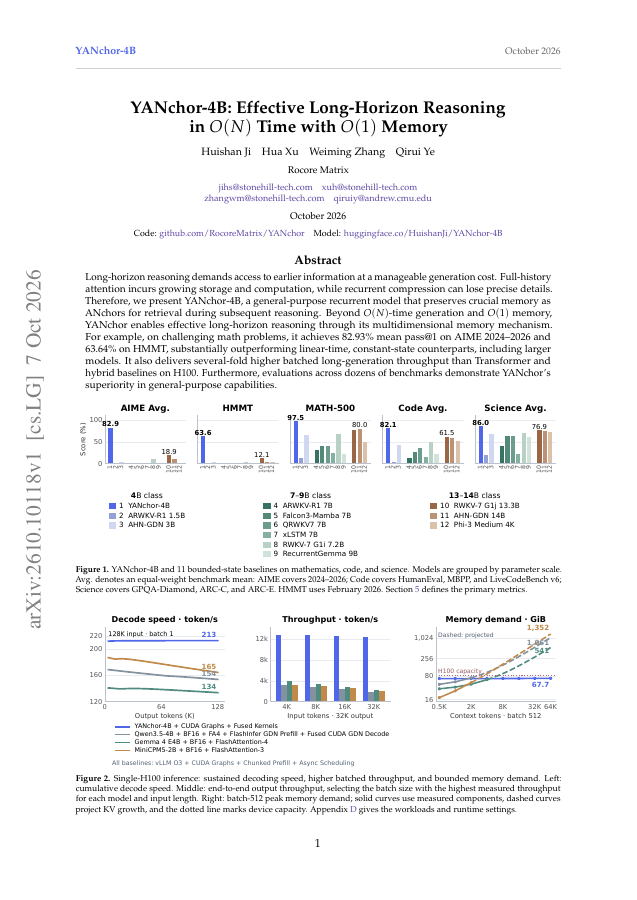
16 Sep 2026
Mixture-of-experts (MoE) inference on consumer hardware is bounded by weight memory: a 35B-class model is 19.5GB at 4-bit, and sparsity shrinks the compute per token, not the bytes that must be held.
7 Oct 2026
We present EdgeRock, a family of multimodal models that deliver strong reasoning at constant memory. Most models keep reasoning history in a key-value (KV) cache that grows with every token, consuming accelerator memory, limiting concurrent requests, and competing with…
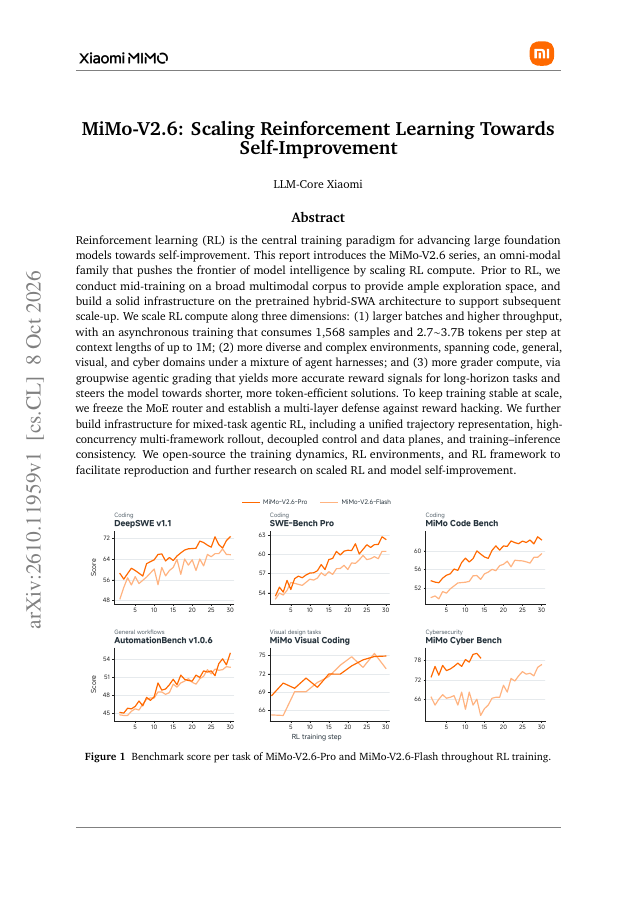
8 Oct 2026
Reinforcement learning (RL) is the central training paradigm for advancing large foundation models towards self-improvement. This report introduces the MiMo-V2.6 series, an omni-modal family that pushes the frontier of model intelligence by scaling RL compute.
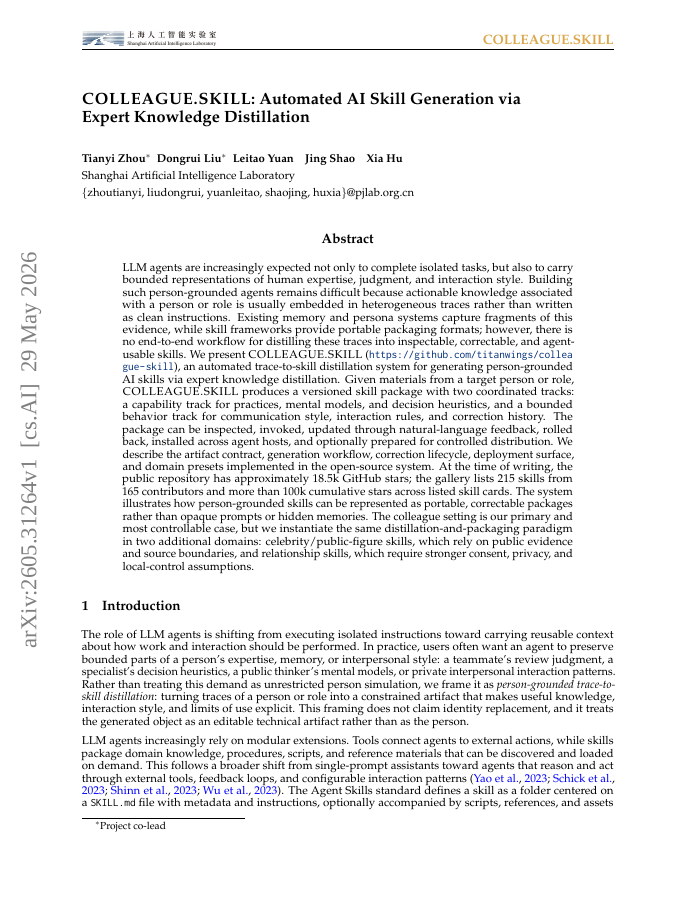
29 May 2026
LLM agents are increasingly expected not only to complete isolated tasks, but also to carry bounded representations of human expertise, judgment, and interaction style. Building such person-grounded agents remains difficult because actionable knowledge associated with a person…
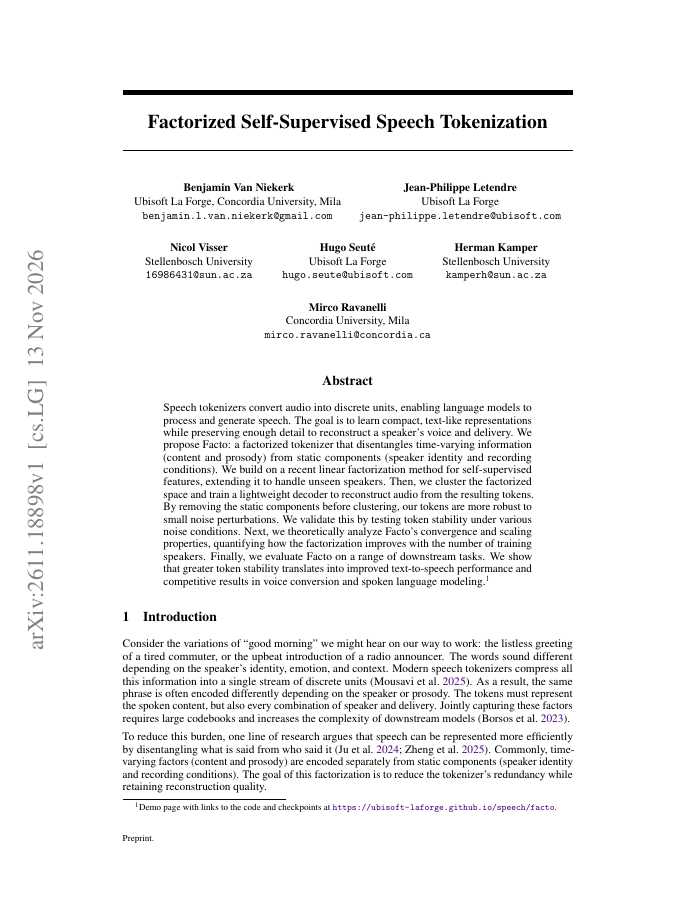
13 Nov 2026
Speech tokenizers convert audio into discrete units, enabling language models to process and generate speech. The goal is to learn compact, text-like representations while preserving enough detail to reconstruct a speaker's voice and delivery.
9 Oct 2026
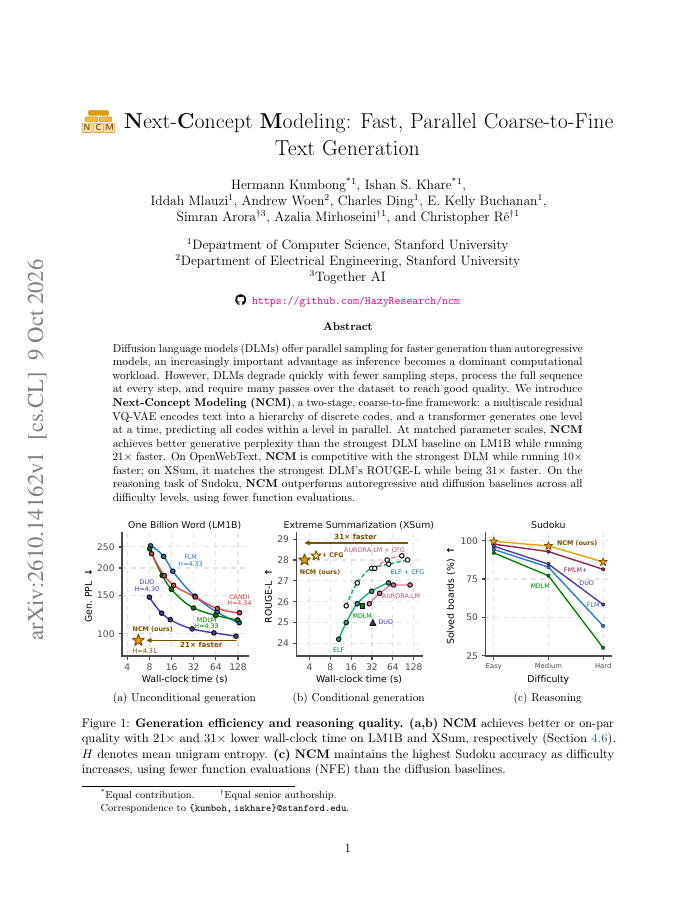
Diffusion language models (DLMs) offer parallel sampling for faster generation than autoregressive models, an increasingly important advantage as inference becomes a dominant computational workload.
5 Jul 2026
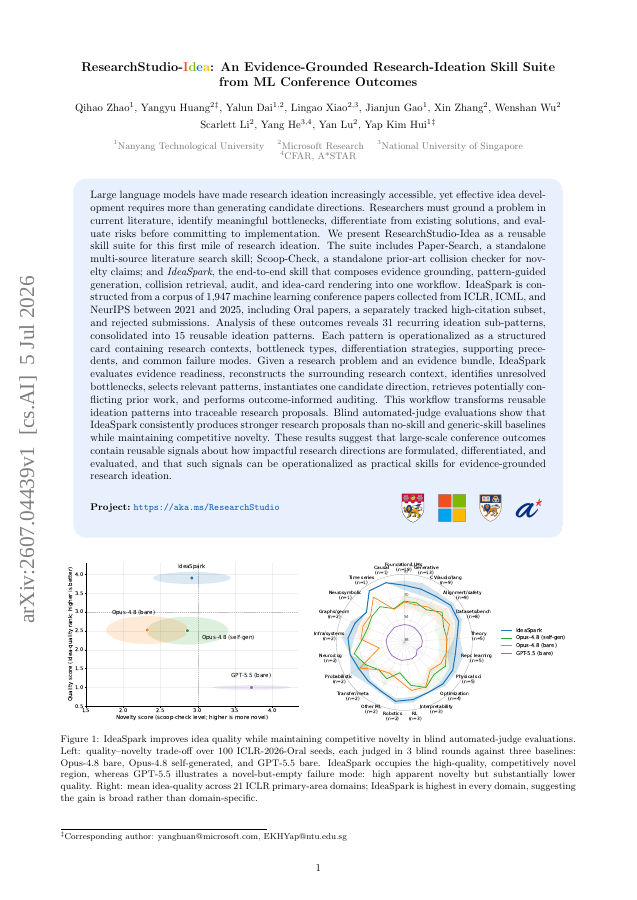
Large language models have made research ideation increasingly accessible, yet effective idea development requires more than generating candidate directions. Researchers must ground a problem in current literature, identify meaningful bottlenecks, differentiate from existing…
17 Sep 2026
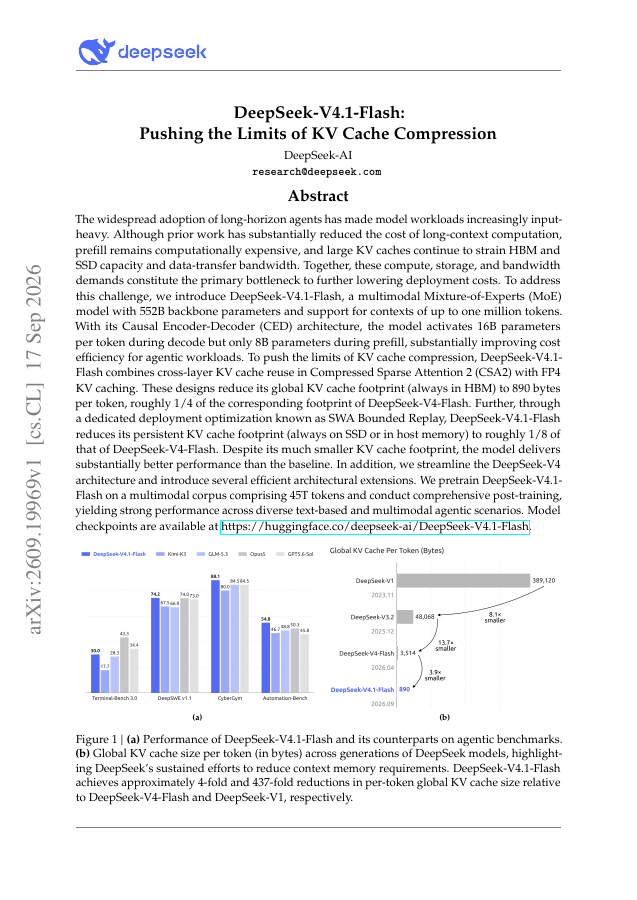
The widespread adoption of long-horizon agents has made model workloads increasingly input-heavy. Although prior work has substantially reduced the cost of long-context computation, prefill remains computationally expensive, and large KV caches continue to strain HBM and SSD…
2 Jun 2026
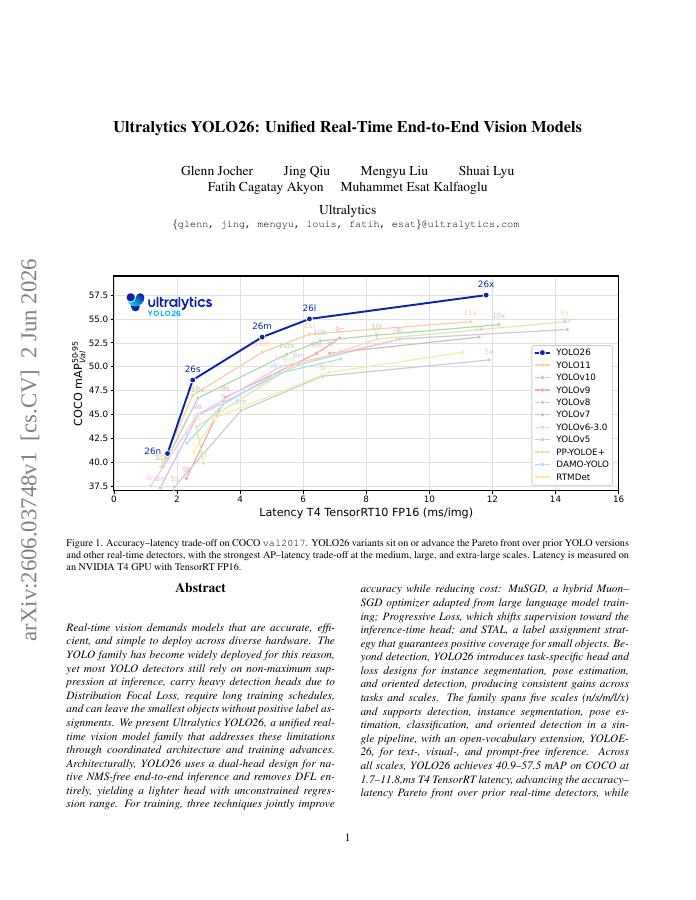
Real-time vision demands models that are accurate, efficient, and simple to deploy across diverse hardware. The YOLO family has become widely deployed for this reason, yet most YOLO detectors still rely on non-maximum suppression at inference, carry heavy detection heads due to…
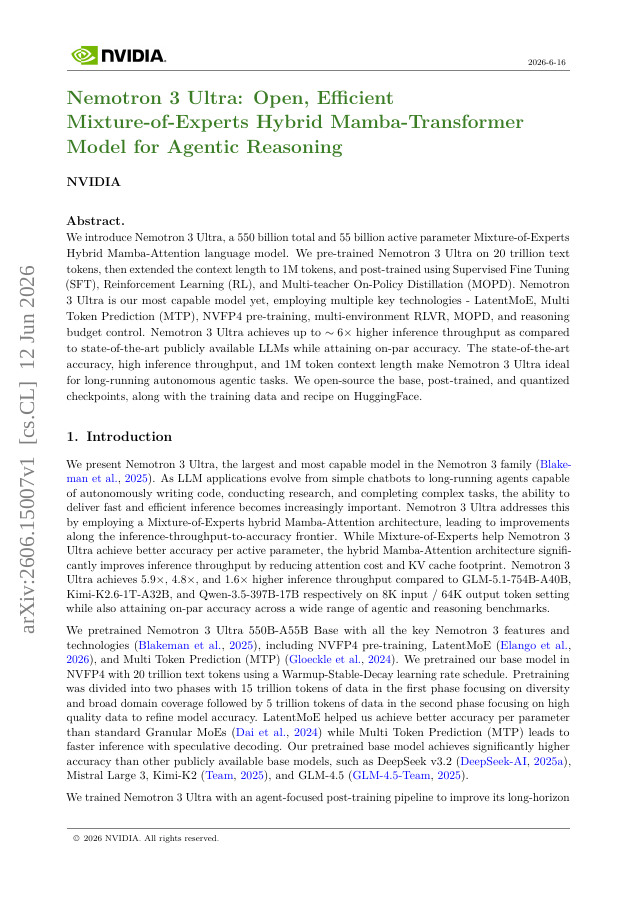
12 Jun 2026
We introduce Nemotron 3 Ultra, a 550 billion total and 55 billion active parameter Mixture-of-Experts Hybrid Mamba-Attention language model. We pre-trained Nemotron 3 Ultra on 20 trillion text tokens, then extended the context length to 1M tokens, and post-trained using…
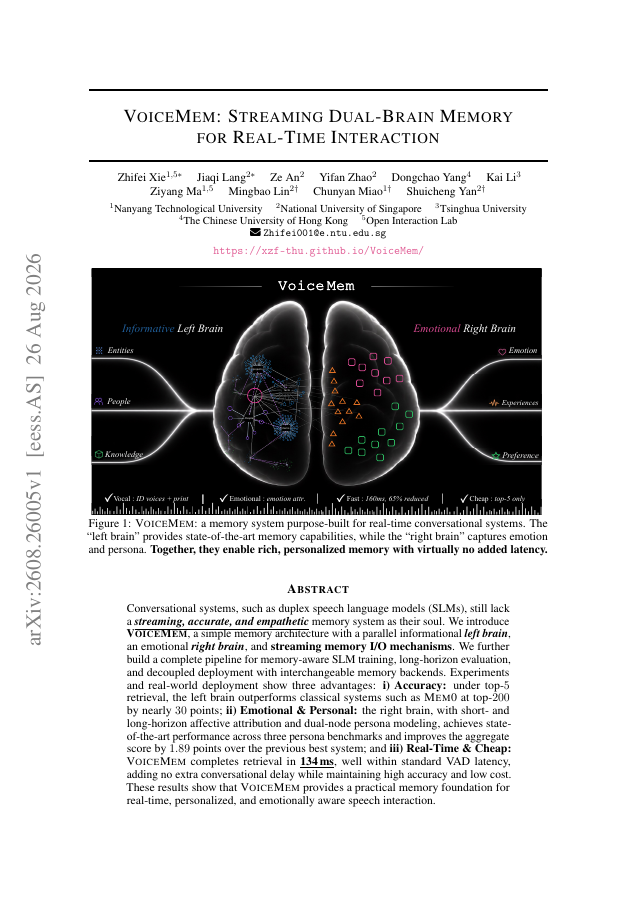
26 Aug 2026
Conversational systems, such as duplex speech language models (SLMs), still lack a streaming, accurate, and empathetic memory system as their soul. We introduce VoiceMem, a simple memory architecture with a parallel informational left brain, an emotional right brain, and…
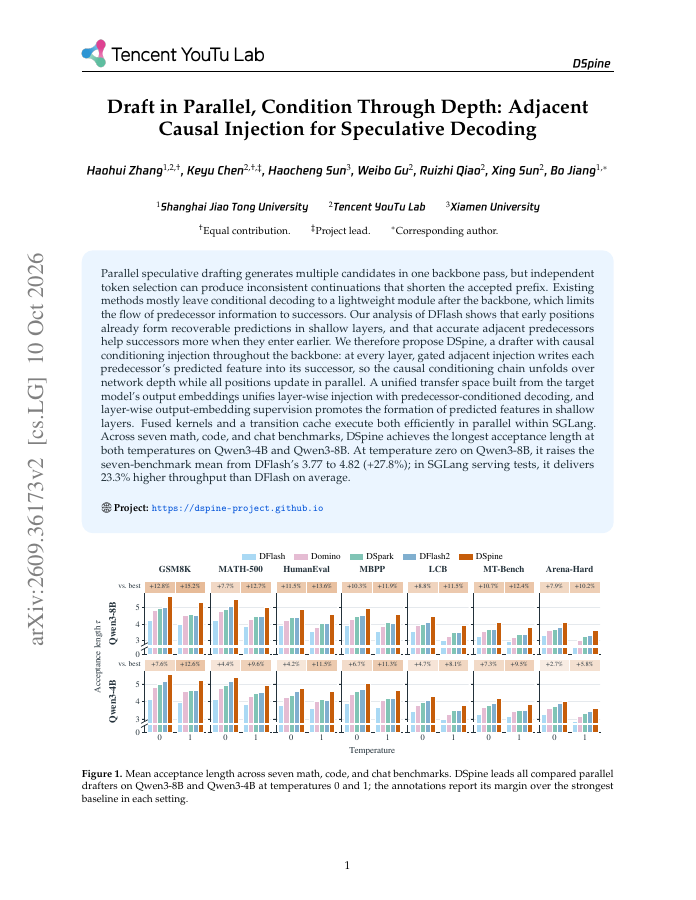
10 Oct 2026
Parallel speculative drafting generates multiple candidates in one backbone pass, but independent token selection can produce inconsistent continuations that shorten the accepted prefix.
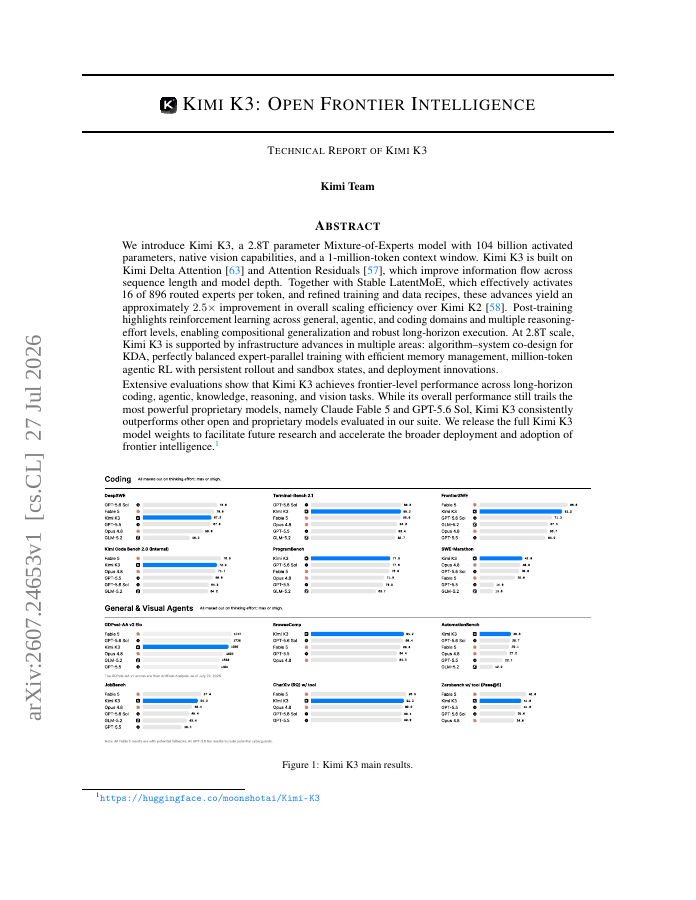
27 Jul 2026
We introduce Kimi K3, a 2.8T parameter Mixture-of-Experts model with 104 billion activated parameters, native vision capabilities, and a 1-million-token context window. Kimi K3 is built on Kimi Delta Attention and Attention Residuals, which improve information flow across…
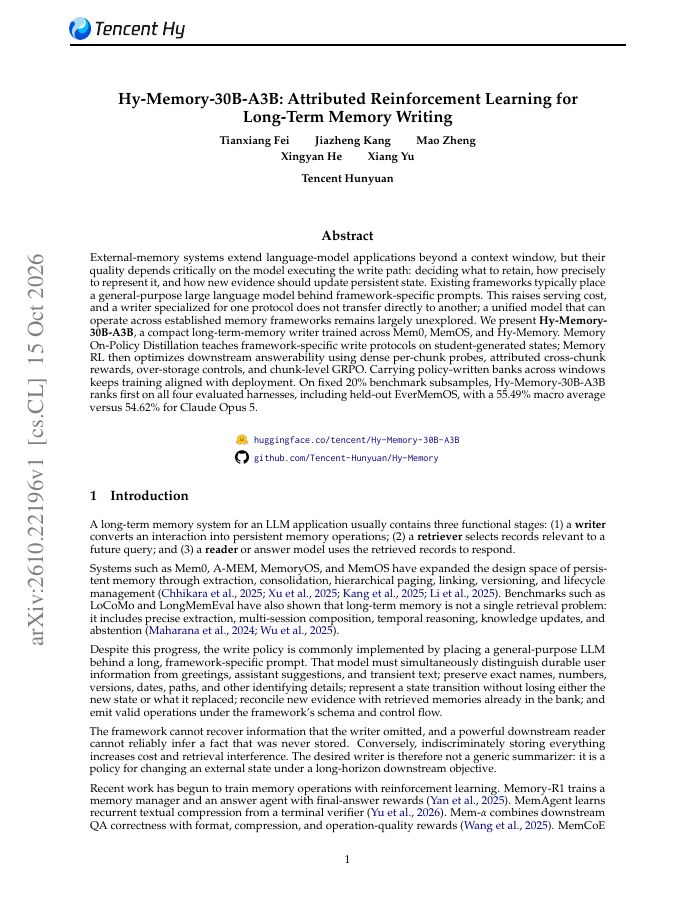
15 Oct 2026
External-memory systems extend language-model applications beyond a context window, but their quality depends critically on the model executing the write path: deciding what to retain, how precisely to represent it, and how new evidence should update persistent state.
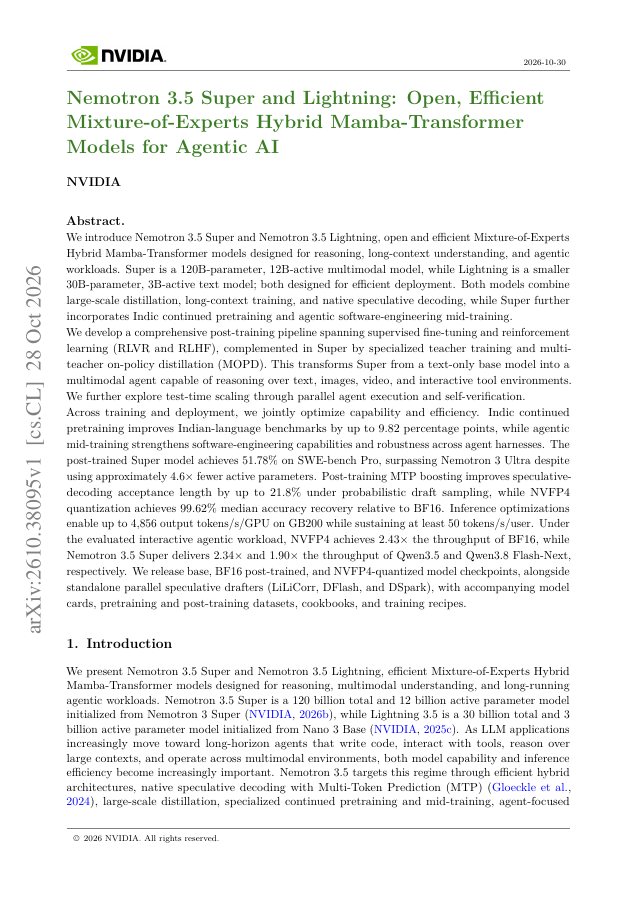
28 Oct 2026
We introduce Nemotron 3.5 Super and Nemotron 3.5 Lightning, open and efficient Mixture-of-Experts Hybrid Mamba-Transformer models designed for reasoning, long-context understanding, and agentic workloads.
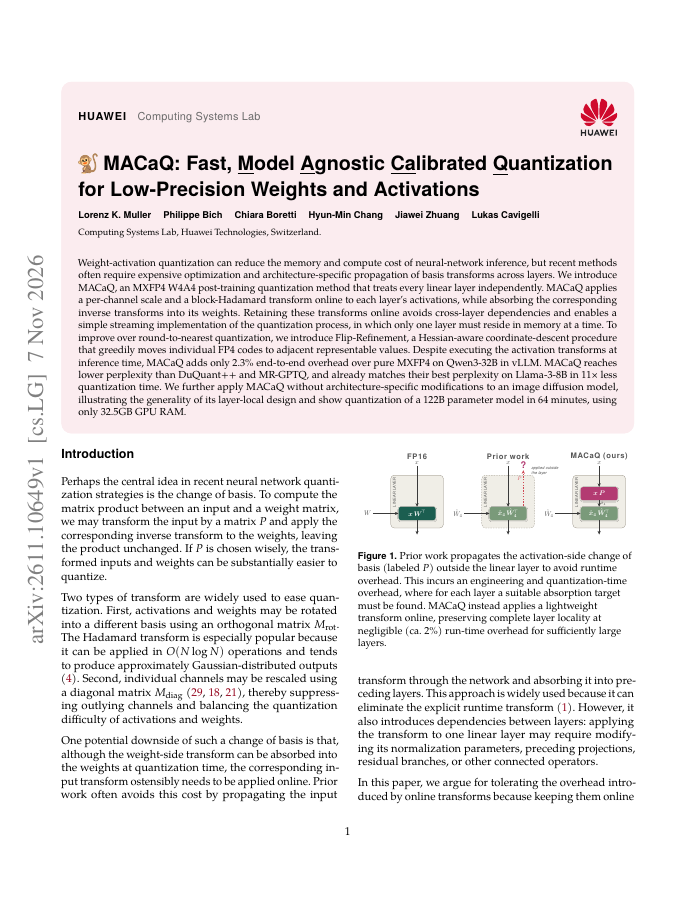
7 Nov 2026
Weight-activation quantization can reduce the memory and compute cost of neural-network inference, but recent methods often require expensive optimization and architecture-specific propagation of basis transforms across layers.
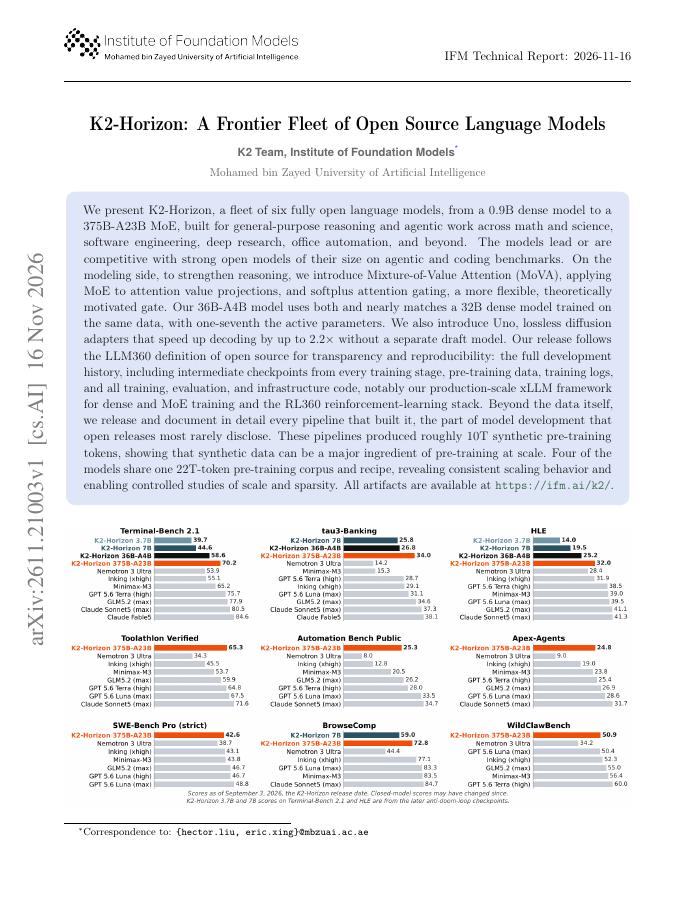
16 Nov 2026
We present K2-Horizon, a fleet of six fully open language models, from a 0.9B dense model to a 375B-A23B MoE, built for general-purpose reasoning and agentic work across math and science, software engineering, deep research, office automation, and beyond.
16 Nov 2026
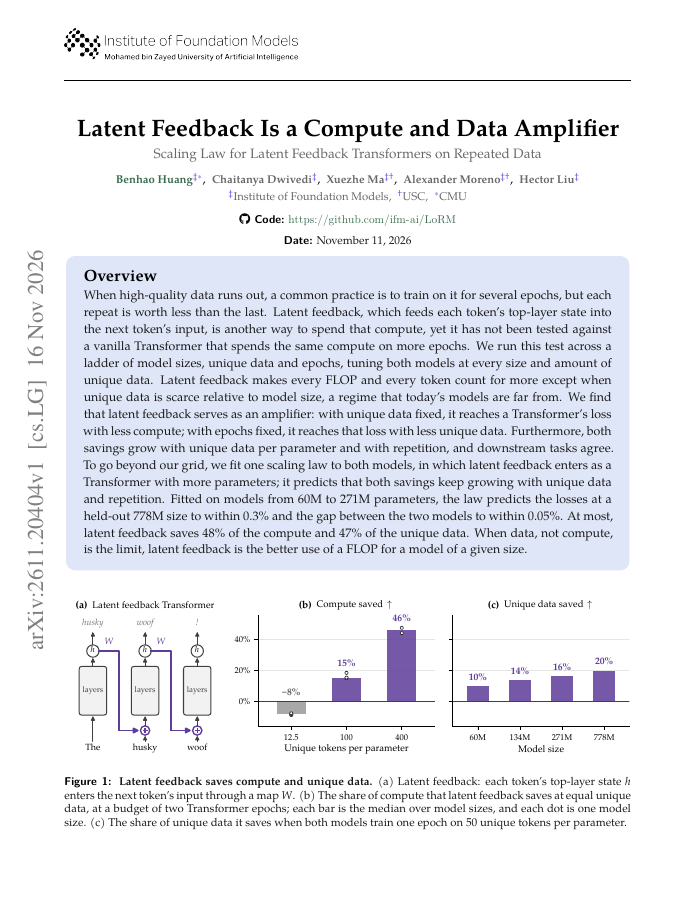
When high-quality data runs out, a common practice is to train on it for several epochs, but each repeat is worth less than the last. Latent feedback, which feeds each token's top-layer state into the next token's input, is another way to spend that compute, yet it has not been…
9 Nov 2026
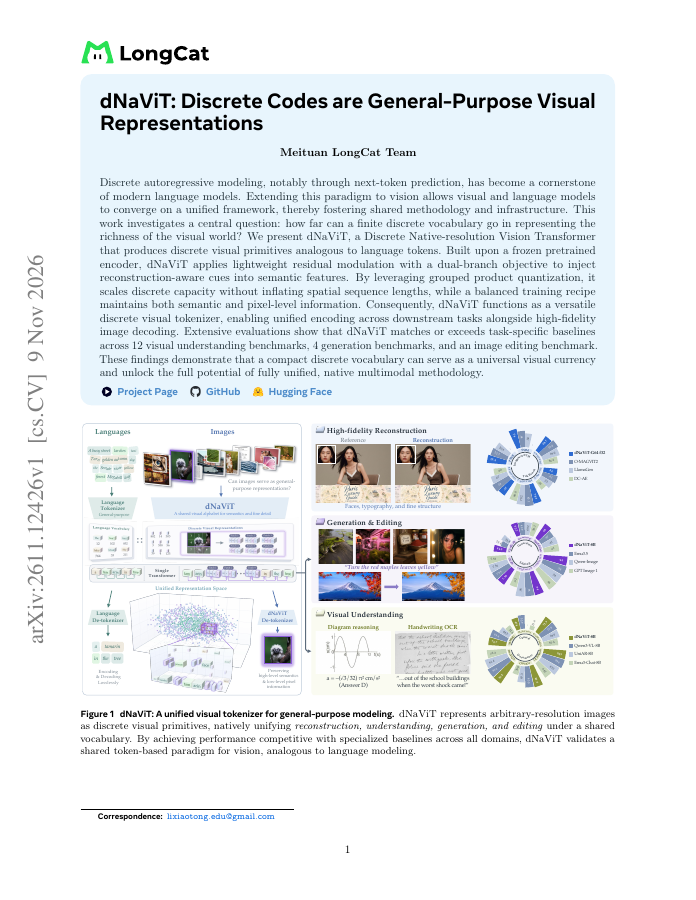
Discrete autoregressive modeling, notably through next-token prediction, has become a cornerstone of modern language models. Extending this paradigm to vision allows visual and language models to converge on a unified framework, thereby fostering shared methodology and…
29 Oct 2026
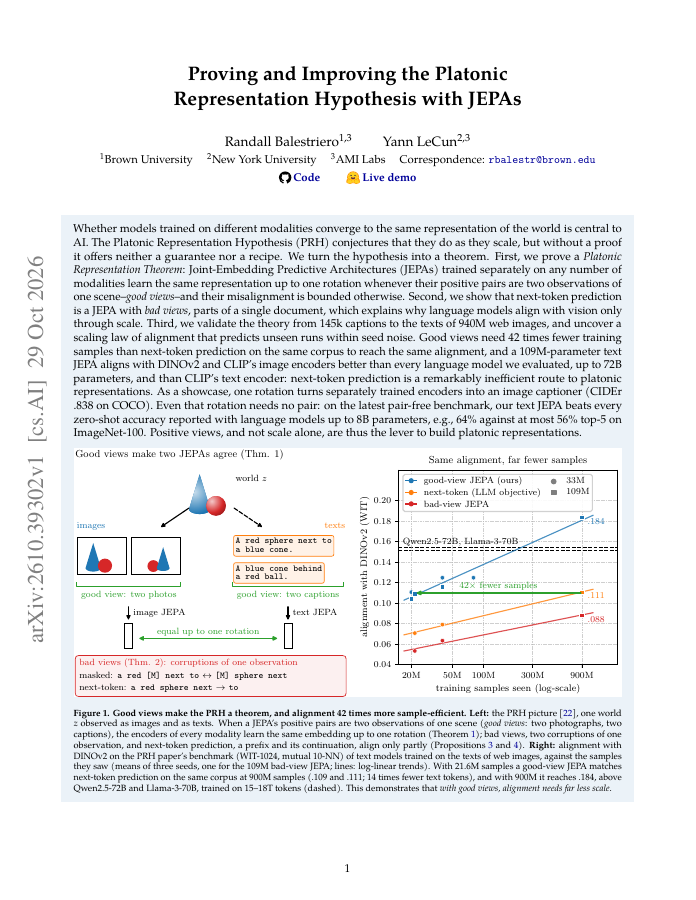
Whether models trained on different modalities converge to the same representation of the world is central to AI. The Platonic Representation Hypothesis (PRH) conjectures that they do as they scale, but without a proof it offers neither a guarantee nor a recipe.
15 Nov 2026
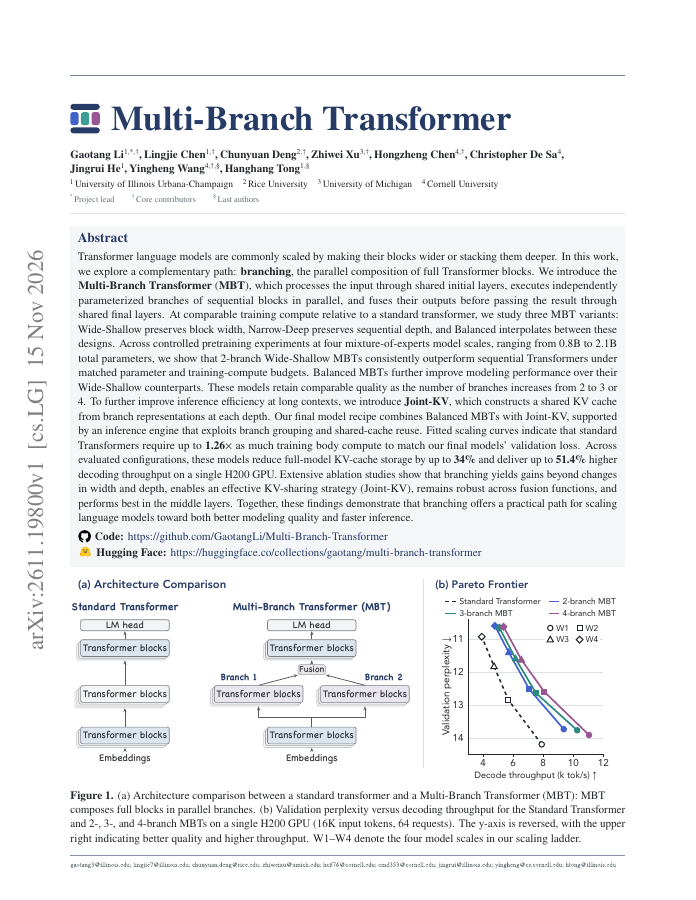
Transformer language models are commonly scaled by making their blocks wider or stacking them deeper. In this work, we explore a complementary path: branching, the parallel composition of full Transformer blocks.
16 Nov 2026
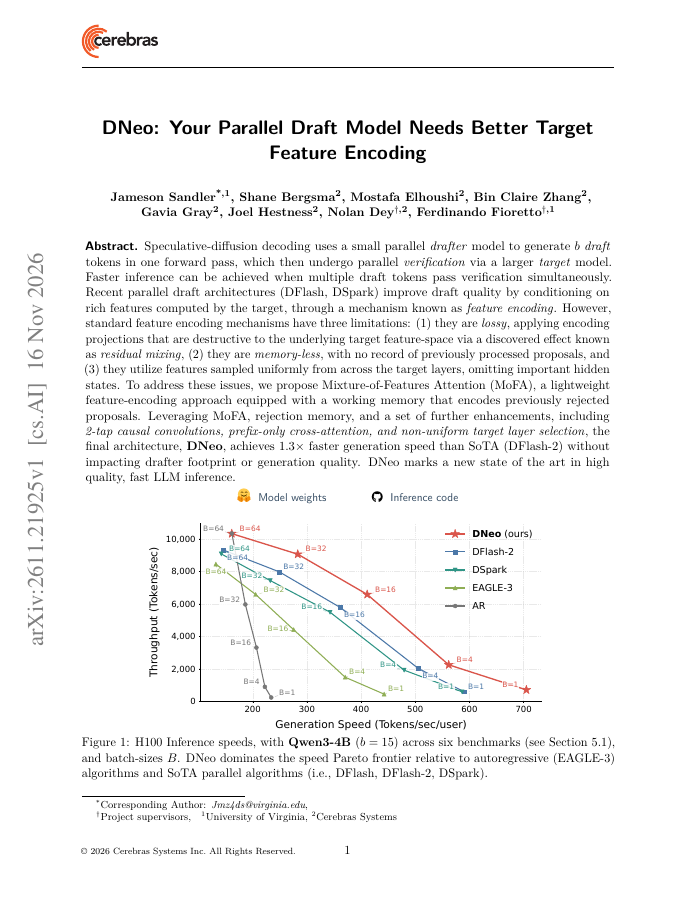
Speculative-diffusion decoding uses a small parallel drafter model to generate b draft tokens in one forward pass, which then undergo parallel verification via a larger target model. Faster inference can be achieved when multiple draft tokens pass verification simultaneously.
17 Nov 2026
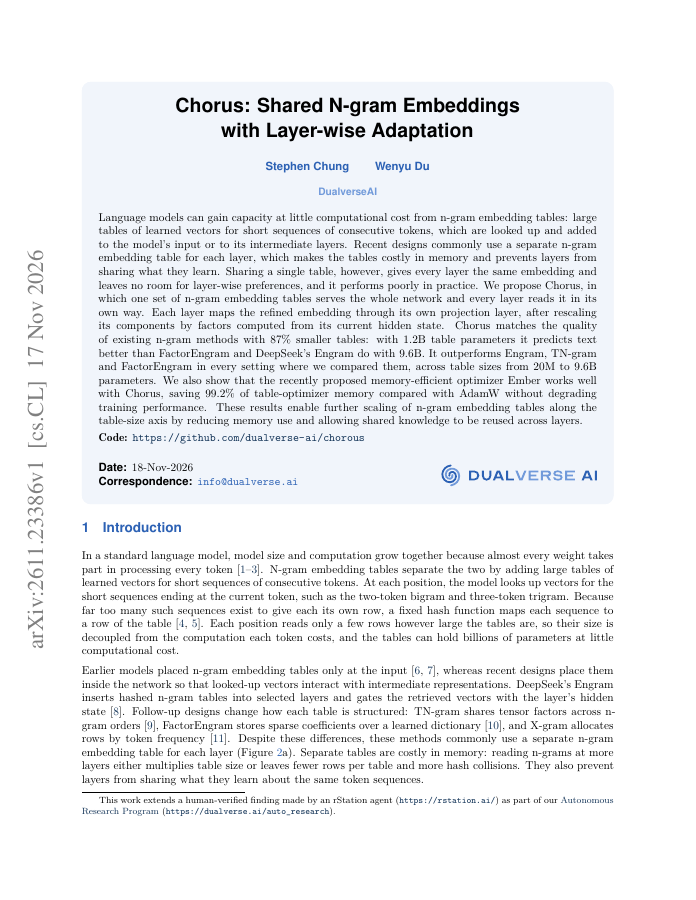
Language models can gain capacity at little computational cost from n-gram embedding tables: large tables of learned vectors for short sequences of consecutive tokens, which are looked up and added to the model's input or to its intermediate layers.
18 Nov 2026
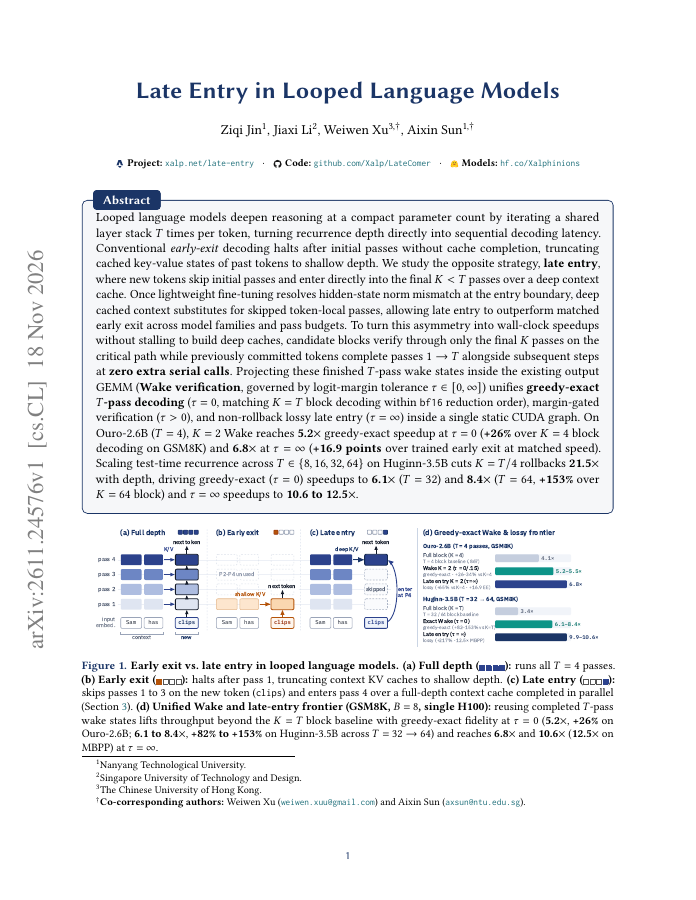
Looped language models deepen reasoning at a compact parameter count by iterating a shared layer stack T times per token, turning recurrence depth directly into sequential decoding latency.