
Trajectory-Refined Distillation
7 Jun 2026
On-policy distillation (OPD) has become a central post-training tool for large language models (LLMs), providing dense per-token teacher supervision along the student's own rollouts.
1082.9/h
Trending research and the full catalog - each paper linked to the benchmarks, methods, and models it introduces.
Filtering here covers the 2,000 most recent papers, as much as one page can hold in memory. See the full index of 22,656 papers.
7 Jun 2026
On-policy distillation (OPD) has become a central post-training tool for large language models (LLMs), providing dense per-token teacher supervision along the student's own rollouts.
8 Oct 2026
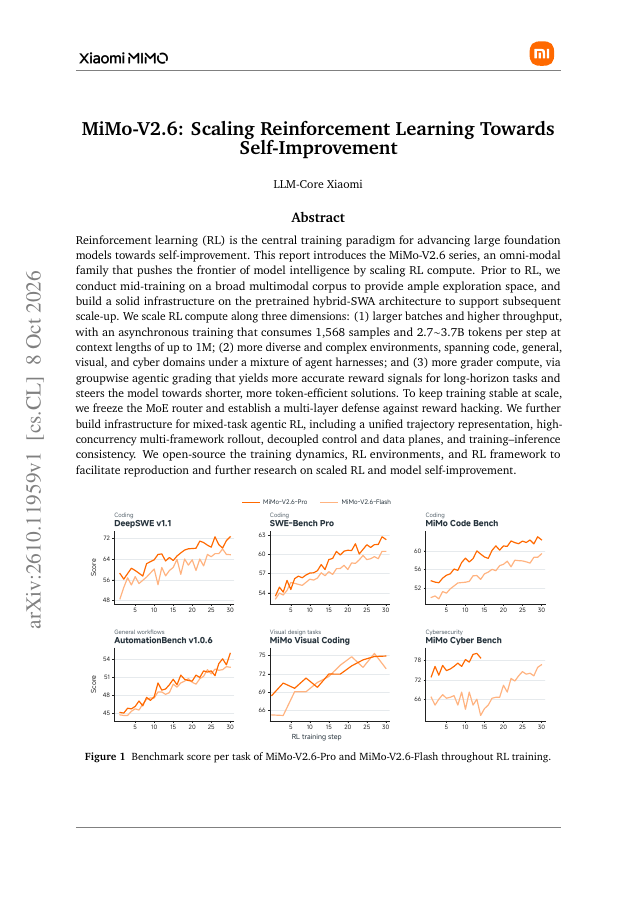
Reinforcement learning (RL) is the central training paradigm for advancing large foundation models towards self-improvement. This report introduces the MiMo-V2.6 series, an omni-modal family that pushes the frontier of model intelligence by scaling RL compute.
12 Oct 2026
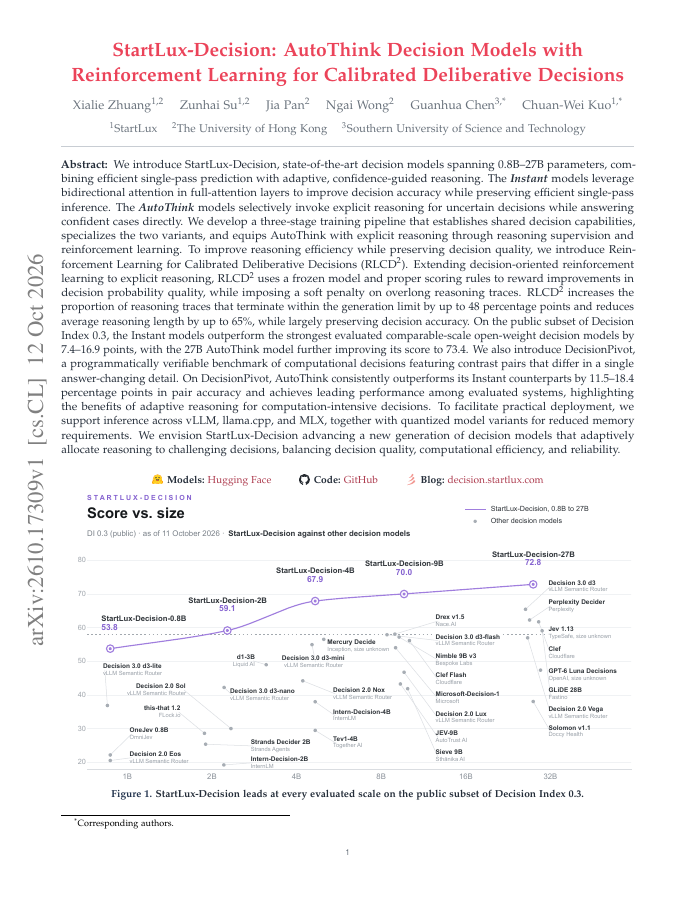
We introduce StartLux-Decision, decision models from 0.8B to 27B parameters that combine efficient single-pass prediction with adaptive, confidence-guided reasoning. The Instant models use bidirectional attention in full-attention layers to improve decision accuracy while…
13 Oct 2026
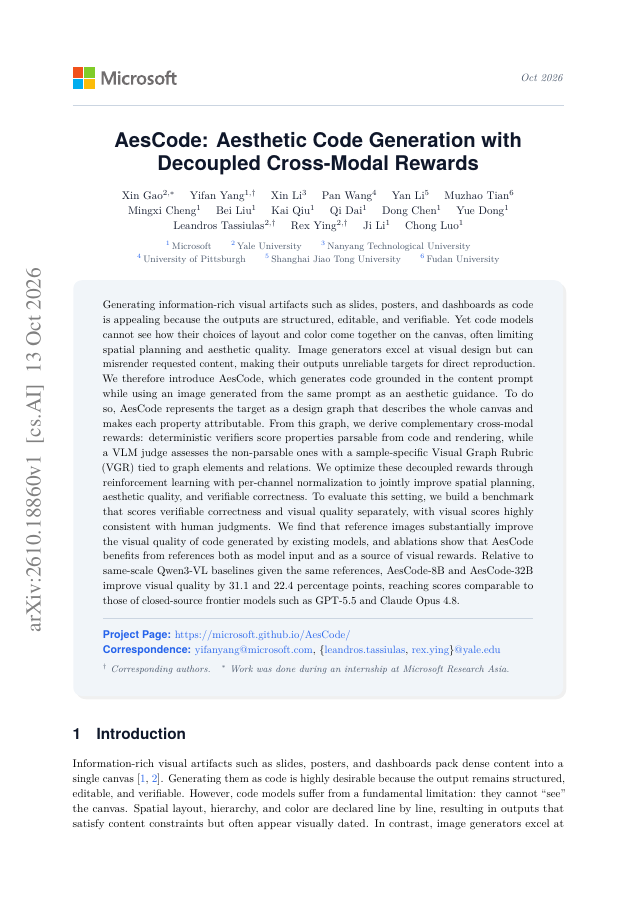
Generating information-rich visual artifacts such as slides, posters, and dashboards as code is appealing because the outputs are structured, editable, and verifiable. Yet code models cannot see how their choices of layout and color come together on the canvas, often limiting…
15 Oct 2026
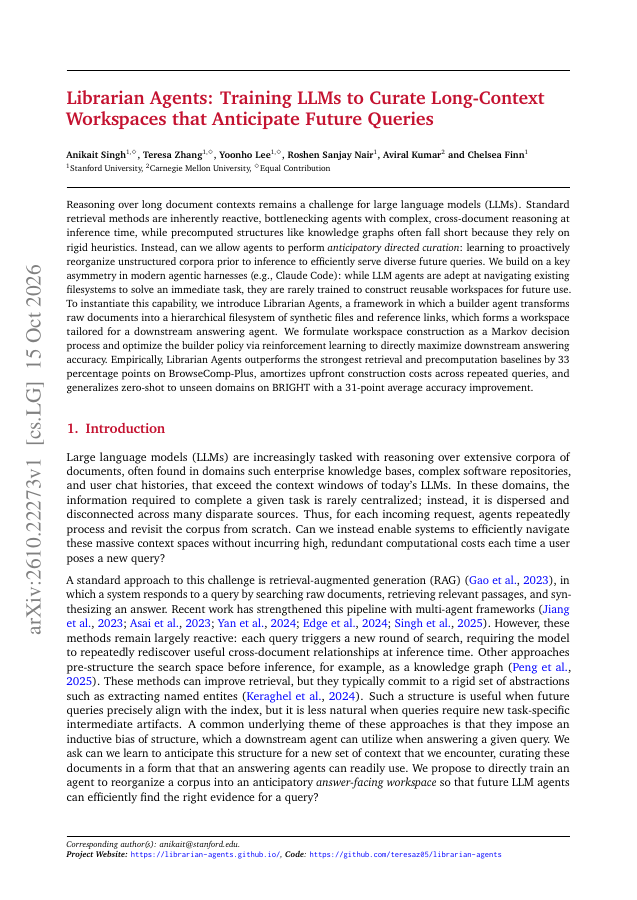
Reasoning over long document contexts remains a challenge for large language models (LLMs). Standard retrieval methods are inherently reactive, bottlenecking agents with complex, cross-document reasoning at inference time, while precomputed structures like knowledge graphs often…
15 Oct 2026
External-memory systems extend language-model applications beyond a context window, but their quality depends critically on the model executing the write path: deciding what to retain, how precisely to represent it, and how new evidence should update persistent state.
9 Jul 2026
Existing methods for automatic music transcription are often limited to single-instrument recordings or fail on complex, real music mixes. Although previous work utilizes synthetic training data, the resulting models generalize poorly, leading to largely unusable transcription…
8 Sep 2026
We introduce AuK, an open-source foundational model that unifies speech generation and editing through a common interface of natural-language instructions and audio context.
9 Sep 2026
We study how model post-training and test-time inference design affect natural-language proof generation for hard olympiad mathematics. Starting from Nemotron 3 Ultra, we train two specialist checkpoints using supervised fine-tuning and reinforcement learning, and evaluate…
16 Oct 2026
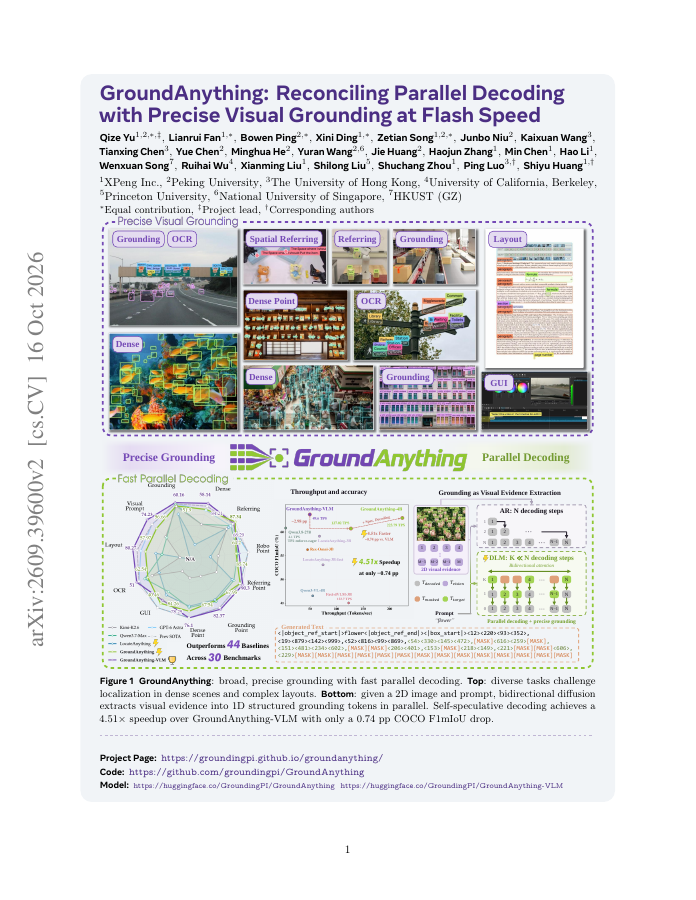
Autoregressive (AR) grounding models serialize spatial predictions, introducing sequential latency and imposing a causal order on output tokens. We view grounding as visual evidence extraction: objects, locations, and spatial relations are jointly constrained by the image and…
1 Oct 2026
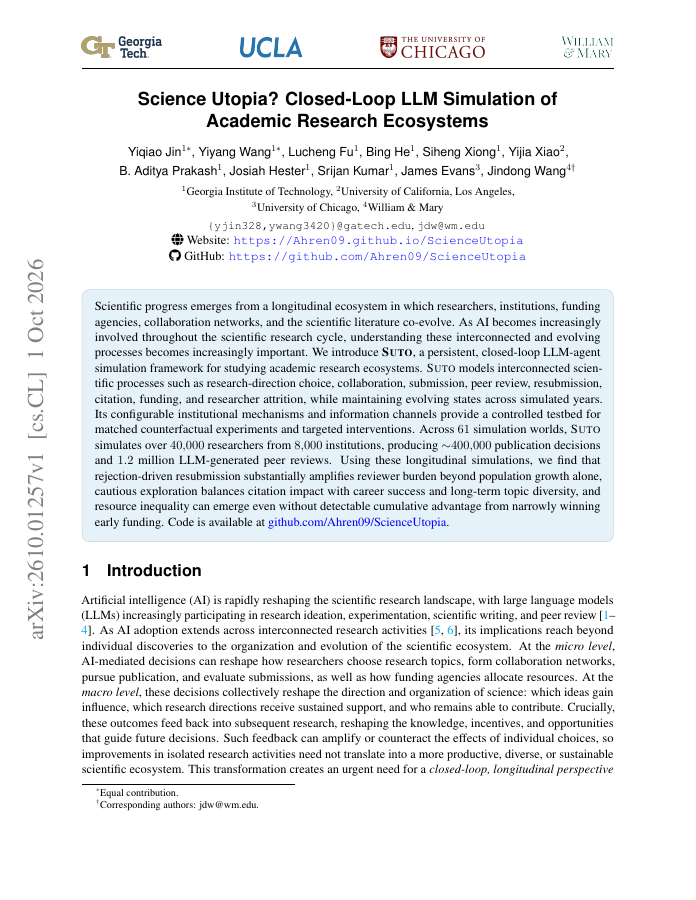
Scientific progress emerges from a longitudinal ecosystem in which researchers, institutions, funding agencies, collaboration networks, and the scientific literature co-evolve.
7 Oct 2026
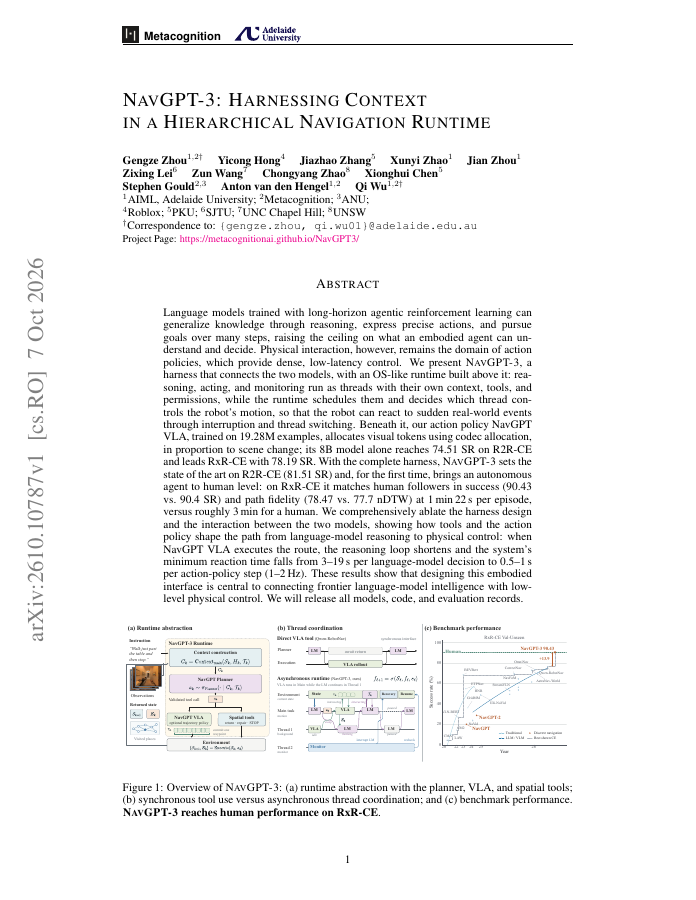
Language models trained with long-horizon agentic reinforcement learning can generalize knowledge through reasoning, express precise actions, and pursue goals over many steps, raising the ceiling on what an embodied agent can understand and decide.
16 Oct 2026
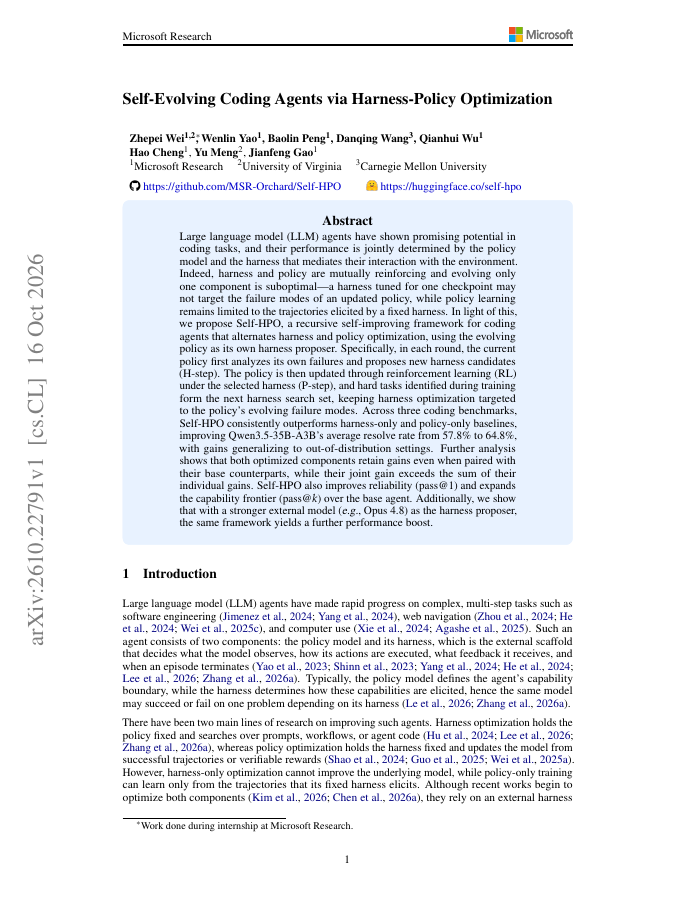
Large language model (LLM) agents have shown promising potential in coding tasks, and their performance is jointly determined by the policy model and the harness that mediates their interaction with the environment.
5 Oct 2026
Modern information systems, including many agentic workflows, use dense retrieval to explore large amounts of unstructured data. However, dense retrieval relies on surface-level semantic similarity, which is insufficient for increasingly complex search applications.
26 Sep 2026
Document rerankers determine what evidence reaches the downstream model in RAG and deep research, yet mainstream rerankers select by relevance matching, and individually relevant documents rarely constitute the complete, complementary, non-redundant set a complex information…
14 Oct 2026
Self-distillation in agentic reinforcement learning has produced a growing number of methods. However, existing evaluations often reuse published baseline scores under differing experimental conditions, provide few direct comparisons among contemporaneous methods, and give…
8 Oct 2026
Online reinforcement learning (RL) fine-tunes diffusion models with black-box rewards, but reverse-process methods such as Flow-GRPO are limited in efficiency by poor credit assignment, while forward-process methods such as DiffusionNFT are efficient yet unstable without…
16 Oct 2026
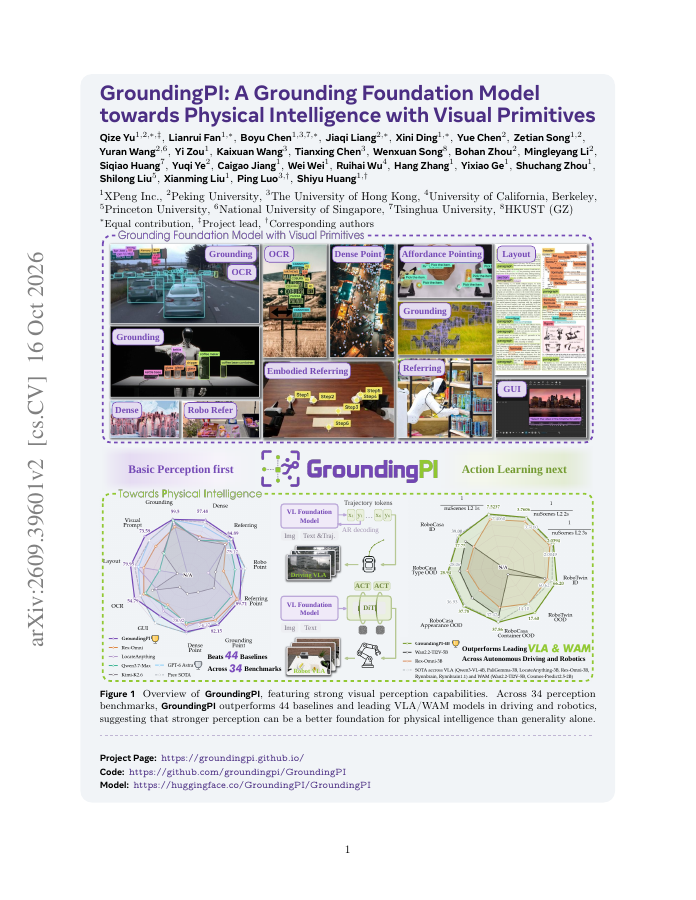
Precise grounding matters. It specifies which object is the target and where that object is, even in clutter and for tiny objects, and it has to be fast enough for closed-loop control.
29 Sep 2026
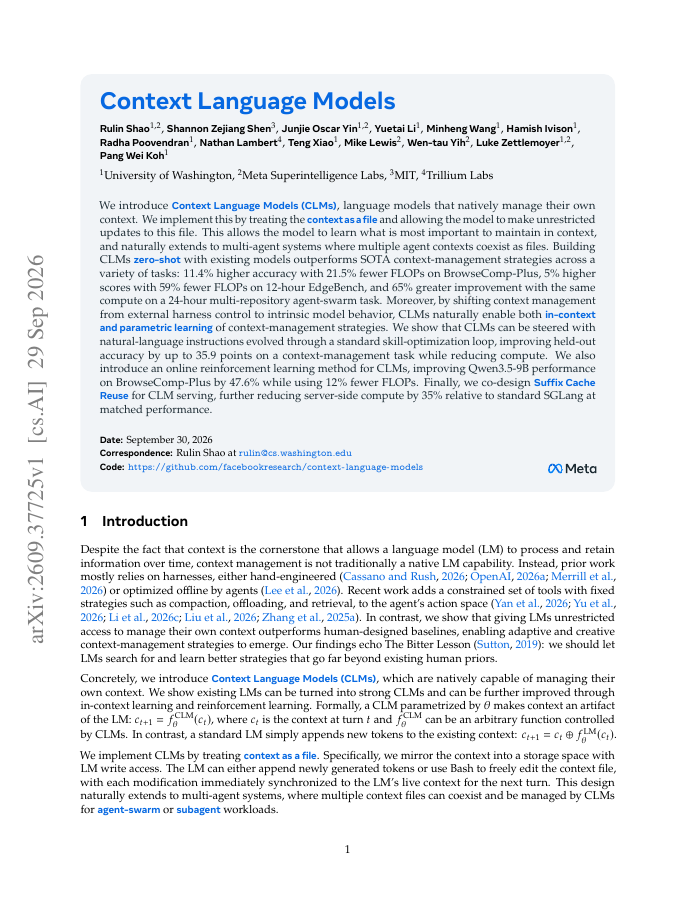
We introduce Context Language Models (CLMs), language models that natively manage their own context. We implement this by treating the context as a file and allowing the model to make unrestricted updates to this file.
18 Oct 2026
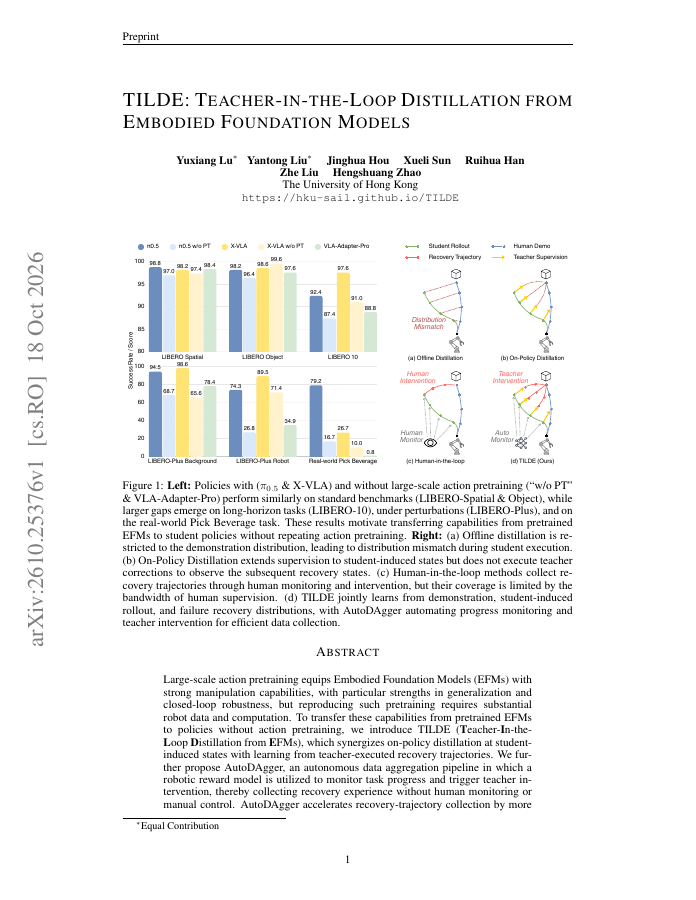
Large-scale action pretraining equips Embodied Foundation Models (EFMs) with strong manipulation capabilities, with particular strengths in generalization and closed-loop robustness, but reproducing such pretraining requires substantial robot data and computation.
18 Oct 2026
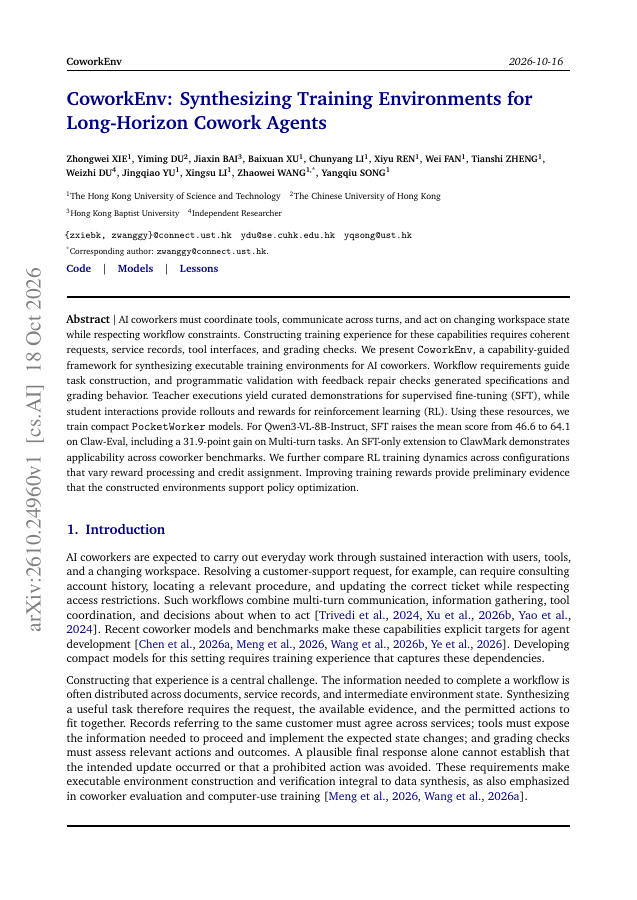
AI coworkers must coordinate tools, communicate across turns, and act on changing workspace state while respecting workflow constraints. Constructing training experience for these capabilities requires coherent requests, service records, tool interfaces, and grading checks.