13 Nov 2026
We introduce Gamer, a generalist agent framework built for long-horizon tasks in complex interactive environments. Its end-to-end architecture combines perception, memory management, and multi-step reasoning.
Trending research and the full catalog - each paper linked to the benchmarks, methods, and models it introduces.
Filtering here covers the 2,000 most recent papers, as much as one page can hold in memory. See the full index of 22,997 papers.
13 Nov 2026
We introduce Gamer, a generalist agent framework built for long-horizon tasks in complex interactive environments. Its end-to-end architecture combines perception, memory management, and multi-step reasoning.
6 Nov 2026
Looping is a powerful inductive bias for reasoning. By repeatedly iterating a recurrent block, looped models can scale their effective depth and enable multi-step reasoning in latent space.
6 Nov 2026
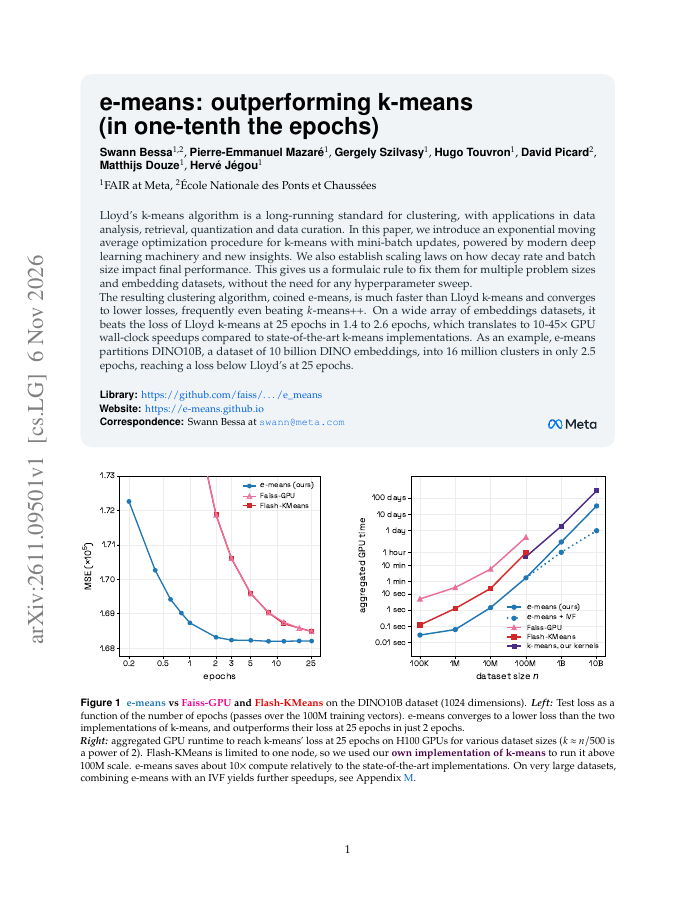
Lloyd's k-means algorithm is a long-running standard for clustering, with applications in data analysis, retrieval, quantization and data curation. In this paper, we introduce an exponential moving average optimization procedure for k-means with mini-batch updates, powered by…
15 Nov 2026
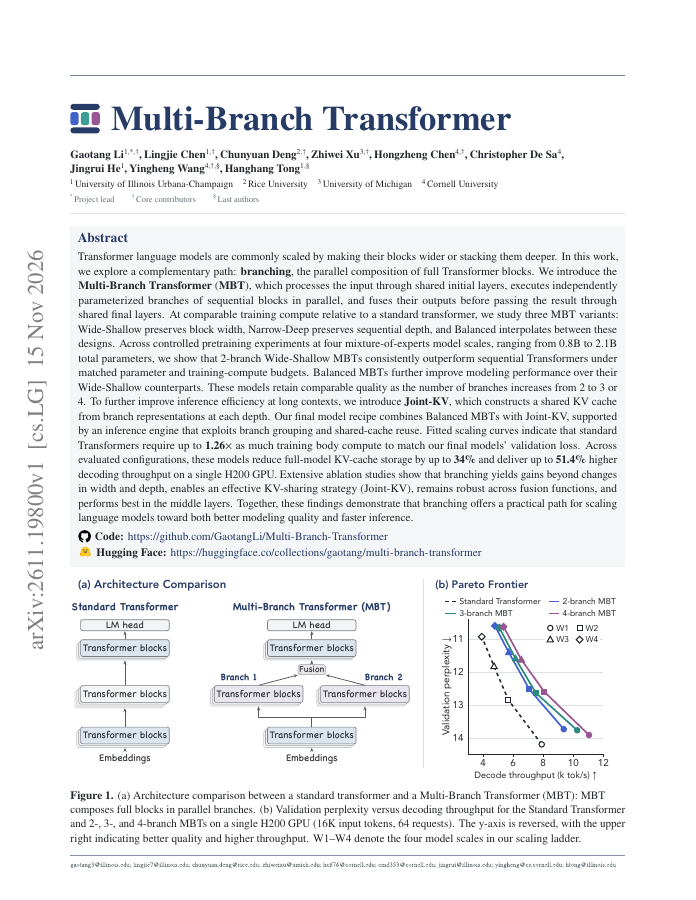
Transformer language models are commonly scaled by making their blocks wider or stacking them deeper. In this work, we explore a complementary path: branching, the parallel composition of full Transformer blocks.
5 Nov 2026
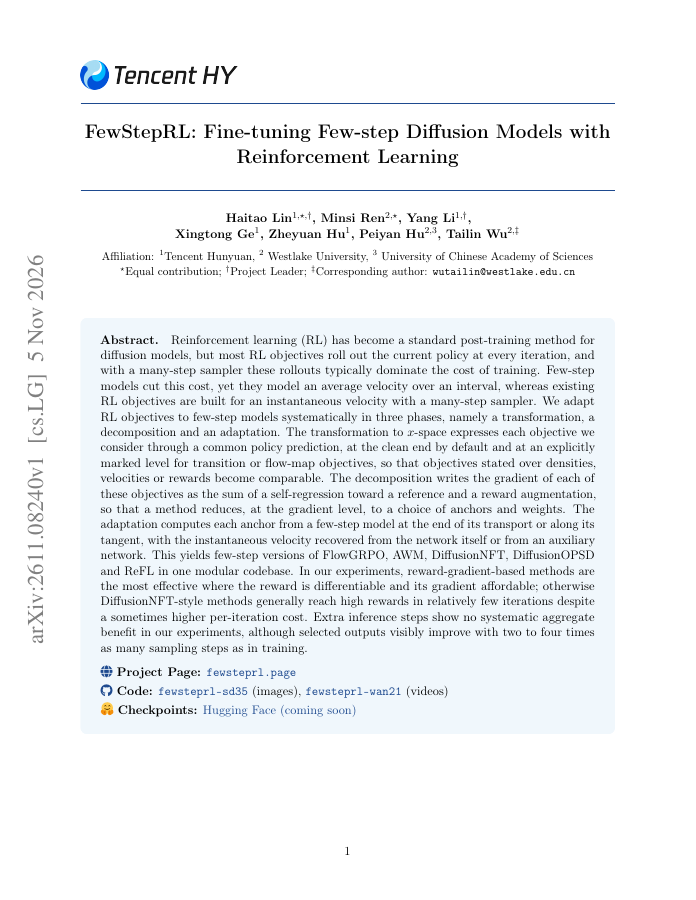
Reinforcement learning (RL) has become a standard post-training method for diffusion models, but most RL objectives roll out the current policy at every iteration, and with a many-step sampler these rollouts typically dominate the cost of training.
13 Nov 2026
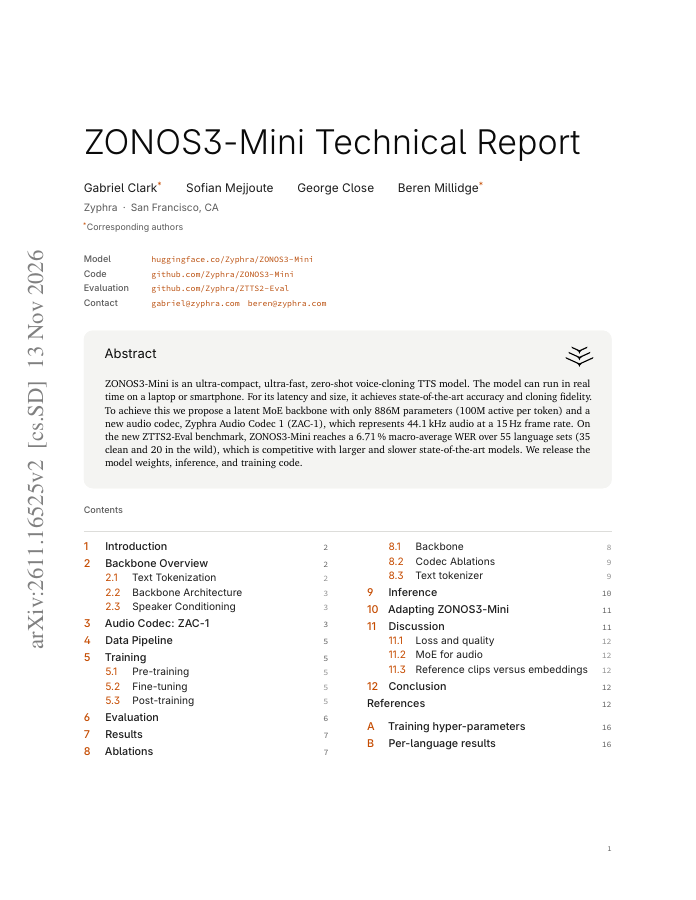
ZONOS3-Mini is an ultra-compact, ultra-fast, zero-shot voice-cloning TTS model. The model can run in real time on a laptop or smartphone. For its latency and size, it achieves state-of-the-art accuracy and cloning fidelity.
16 Nov 2026
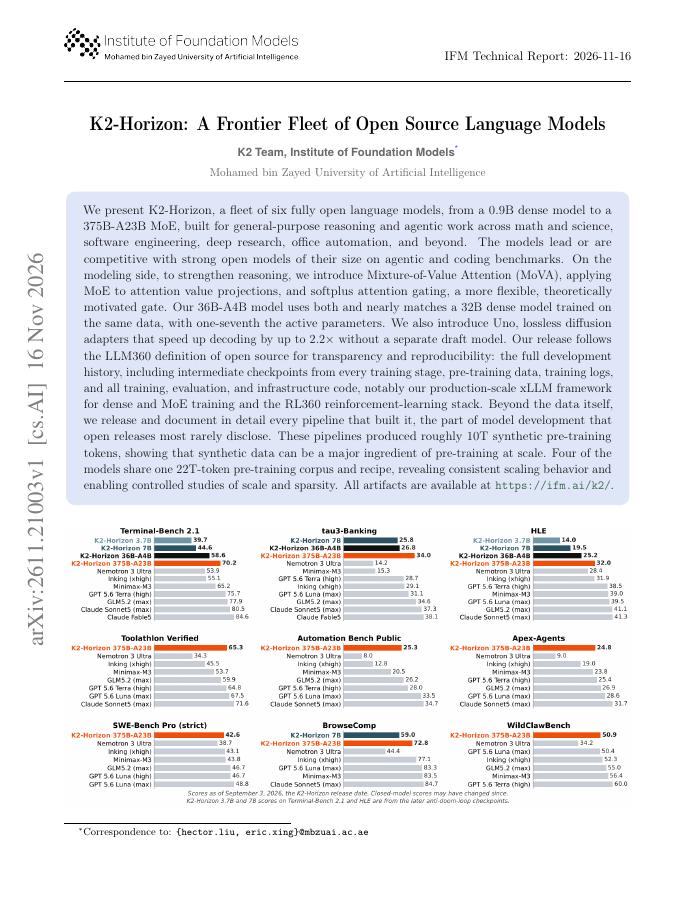
We present K2-Horizon, a fleet of six fully open language models, from a 0.9B dense model to a 375B-A23B MoE, built for general-purpose reasoning and agentic work across math and science, software engineering, deep research, office automation, and beyond.
10 Nov 2026
Understanding 4D scenes is a core challenge in visual intelligence, requiring models to jointly capture scene geometry, appearance, and dynamics from partial observations.
7 Nov 2026
How little of a pretrained large language model (LLM) has to change for it to acquire new capabilities? We find that zeroing fewer than 0.05% of its weights, with no other modification, matches full fine-tuning (FFT) at scale across three LLM post-training regimes: reinforcement…
9 Nov 2026
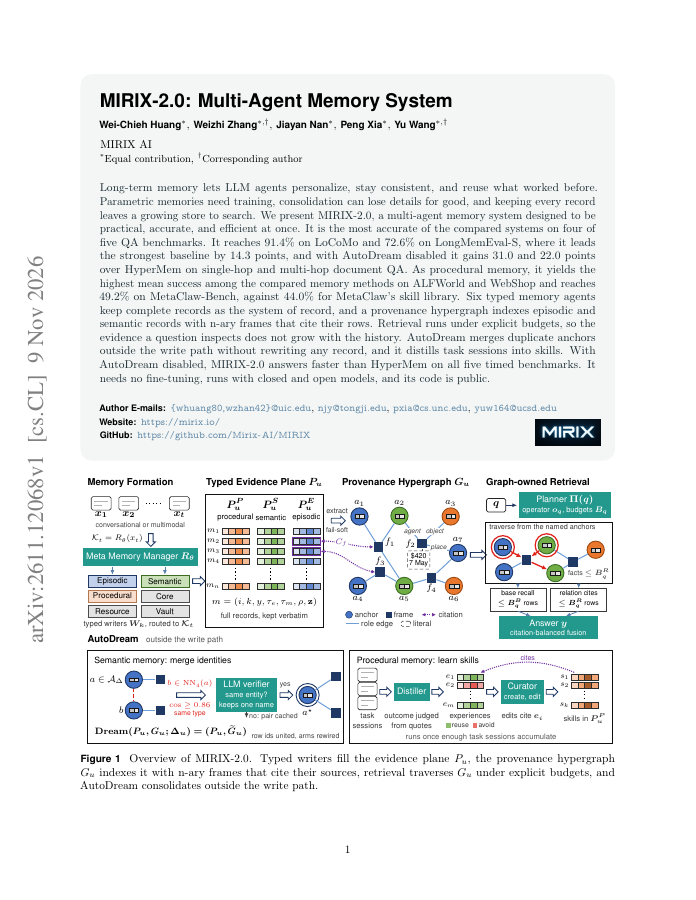
Long-term memory lets LLM agents personalize, stay consistent, and reuse what worked before. Parametric memories need training, consolidation can lose details for good, and keeping every record leaves a growing store to search.
22 Oct 2026
Many language-model pipelines end in a closed-set decision, such as selecting a tool. Prompting a large language model for it is slow and order-sensitive. We ask how small an encoder for such decisions can be and whether it should read the options jointly or separately.
6 Nov 2026
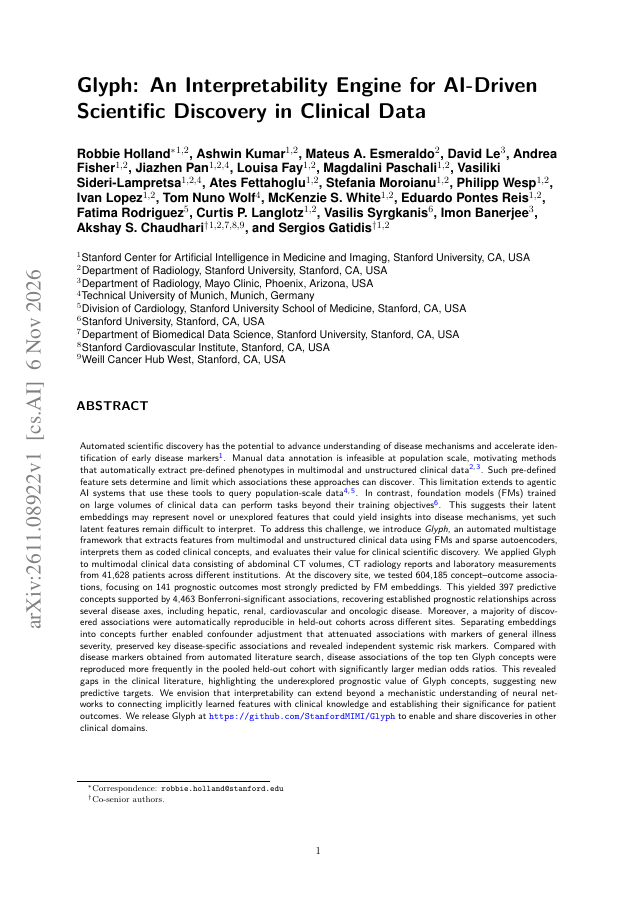
Automated scientific discovery has the potential to advance understanding of disease mechanisms and accelerate identification of early disease markers. Manual data annotation is infeasible at population scale, motivating methods that automatically extract pre-defined phenotypes…
15 Nov 2026
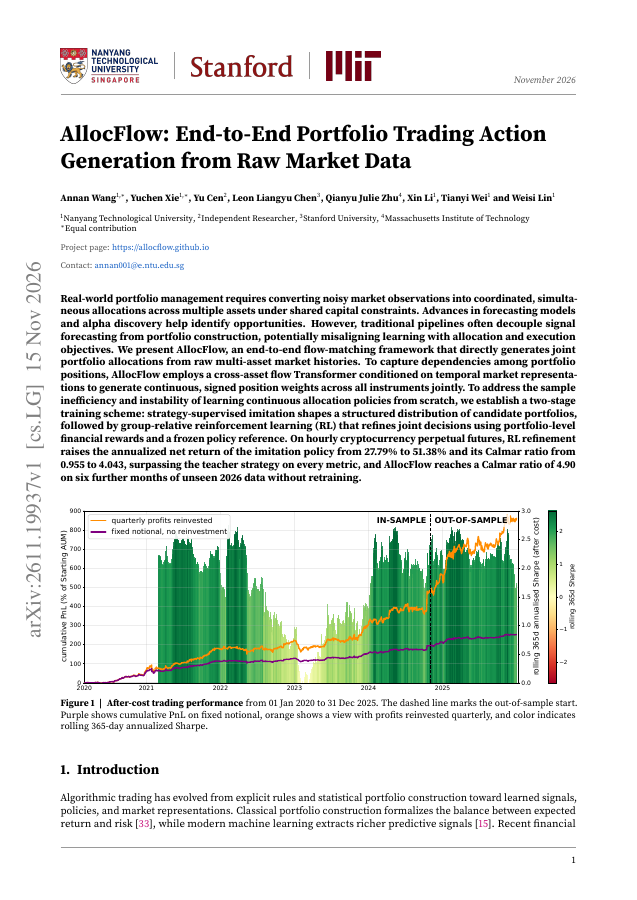
Real-world portfolio management requires converting noisy market observations into coordinated, simultaneous allocations across multiple assets under shared capital constraints. Advances in forecasting models and alpha discovery help identify opportunities.
2 Nov 2026
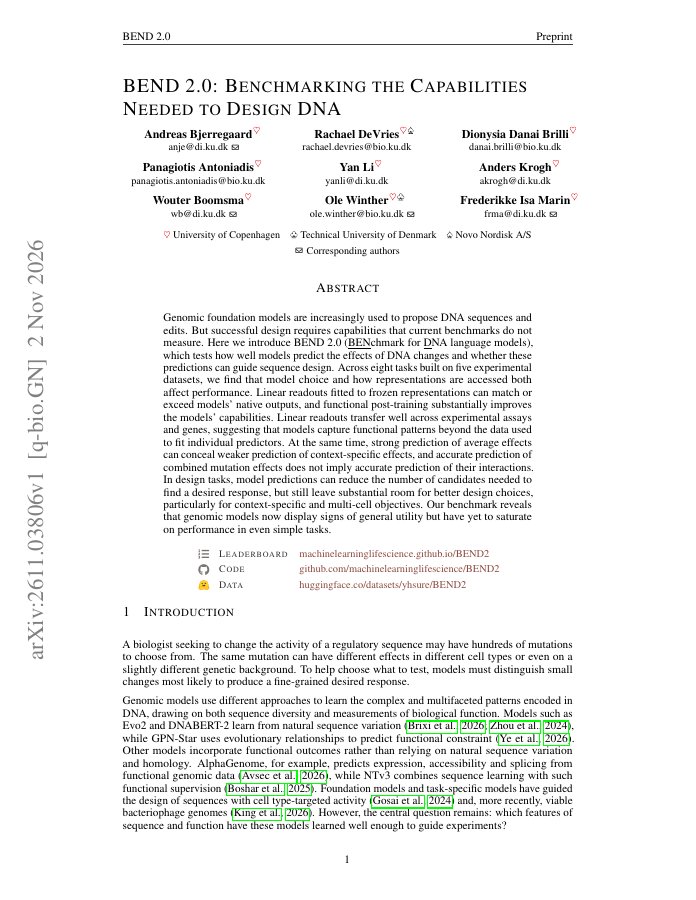
Genomic foundation models are increasingly used to propose DNA sequences and edits. But successful design requires capabilities that current benchmarks do not measure. Here we introduce BEND 2.0 (BENchmark for DNA language models), which tests how well models predict the effects…
13 Nov 2026
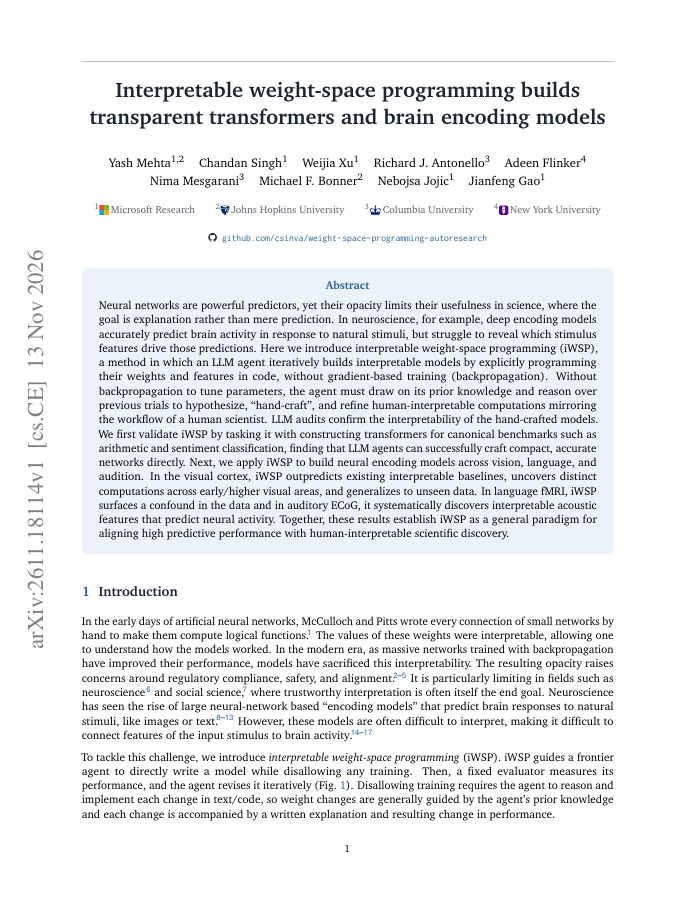
Neural networks are powerful predictors, yet their opacity limits their usefulness in science, where the goal is explanation rather than mere prediction. In neuroscience, for example, deep encoding models accurately predict brain activity in response to natural stimuli, but…
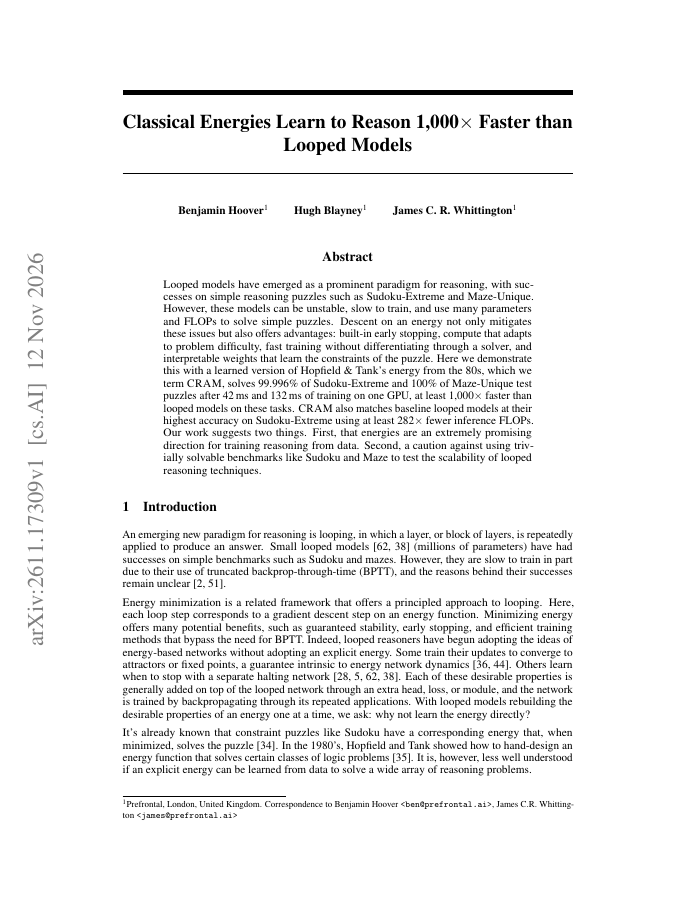
12 Nov 2026
Looped models have emerged as a prominent paradigm for reasoning, with successes on simple reasoning puzzles such as Sudoku-Extreme and Maze-Unique. However, these models can be unstable, slow to train, and use many parameters and FLOPs to solve simple puzzles.
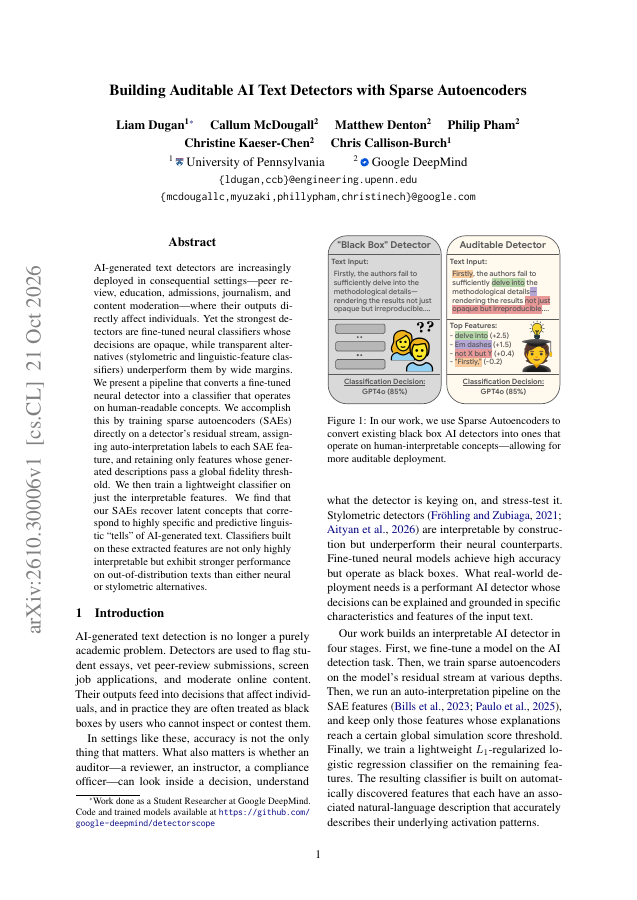
21 Oct 2026
AI-generated text detectors are increasingly deployed in consequential settings---peer review, education, admissions, journalism, and content moderation---where their outputs directly affect individuals.
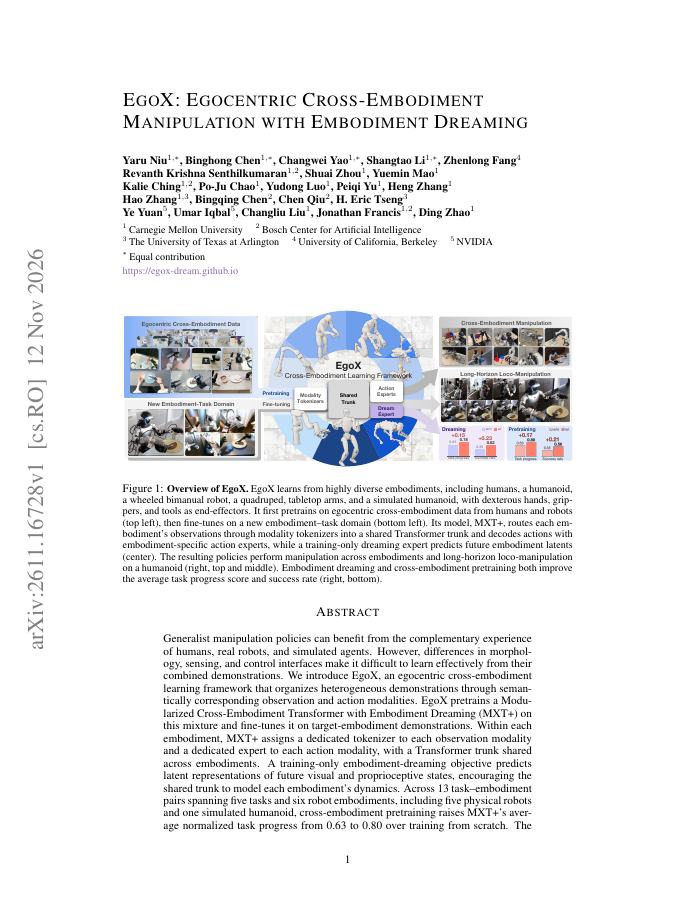
12 Nov 2026
Generalist manipulation policies can benefit from the complementary experience of humans, real robots, and simulated agents. However, differences in morphology, sensing, and control interfaces make it difficult to learn effectively from their combined demonstrations.
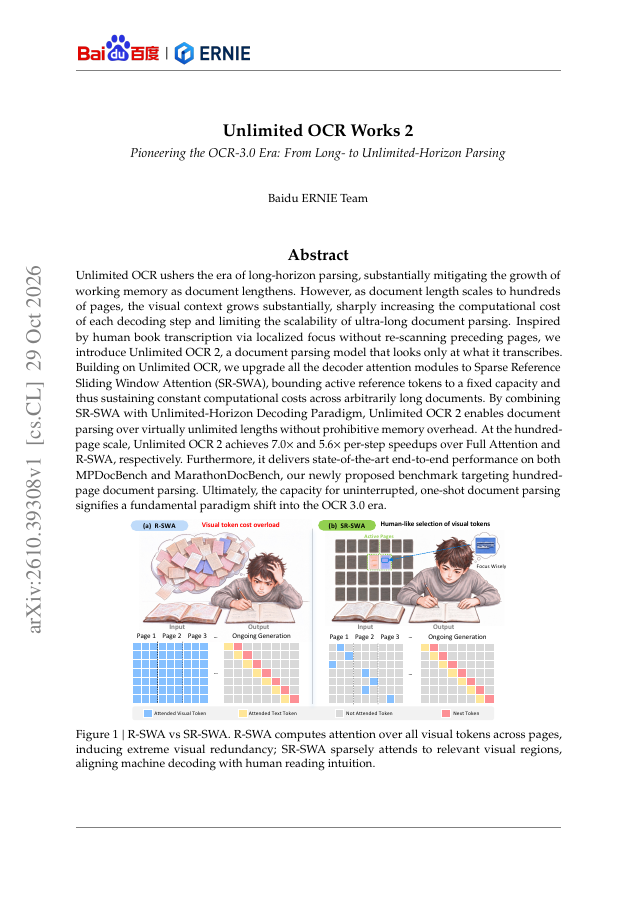
29 Oct 2026
Unlimited OCR ushers the era of long-horizon parsing, substantially mitigating the growth of working memory as document lengthens. However, as document length scales to hundreds of pages, the visual context grows substantially, sharply increasing the computational cost of each…
7 Nov 2026
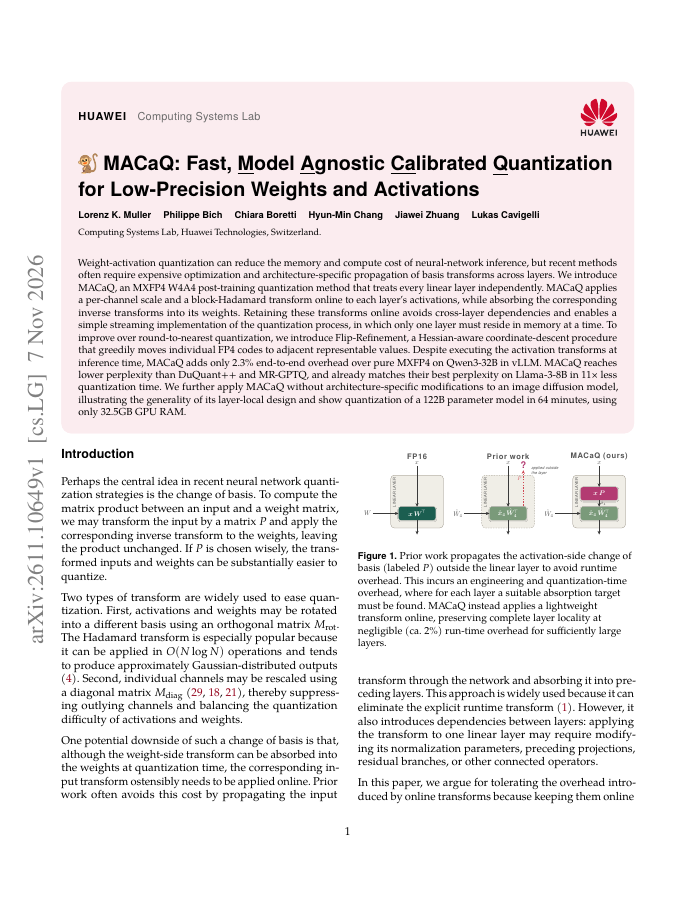
Weight-activation quantization can reduce the memory and compute cost of neural-network inference, but recent methods often require expensive optimization and architecture-specific propagation of basis transforms across layers.
16 Nov 2026
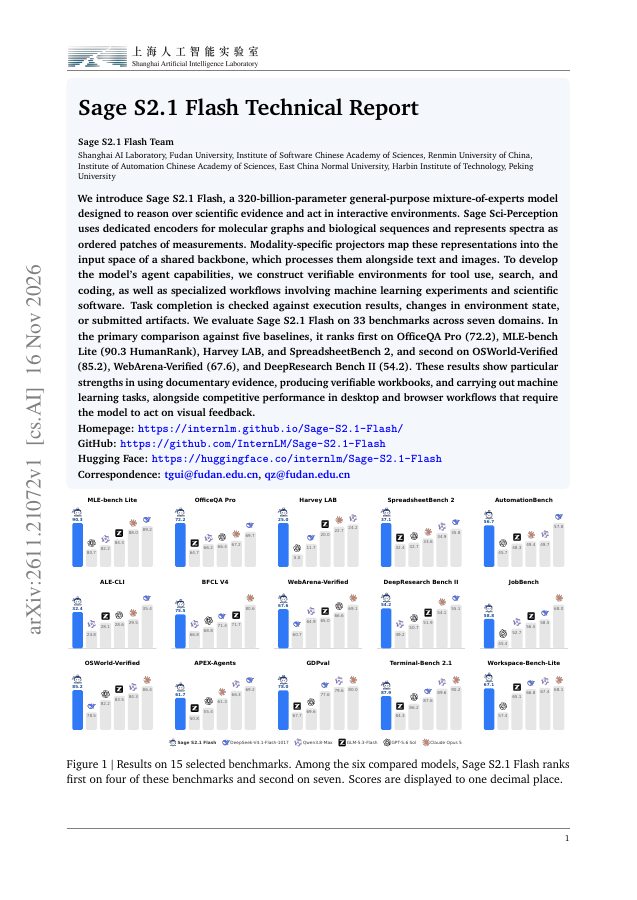
We introduce Sage S1.5 Flash, a 320-billion-parameter general-purpose mixture-of-experts model designed to reason over scientific evidence and act in interactive environments.
30 Oct 2026
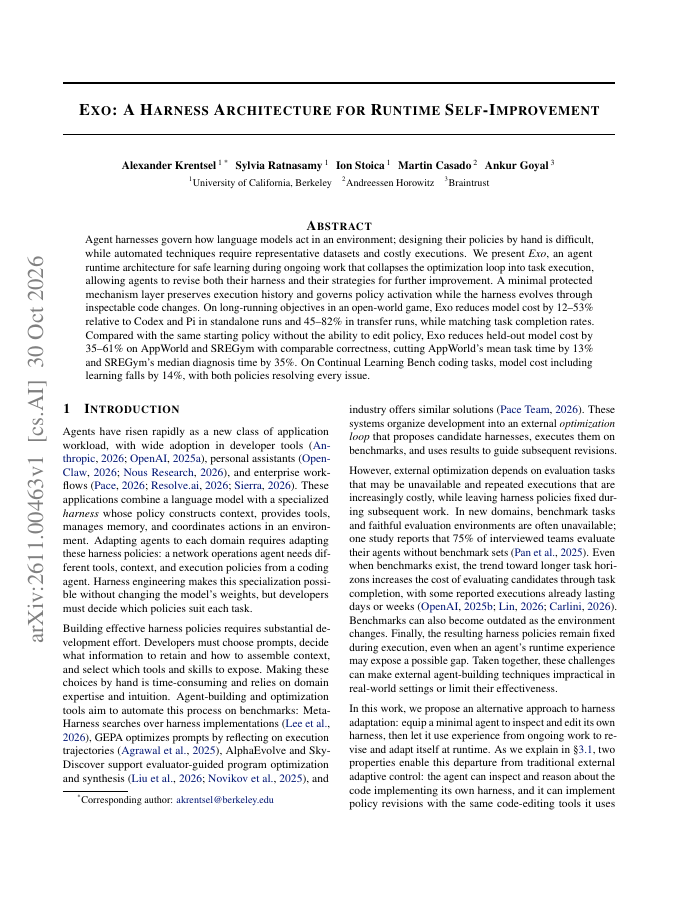
Agent harnesses govern how language models act in an environment; designing their policies by hand is difficult, while automated techniques require representative datasets and costly executions.
4 Nov 2026
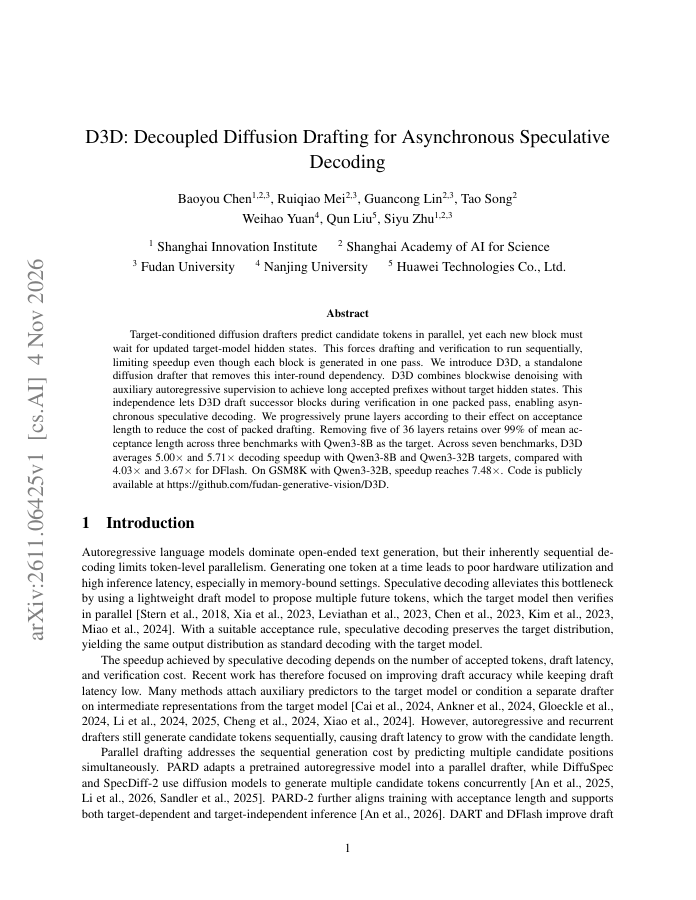
Target-conditioned diffusion drafters predict candidate tokens in parallel, yet each new block must wait for updated target-model hidden states. This forces drafting and verification to run sequentially, limiting speedup even though each block is generated in one pass.
13 Nov 2026
World-model video encoders such as V-JEPA learn how scenes change (direction, speed, order, state) from video alone. To answer questions, they are joined to a language model trained on captions and question-answer pairs.