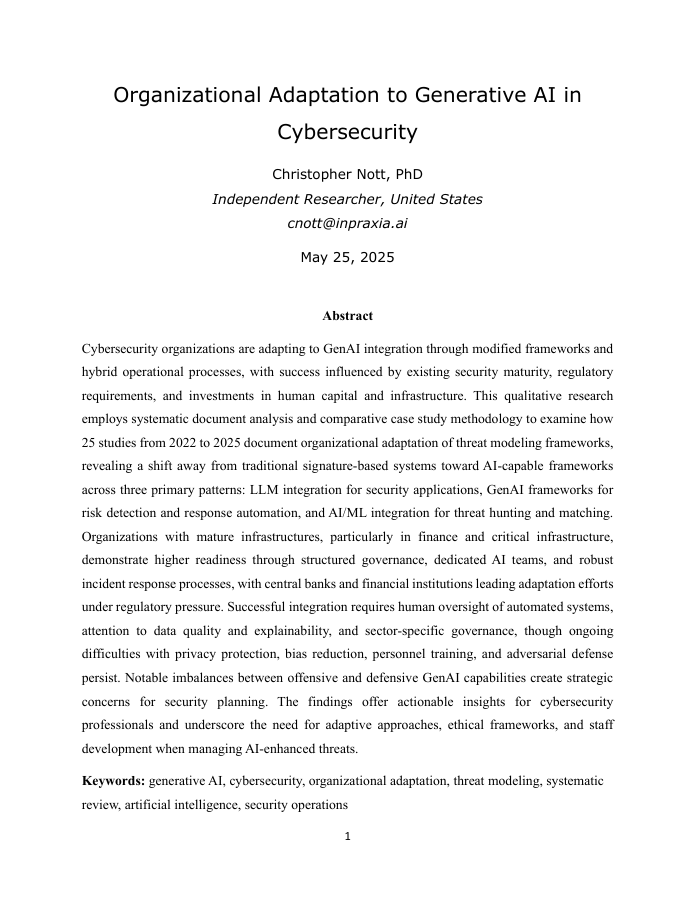
Cybersecurity organizations are adapting to GenAI integration through modified frameworks and hybrid operational processes, with success influenced by existing security maturity, regulatory requirements, and investments in human capital and infrastructure. This qualitative research employs systematic document analysis and comparative case study methodology to examine how 25 studies from 2022 to 2025 document organizational adaptation of threat modeling frameworks, revealing a shift away from traditional signature-based systems toward AI-capable frameworks across three primary patterns: LLM integration for security applications, GenAI frameworks for risk detection and response automation, and AI/ML integration for threat hunting and matching. Organizations with mature infrastructures, particularly in finance and critical infrastructure, demonstrate higher readiness through structured governance, dedicated AI teams, and robust incident response processes, with central banks and financial institutions leading adaptation efforts under regulatory pressure. Successful integration requires human oversight of automated systems, attention to data quality and explainability, and sector-specific governance, though ongoing difficulties with privacy protection, bias reduction, personnel training, and adversarial defense persist. Notable imbalances between offensive and defensive GenAI capabilities create strategic concerns for security planning. The findings offer actionable insights for cybersecurity professionals and underscore the need for adaptive approaches, ethical frameworks, and staff development when managing AI-enhanced threats.
Organizational Adaptation to Generative AI in Cybersecurity
Cybersecurity organizations are adapting to GenAI integration through modified frameworks and hybrid operational processes, with success influenced by existing security maturity, regulatory requirements, and investments in human capital and infrastructure.
- Preview
- Year
- 2025
- Hosting
- Excerpt onlyCC-BY-NC-4.0
Cite
Notes
Only stored in your browser.
Attribution
- Abstract & full text
- arxiv.org/abs/2506.12060CC-BY-NC-4.0
- TL;DR
- Semantic Scholar