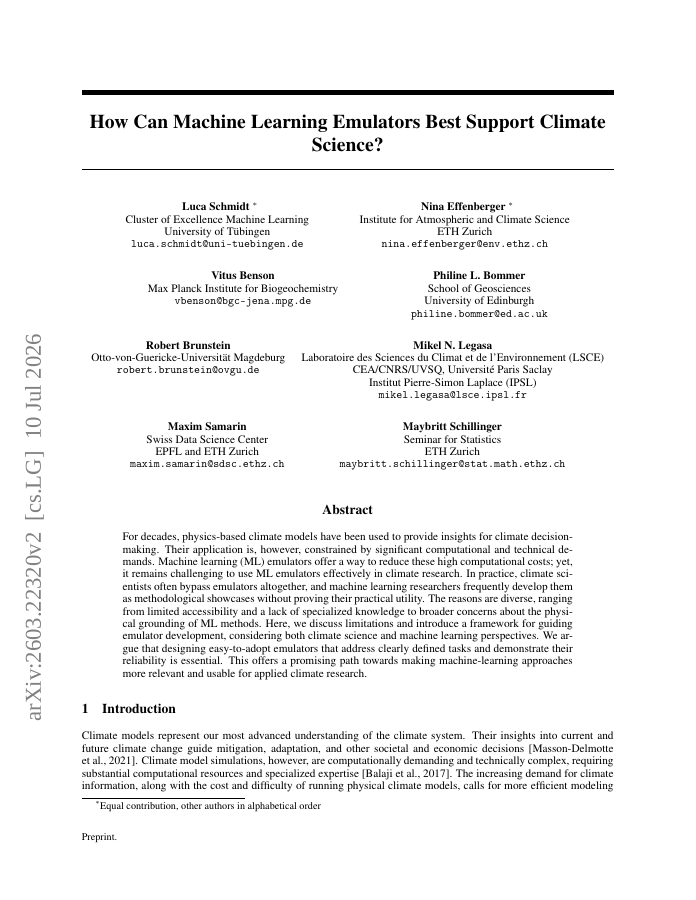
For decades, physics-based climate models have been used to provide insights for climate decision-making. Their application is, however, constrained by significant computational and technical demands. Machine learning (ML) emulators offer a way to reduce these high computational costs; yet, it remains challenging to use ML emulators effectively in climate research. In practice, climate scientists often bypass emulators altogether, and machine learning researchers frequently develop them as methodological showcases without proving their practical utility. The reasons are diverse, ranging from limited accessibility and a lack of specialized knowledge to broader concerns about the physical grounding of ML methods. Here, we discuss limitations and introduce a framework for guiding emulator development, considering both climate science and machine learning perspectives. We argue that designing easy-to-adopt emulators that address clearly defined tasks and demonstrate their reliability is essential. This offers a promising path towards making machine-learning approaches more relevant and usable for applied climate research.
Bridging the Gap Between Climate Science and Machine Learning in Climate Model Emulation
For decades, physics-based climate models have been used to provide insights for climate decision-making. Their application is, however, constrained by significant computational and technical demands.
- Preview
- Year
- 2026
- Hosting
- Full text hostedCC-BY-4.0
Cite
Notes
Only stored in your browser.
Attribution
- Abstract & full text
- arxiv.org/abs/2603.22320CC-BY-4.0
- TL;DR
- Semantic Scholar