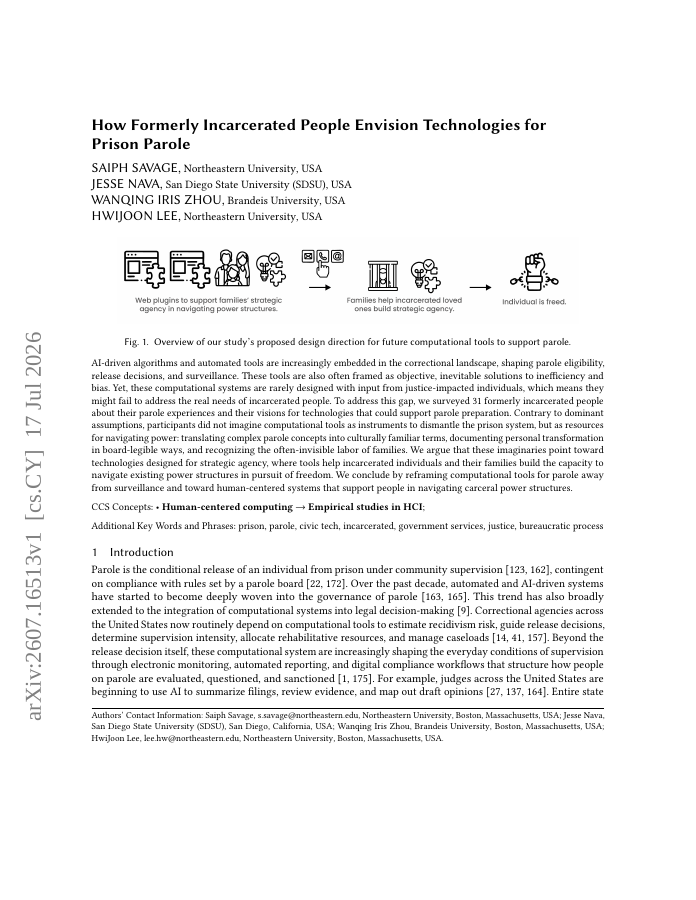
AI-driven algorithms and automated tools are increasingly embedded in the correctional landscape, shaping parole eligibility,release decisions, and surveillance. These tools are also often framed as objective, inevitable solutions to inefficiency andbias. Yet, these computational systems are rarely designed with input from justice-impacted individuals, which means theymight fail to address the real needs of incarcerated people. To address this gap, we surveyed 31 formerly incarcerated peopleabout their parole experiences and their visions for technologies that could support parole preparation. Contrary to dominantassumptions, participants did not imagine computational tools as instruments to dismantle the prison system, but as resourcesfor navigating power: translating complex parole concepts into culturally familiar terms, documenting personal transformationin board-legible ways, and recognizing the often-invisible labor of families. We argue that these imaginaries point towardtechnologies designed for strategic agency, where tools help incarcerated individuals and their families build the capacity tonavigate existing power structures in pursuit of freedom. We conclude by reframing computational tools for parole awayfrom surveillance and toward human-centered systems that support people in navigating carceral power structures.
How Formerly Incarcerated People Envision Technologies for Prison Parole
AI-driven algorithms and automated tools are increasingly embedded in the correctional landscape, shaping parole eligibility,release decisions, and surveillance. These tools are also often framed as objective, inevitable solutions to inefficiency andbias.
- Preview
- Year
- 2026
- Hosting
- Full text hostedCC-BY-4.0
Cite
Notes
Only stored in your browser.
Attribution
- Abstract & full text
- arxiv.org/abs/2607.16513CC-BY-4.0
- TL;DR
- Semantic Scholar